About this Weekly Calendar Template
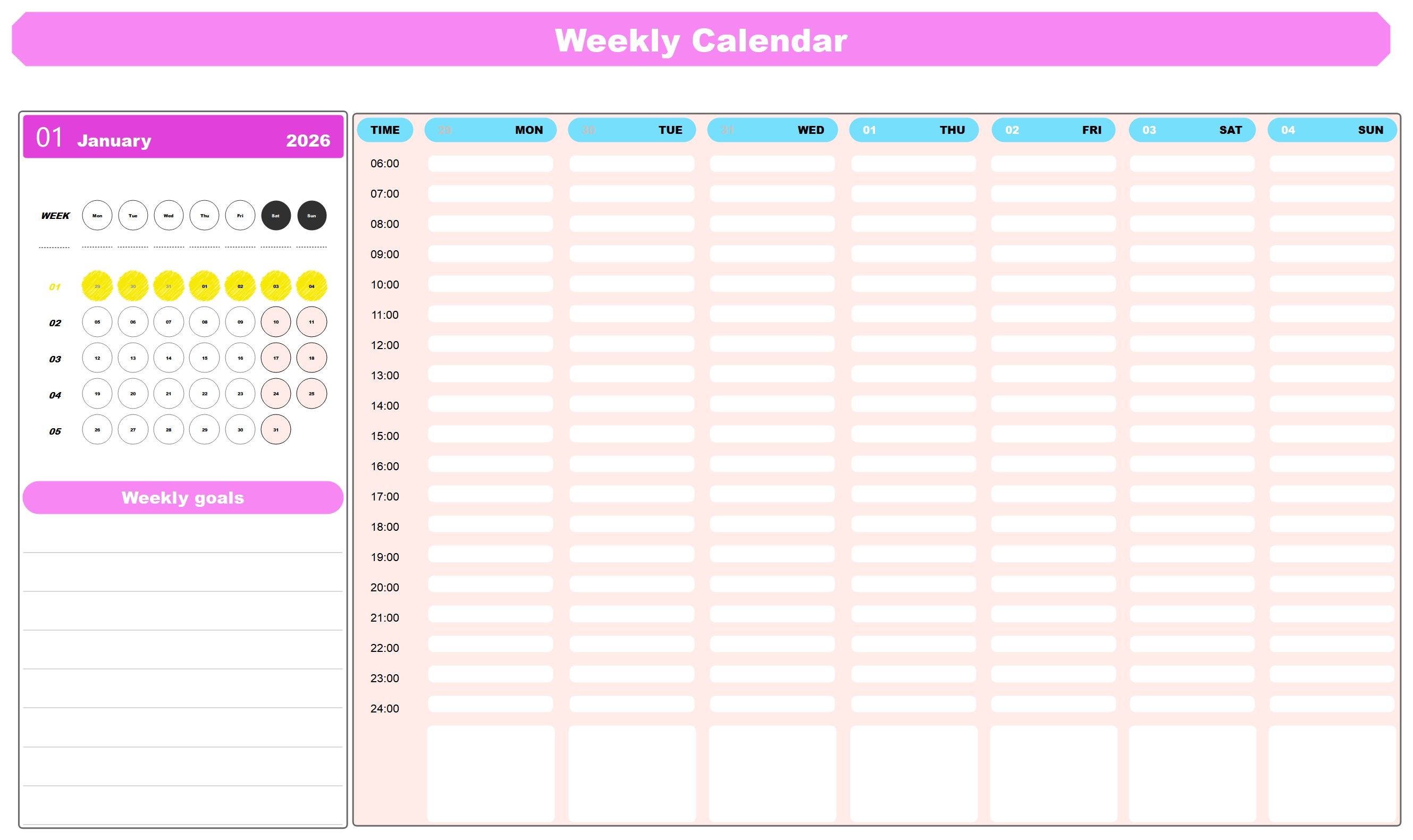
This template is structured as a time-grid weekly planner rather than a task-only list. It gives users a full-day scheduling frame, hourly slots, and a place to connect the week’s larger goals to actual daily time use.
Weekly Goals
This branch captures the priorities that should guide the week before individual hours are filled. It helps users connect day-level scheduling to a broader outcome instead of treating the calendar as only a list of appointments.
06:00–12:00 Time Block
This section reflects the early part of the day and helps users plan morning routines, focused work, or fixed obligations inside the weekly grid.
13:00–18:00 Time Block
This branch represents the central working hours of the day. It is useful for scheduling meetings, delivery work, or follow-up tasks across the most active part of the week.
19:00–24:00 Time Block
This section gives the planner an evening layer for review, learning, personal tasks, or late-day commitments that still matter to weekly structure.
Week View of January 2026
This branch anchors the planner in a specific dated week rather than leaving it as a timeless template. It helps users convert the structure into a real short-term planning tool.
Time-Based Weekly Planning
This final section represents the overall logic of the template: combining goals, calendar structure, and time blocks so the week can be managed visually and consistently.
FAQs about this Template
-
What should a weekly calendar include?
A weekly calendar should usually include fixed commitments, planned work blocks, deadlines, meetings, and any personal or operational constraints that affect how time can be used. The best weekly calendars help people make choices about capacity instead of pretending everything can fit.
-
How do you organize a weekly calendar effectively?
An effective weekly calendar starts with non-movable commitments, then adds focused work time, follow-up windows, and enough flexibility for interruptions or review. It works best when it reflects how people actually use time rather than becoming an unrealistic ideal schedule.
-
Why does weekly scheduling help?
Weekly scheduling helps because it turns broad priorities into concrete time decisions. Without that step, people often keep good intentions in a task list while the week gets filled by urgency, meetings, and fragmented work.
-
What’s the difference between a weekly calendar and a to-do list?
A weekly calendar assigns time and sequence to work, while a to-do list simply records what needs to be done. The calendar is more useful when capacity and timing matter, because it forces tradeoffs that a plain list can avoid.