About this Classification of visual languages template
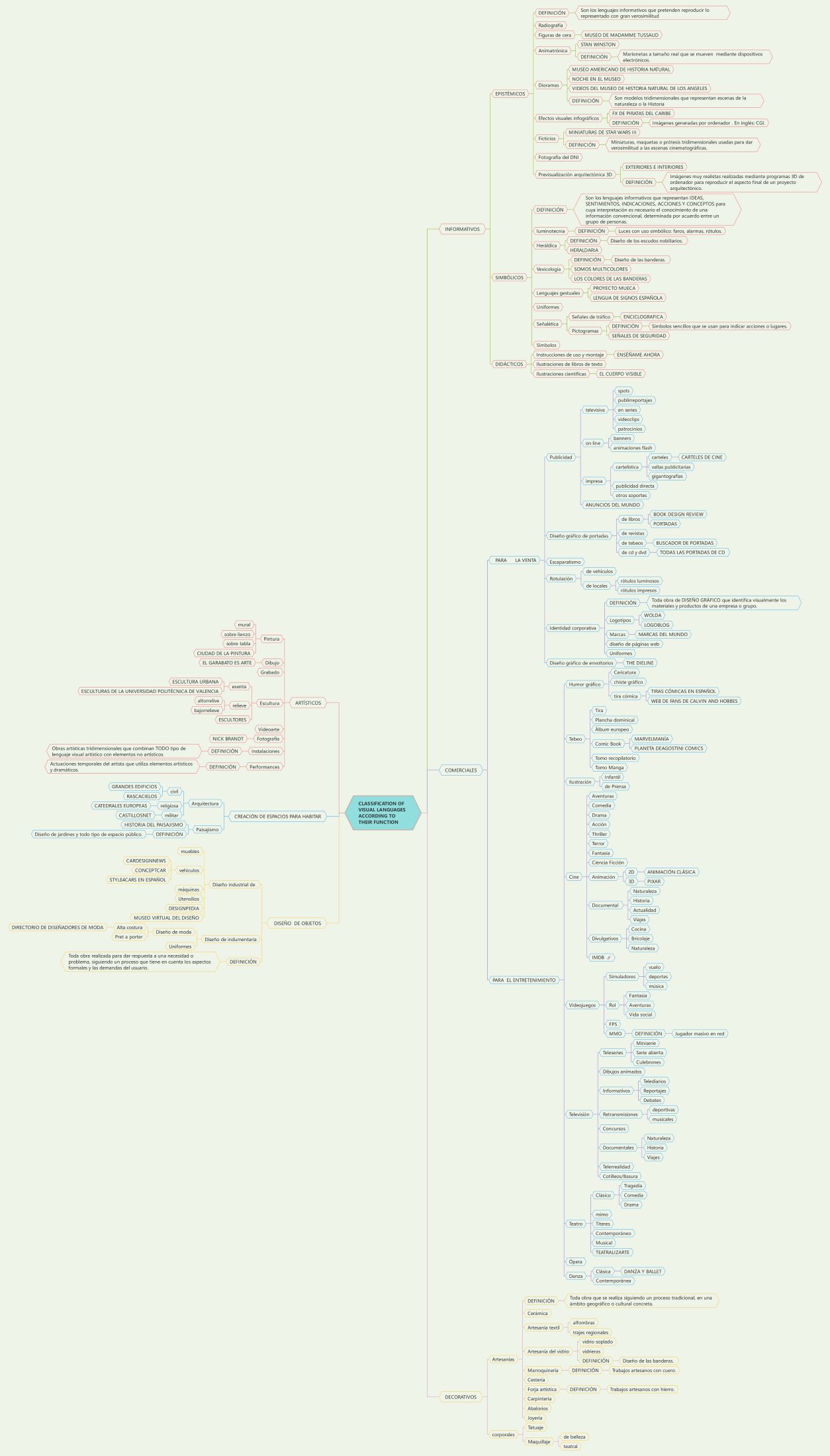
This template provides a comprehensive mind map that organizes visual languages into functional categories. It helps educators, designers, and students understand the diverse ways images communicate information, sell products, or express artistic vision across different media types and platforms.
Informativos (Informative Visual Languages)
Informative visual languages aim to provide facts and objective knowledge. This category includes epistemic representations like diagrams, symbolic systems like traffic signs, and didactic tools used for educational purposes to ensure clarity and effective learning.
- Epist micos (Scientific models, dioramas)
- Simb licos (Signals, pictograms, uniforms)
- Did cticos (Educational illustrations, textbooks)
Comerciales (Commercial Visual Languages)
Commercial visual languages focus on marketing products and providing entertainment to a wide audience. They use persuasive imagery in advertising and branding to drive sales or create immersive experiences in movies, television, and video games.
- Para la venta (Publicity, corporate identity, packaging)
- Para el entretenimiento (Movies, comics, television shows)
Art sticos (Artistic Visual Languages)
Artistic visual languages prioritize creative expression and the design of physical spaces or objects. This branch covers everything from traditional fine arts like painting and sculpture to functional designs in architecture, fashion, and industrial equipment.
- Pintura, Dibujo, and Grabado
- Arquitectura and Paisajismo
- Dise o industrial and de indumentaria
Decorativos (Decorative Visual Languages)
Decorative visual languages focus on aesthetics and craftsmanship within cultural or personal contexts. This includes traditional handicrafts like ceramics and jewelry, as well as body art like tattoos and makeup, which serve to beautify or signify status.
- Artesan as (Ceramics, textiles, glasswork)
- Corporales (Makeup, tattoos, beauty treatments)
FAQs about this Template
-
What is the primary purpose of classifying visual languages?
Classifying visual languages helps professionals and students identify the specific intent behind an image. By understanding whether a visual is meant to inform, persuade, or decorate, creators can choose the right techniques to reach their audience effectively. This organization also provides a structural framework for analyzing how different media types influence human behavior and cultural development over time.
-
How does the commercial branch differ from the artistic branch?
The commercial branch is strictly functional and profit-driven, focusing on selling products or providing mass entertainment through branding and advertising. In contrast, the artistic branch emphasizes self-expression, architectural design, and industrial aesthetics. While commercial work often follows market trends to ensure a return on investment, artistic work frequently challenges conventions to explore new creative boundaries and human emotions.
-
Why are symbolic languages included in the informative category?
Symbolic languages are considered informative because they convey essential instructions or data through universally recognized icons. Examples include traffic signals, safety pictograms, and flags. These visuals require the viewer to have specific cultural or conventional knowledge to decode the message. Their main goal is to provide clear, quick information that guides public behavior or ensures safety in various environments.