


In this article
The Definition of Matthew Effect
The Matthew effect refers to the phenomenon that the stronger one is, the stronger they become, and the weaker one is, the weaker they become. It is widely used in the fields of social psychology, education, finance, and science.
The Matthew effect is a term commonly used by sociologists and economists. It reflects the social phenomenon of increasing polarization, both richer and poorer.
A parable from the Bible "New Testament Matthew": "Everything you have will be doubled to make him superfluous; if not, even what he has will be taken away." Learn the Matthew effect with the EdrawMind mind map below.
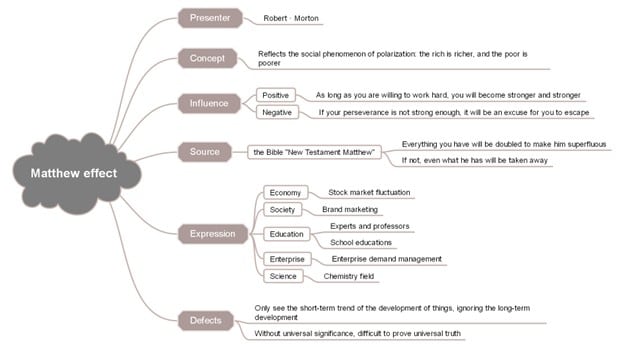
The Matthew effect is a socio-psychological phenomenon and a universal law. You need to study it based on the principle of dialectical materialism. Treat it properly, apply it scientifically, and use positive factors to overcome negative factors.
When encountering difficulties, you can use a positive attitude to overcome challenges and remain persistent.
In terms of business management, you need first to determine your core competitiveness, quickly expand in your target area, and constantly maintain your advantages.
In terms of career development, you should clarify your professional positioning, set clear goals, and make corresponding career plans according to individual circumstances.
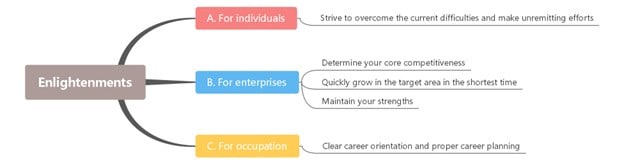
Finally, it is believed that you can quickly understand what the Matthew effect is through these two mind maps and gain enlightenment from them.
Recommended Resources for Sociology and the Matthew Effect
After learning about the Matthew Effect, here are some recommended resources that will help you understand the topic and sociology as a subject better.
These can consist of books, guides, or other video lectures that you might also enjoy, especially if you’re a sociology student or a sociologist by trade.

For Guides
Start with “The Sociology Book” by DK, which provides a visual overview of key sociological theories, including social stratification and inequality—concepts closely related to the Matthew Effect.
For a deeper look at how advantages accumulate over time, Robert K. Merton’s works, especially “The Matthew Effect in Science,” remain essential reading.
For Articles and Research
Academic databases like JSTOR or Google Scholar host numerous studies analyzing the Matthew Effect in education, economics, and social mobility.
One useful paper to look for is “The Matthew Effect in Reading” by Keith Stanovich, which discusses how early advantages in learning compound over time.
For Videos and Online Learning
Platforms such as Coursera and Khan Academy offer free sociology courses that discuss inequality and systemic advantage.
CrashCourse Sociology on YouTube also has digestible episodes explaining social hierarchy and power dynamics.
For Visual Learning
If you prefer visual summaries, use tools like EdrawMind, which lets you map sociological theories and their connections. You can create a “Matthew Effect” mind map linking it to related ideas such as meritocracy, privilege, and structural inequality.
Visualizing these relationships helps clarify how advantages and disadvantages persist across systems.
How To Boost Efficiency When Studying Sociology With Mind Maps
As a sociology major, you must be very familiar with the complexity of sociology as a subject. This is why it’s important to use all available resources to help you understand it.
In this section, you can see how mind mapping makes for a great assistant in boosting efficiency for studying sociology, or any subject for that matter.



How To Make a Mind Map for Sociology
Start by writing your main topic at the center—say, “Social Inequality” or “The Matthew Effect.” Then, branch out into related concepts like “Education,” “Power,” or “Class Structure.” From each branch, add key sociologists, examples, and theories.
 Try the app & get 500 free AI tokens


For instance, under “Power,” you might include Weber’s theory of authority or Foucault’s view of social control. This way, complex ideas turn into a visual web of connections you can quickly recall during exams.
It’s also great to change the colors of your mind map for color-coding or just personal design. Add relevant icons or logos to make the mind map more memorable or digestible.
Using a Digital Tool
And, for making your mind maps, it’s great to rely on a digital mind mapping tool like Wondershare EdrawMind. With templates, icons, symbols, and lots of creative options, you’ll be good to go immediately.
This tool is powerful enough to offer creative features and AI functions that can help you summarize and understand complex sociology topics.
Tips When Reading Sociology Topics Like the Matthew Effect
Reading sociology topics such as the Matthew Effect requires more than just memorizing definitions. It’s about understanding how ideas connect, evolve, and apply to real-world situations. Here are a few simple tips to make your reading more effective.
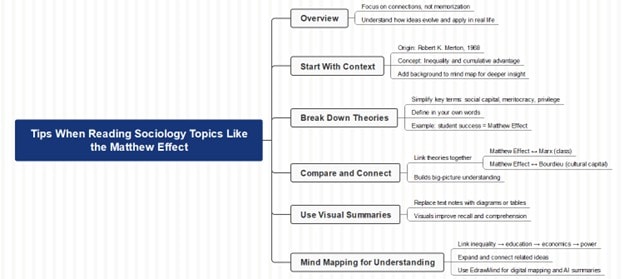
- Start With the Context
Like any other topic in sociology, understanding the background of a theory and the reasons for its formulation is important. The Matthew Effect was coined by Merton, who noticed inequality even in academia in 1968.
Thus, you can add this to your mind map as well. The result is a deeper understanding of the topic at hand.
- Break Down Theories Into Simple Parts
Sociological theories often sound complex, but they can be simplified. Take key terms—like “social capital,” “meritocracy,” or “privilege”—and define them in your own words.
Then, look for examples in daily life. For instance, when one student gets more support and ends up performing better, that’s the Matthew Effect in action.
- Compare and Connect Ideas
As you read, link one theory to another. How does the Matthew Effect relate to Marx’s view of class or Bourdieu’s concept of cultural capital?
Drawing comparisons like these helps you understand the bigger picture and prepares you for essay-type exams.
- Use Visual Summaries
Instead of relying only on text, use diagrams or short tables to summarize relationships between concepts. Visual learners retain information better when they can “see” the structure of ideas.
- Use Mind Maps To Deepen Understanding
For the whole article, it has been telling you that mind mapping is the way to go. A mind map helps you visualize sociological connections—like linking “Inequality” to “Education,” “Economics,” and “Power.”
As you add more branches, you’ll see how one idea flows into another. Tools like EdrawMind make this process easier by letting you map, update, and organize theories digitally.
FAQs
Lastly, here are some frequently asked questions related to the Matthew Effect, as a topic in sociology:
-
1. Can the Matthew Effect be reversed?
Like any theory in sociology, implementing early interventions can be really helpful. For example, a society must provide early education support and ensure equitable resource distribution to level the playing field.
The Matthew Effect doesn’t have to be a terrifying theory. It can serve as an inspiration for people, as a society, to work together to improve equality.
-
2. What are real-world examples of the Matthew Effect?
If you know nepotism, then it’s a prime example of the Matthew Effect. Good educational opportunities and inherent connections taken from family members or friends can be really helpful in furthering the wealth of the already wealthy.
However, it’s not a one-size-fits-all rule. People have heard of many families whose fortunes declined due to the carelessness of the younger generations. Likewise, you’ve seen lower-class families rise to the top with grit.
-
3. Is the Matthew Effect relevant in academia?
Yes. Even in academia, you see the application of the Matthew Effect. Children of prominent scientists often get the upper hand in scholarships, funding, and other opportunities as compared to those from lower-income families or even countries.
-
4. Can you see the effect of Matthew Effect in Social Media?
Yes, definitely. The algorithm of social media is designed to improve the visibility of creators who are already famous or have an established platform. Thus, it’s harder for smaller creators to rise in social media.
-
5. Are there fictional characters who embody the Matthew Effect?
There’s a lot – think of Tony Stark, Katniss Everdeen, Sherlock Holmes. These are characters who got lucky or had good fortune to begin with, and they easily capitalized on those to rise in society.
 EdrawMind
AppsEdrawMind Online
EdrawMind
AppsEdrawMind Online