


Goldman Sachs, one of the world’s leading investment banking and financial services institutions. It operates through a well-defined Goldman Sachs organizational structure that ensures efficiency, accountability, and innovation. It was founded in 1869. The company has built a global reputation for its expertise in investment banking, asset management, and securities.
Its success lies not only in strategic decision-making but also in how its internal structure aligns with its business goals. Understanding Goldman Sachs’ organizational framework provides insight into how such a vast financial powerhouse functions effectively across international markets.
In this article, you will learn about:
- The core structure and hierarchy of Goldman Sachs
- The key divisions and their functions
- The leadership model and decision-making process
In the end, you will be able to understand how Goldman Sachs' organizational structure supports global operations and innovation. Let's get into it!
In this article
Goldman Sachs Organizational Structure
Goldman Sachs operates under a hierarchical yet flexible organizational structure. It is designed to support its global financial operations efficiently. The structure combines divisional and functional frameworks. It allows the company to manage diverse business segments across regions while maintaining centralized strategic control.
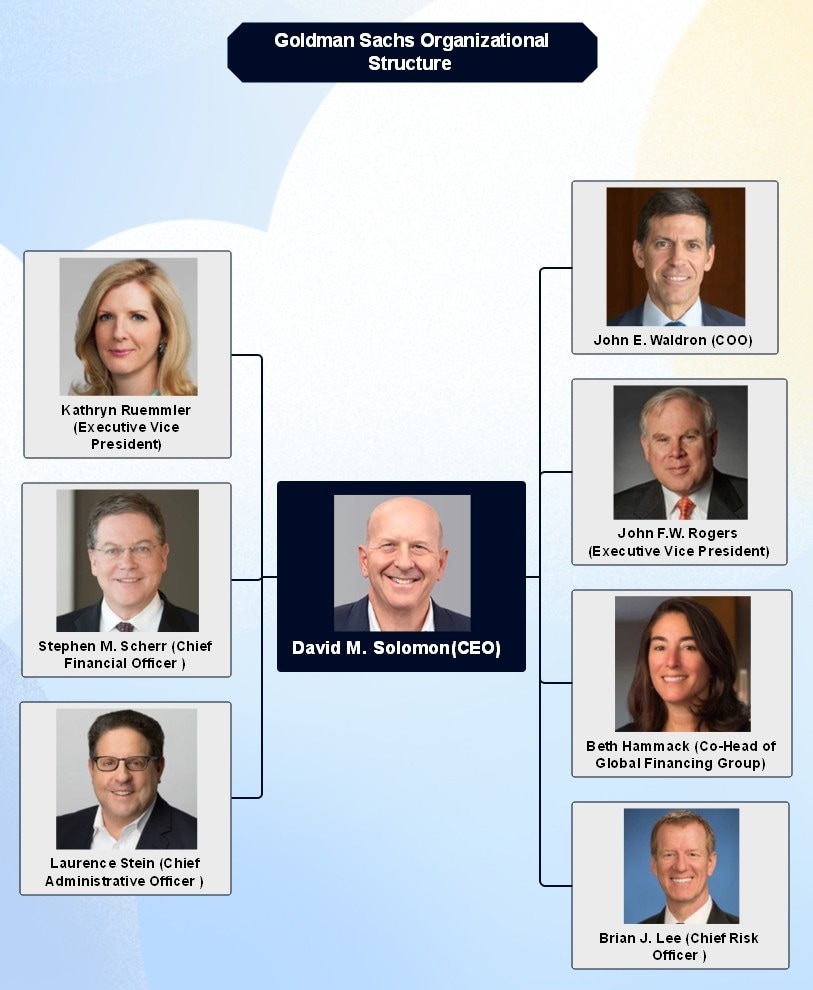


Main Structure of Goldman Sachs
Executive Leadership
At the top of the hierarchy is the Chief Executive Officer (CEO), who oversees the firm’s strategic direction and global operations.
Key executives support the CEO, including the President, Chief Operating Officer (COO), Chief Financial Officer (CFO), and Vice Chairs. They manage specific business areas and internal performance.
Four Core Business Divisions
- Investment Banking Division (IBD): IBD handles mergers and acquisitions (M&A), financial advisory, and capital-raising activities for corporate clients and governments.
- Global Markets Division: This division manages securities trading, risk management, and market-making operations across equities, commodities, and fixed income.
- Asset & Wealth Management Division: They focus on investment management and advisory services for institutions, high-net-worth individuals, and retail clients.
- Platform Solutions Division: A newer division that includes consumer platforms like Marcus by Goldman Sachs and focuses on financial technology innovation.
Regional Operations
Goldman Sachs operates through major regional hubs — including New York, London, Hong Kong, Tokyo, and Bangalore — ensuring effective coordination of global activities and compliance with regional regulations.
Support Functions
Core support units such as Risk Management, Legal & Compliance, Operations, Technology, and Human Capital Management help maintain the firm’s high standards of governance and performance.
Key Members of Goldman Sachs (as of recent years)
- David M. Solomon is the Chairman and Chief Executive Officer (CEO) of Goldman Sachs. He leads the company with a clear strategy that balances innovation, client service, and growth. As CEO, he oversees global operations, long-term planning, and overall performance. Under his leadership, Goldman Sachs has expanded in investment banking, asset management, and financial technology.
- John E. Waldron serves as President and Chief Operating Officer (COO). He manages daily operations and ensures that all divisions work efficiently. Waldron maintains strong client relationships, oversees global business units, and aligns operations with the company’s broader goals.
- Kathryn Ruemmler is the Chief Legal Officer and General Counsel. She leads the global legal department and provides advice on corporate governance, compliance, and regulatory matters. Her role ensures that the company operates ethically and within legal frameworks.
- Stephen M. Scherr, the former Chief Financial Officer, joined Goldman Sachs in 1993 as an Associate in the Financial Institutions Group. During his time at the firm, he helped manage finances, strengthened the capital base, and supported major investment decisions.
- Denis P. Coleman III is the Chief Financial Officer (CFO). He oversees financial planning, risk management, and capital structure. His leadership helps maintain a strong balance sheet and ensures the firm’s financial stability in changing markets.
- Ashok Varadhan serves as Co-Head of Global Banking & Markets. He manages trading, financing, and client coverage across the world. Varadhan focuses on innovation and helps maintain Goldman Sachs’ leadership in investment banking.
- Marc Nachmann is the Global Head of Asset & Wealth Management. He directs investment and wealth management operations, offering clients customized strategies and financial solutions.
- Kimberly Posnett serves as the Global Head of Investment Banking Services. She focuses on strengthening client partnerships and overseeing mergers, acquisitions, and advisory services.
- Beth Hammack is the Co-Head of the Global Financing Group. She leads global financing strategies, manages debt capital markets, and develops funding solutions for clients.
- Brian J. Lee serves as the Chief Risk Officer. He oversees risk management policies to protect the firm’s financial health and ensure compliance with regulations.
- Laurence Stein is the Chief Administrative Officer. He manages internal operations and administration, ensuring coordination, governance, and efficiency across all departments.
Goldman Sachs’ organizational structure is strategically designed to balance central leadership with specialized divisions, ensuring agility, innovation, and consistent service across global markets. This setup enables the firm to maintain its reputation as one of the world’s most powerful and adaptive financial institutions.
How to Create Goldman Sachs Organizational Structure
EdrawMind is a powerful mind mapping and visualization tool. It helps people and teams organize ideas and brainstorm easily. You can also present information in a clear, simple way. Whether you are a student or a professional, EdrawMind makes complex ideas easy to understand and display.
The platform is flexible and supports many types of projects. You can use it for study plans, business strategy, or creative work. When analyzing complex systems like Goldman Sachs’ structure, EdrawMind helps simplify them. It lets users design clear diagrams that show hierarchy and roles. It also makes communication flow easy to visualize and share.
Key Features of EdrawMind:
- Ready-to-Use Templates: EdrawMind includes templates for organizational charts, mind maps, timelines, and more. You can use these templates to complete your own design.
- Drag-and-Drop Interface: Effortlessly build and edit charts with user-friendly tools. You can drag and drop elements, images, and other tools used to complete your diagram.
- Cross-Platform Access: EdrawMind works seamlessly on Windows, macOS, Linux, iOS, and Android. You are also allowed to use the web version of this tool to complete the diagrams seamlessly.
- Customizable Design Options: It helps change colors, icons, and layouts to create professional visuals through a few clicks. Multiple theme options can help you create your design in a unique way.
- Export and Sharing Tools: EdrawMind helps export diagrams as images, PDFs, or presentations for reports or online publishing. It will allow you to share the designs on the social media platforms as well.
Step-by-Step Guide to Create Organizational Structure for Goldman Sachs
Here is a complete guide for you to create an organizational structure of Goldman Sachs with the help of EdrawMind. Follow the steps below to create the org structure.
 Try the app & get 500 free AI tokens


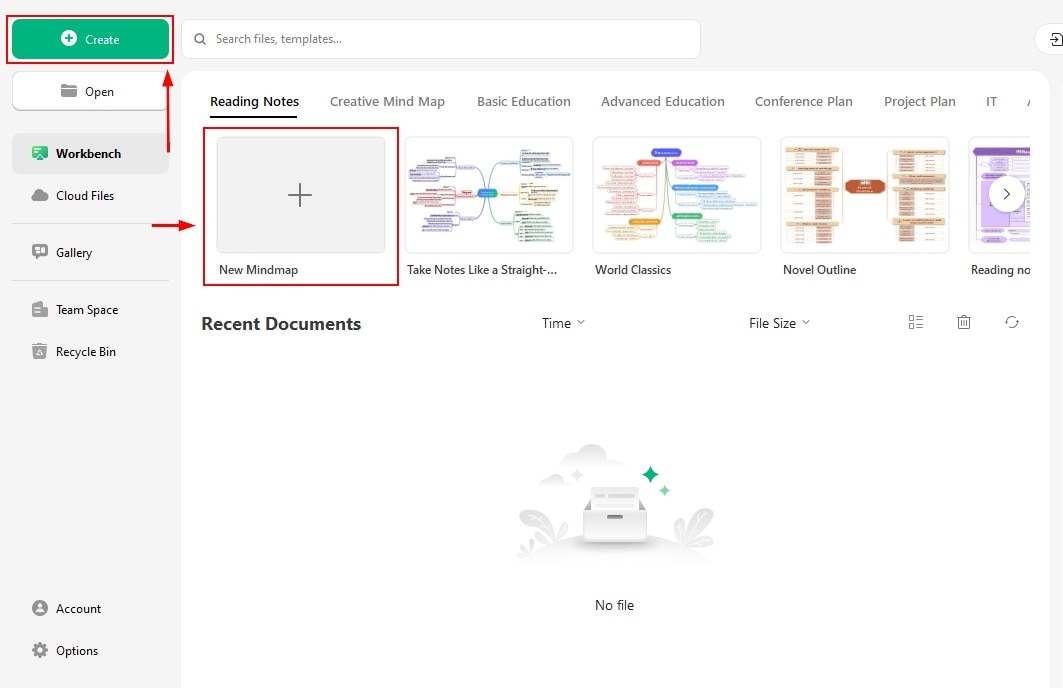
Step1 Create a New File
- Download and install EdrawMind on your desktop.
- Sign in using your Wondershare account or log in with any of your social media accounts.
- On the home screen, click the Create button located at the top-left corner.
- From the menu, select Local MindMap to open a new file and begin your project.
Step2 Change Layout
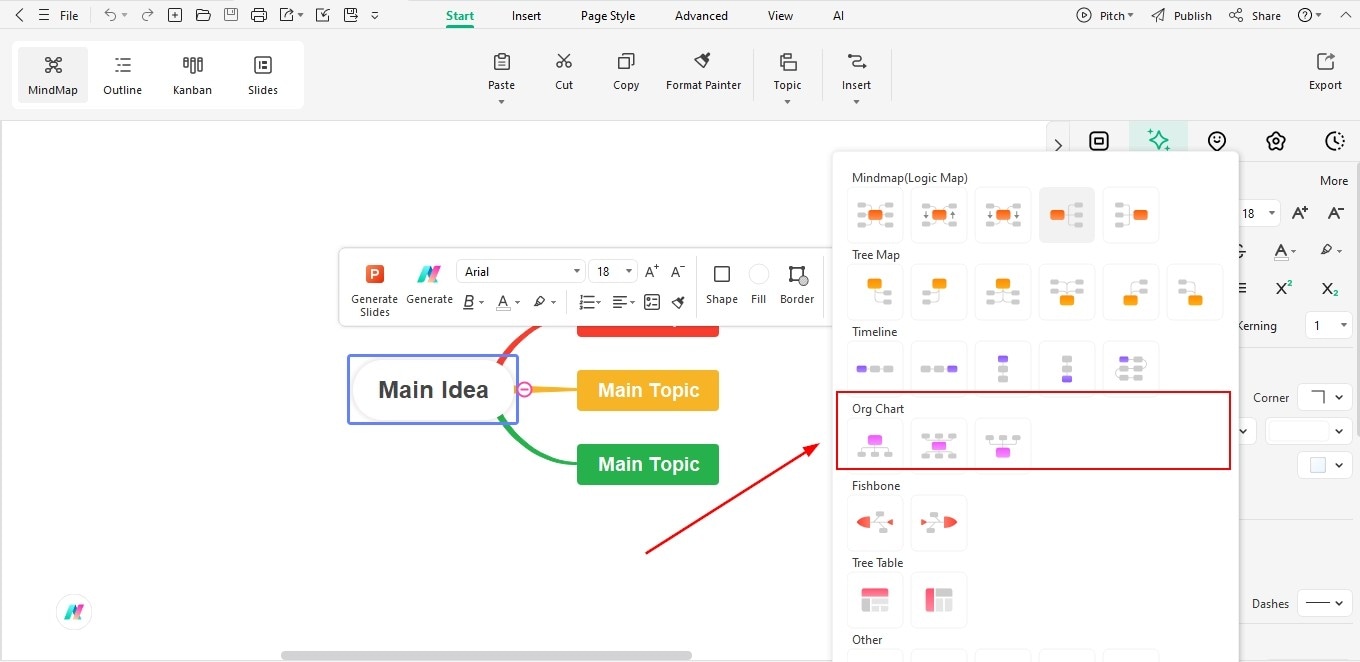
- You’ll see a default layout on the screen, but for creating organizational structures, you’ll need to switch to a more suitable one.
- Open the Layout panel on the right-hand side and choose a layout that best fits your organizational chart needs.
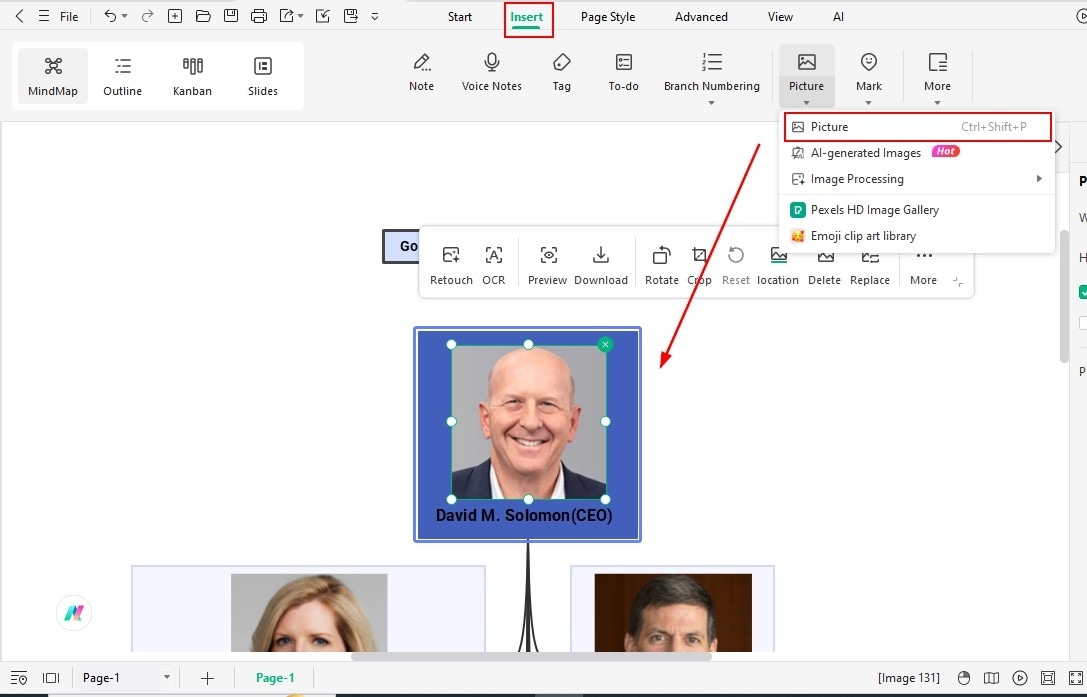
Step3 Add Image and Details of the Members
- Click each topic and add details for each member of the board in the company.
- Write the position they are holding in the organization, as well as their images.
Step4 Change Themes, Colors, and Background
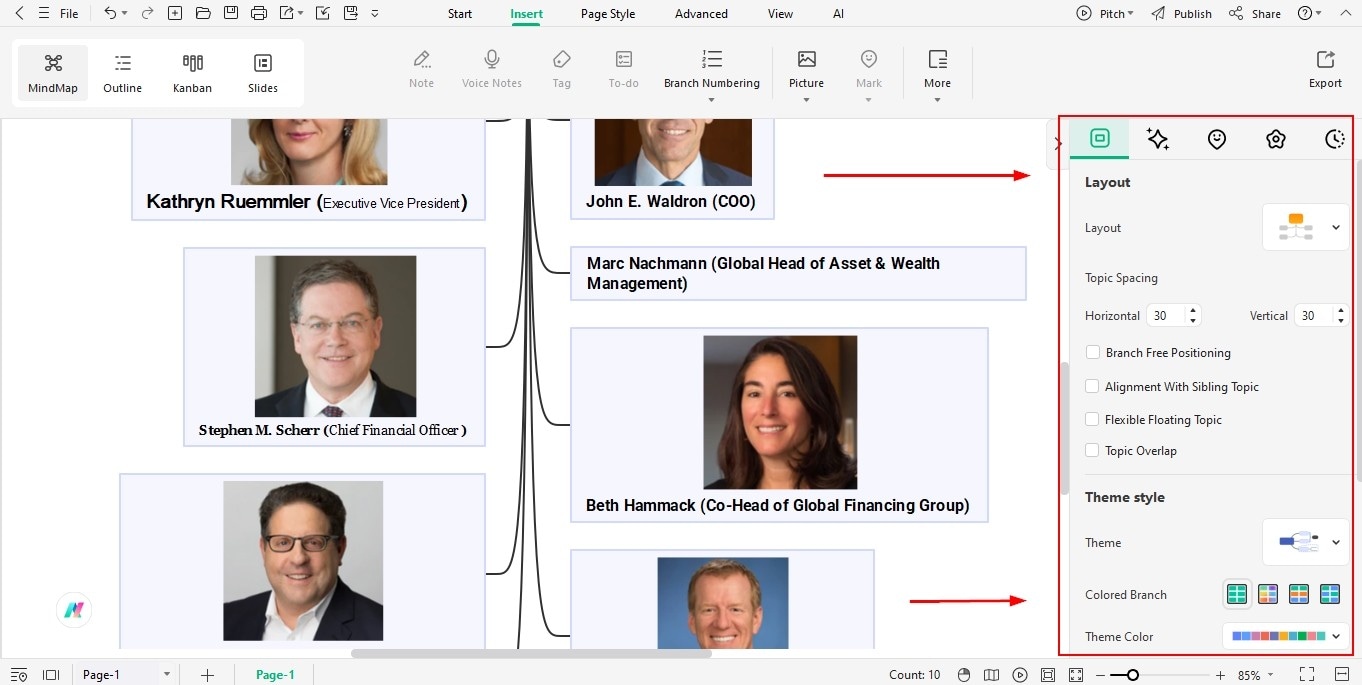
- Adjust color, borders, and shapes from the right side of the screen. You can change it according to the org structure and make your design look good.
- Try different themes and colors for the members to make it a better-looking org structure.
Step5 Export the Org Structure
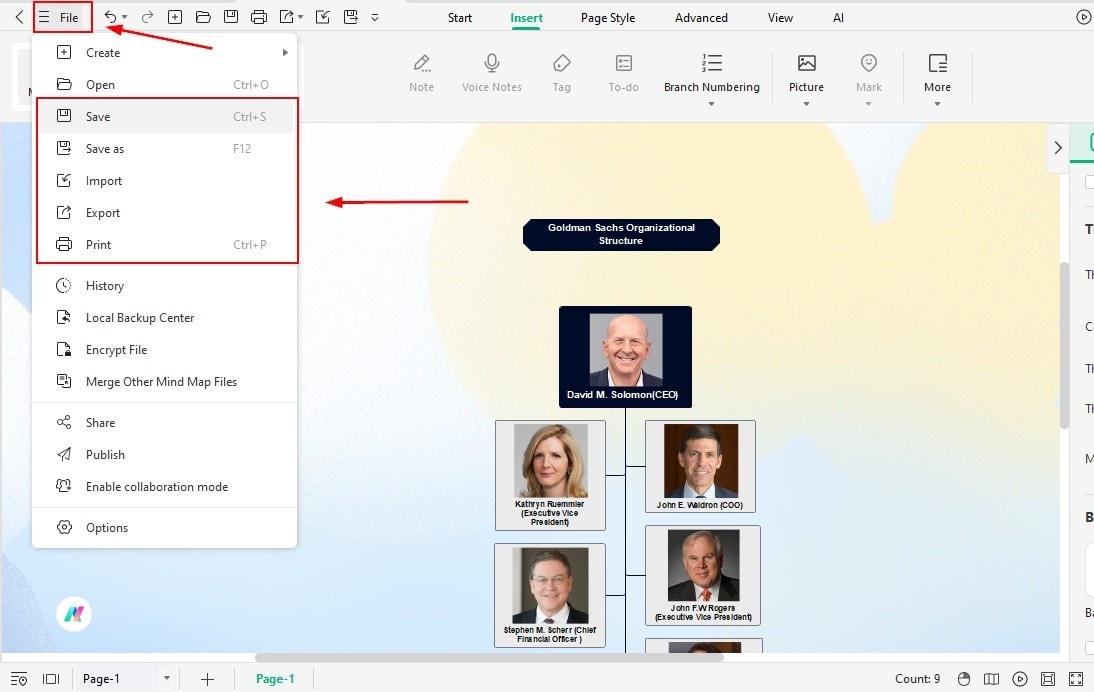
- Click File in the top left corner of the screen and select the format in which you need your design to download.
- Or click print to get the File's hard copy right away.
- You can directly share the files from here as well.
Final Words
The Goldman Sachs structure shows balance between scale and efficiency. Its clear hierarchy is led by skilled and experienced executives. Specialized divisions help the firm adapt to market changes. Strong leadership keeps its vision clear and strategy focused. This structure shows how Goldman Sachs stays successful and innovative.
EdrawMind helps you visualize complex corporate systems easily. It offers simple templates and creative mind mapping tools. You can build clean and professional organizational charts fast. It is great for studying and presenting company structures. Use it to analyze global firms like Goldman Sachs.
 EdrawMind
AppsEdrawMind Online
EdrawMind
AppsEdrawMind Online