About this Project Management Team Structure Template
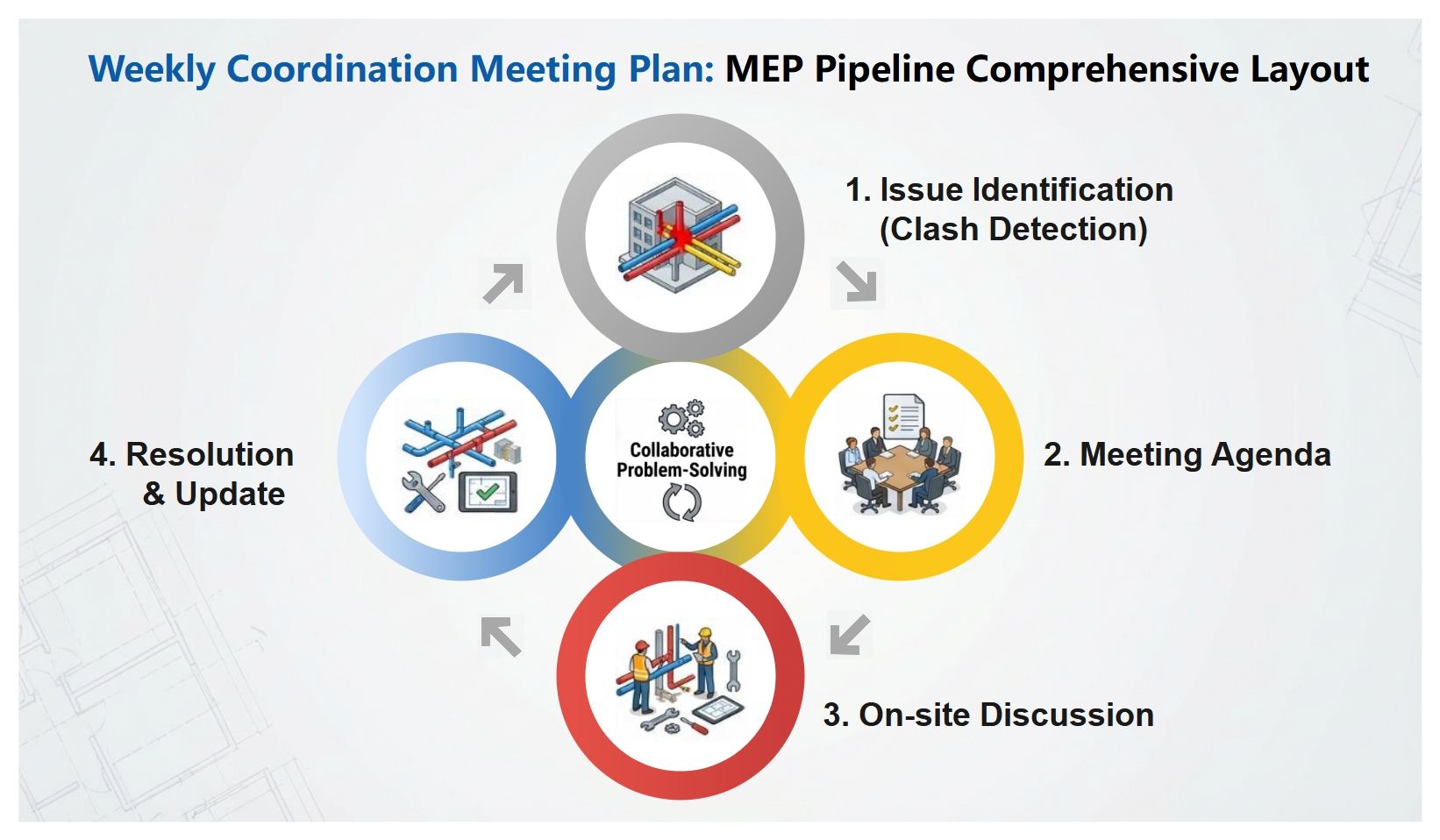
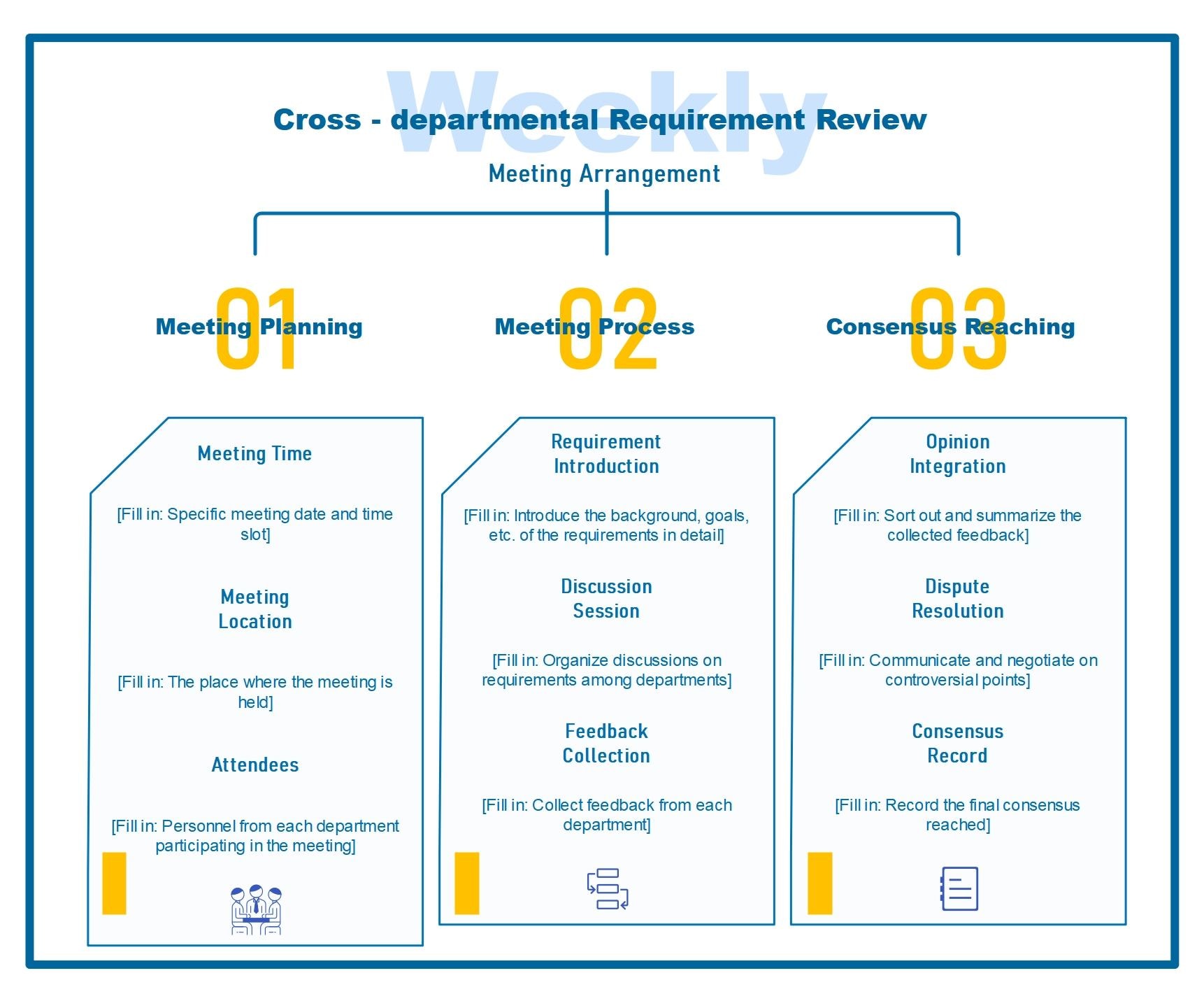
This template is structured as a requirement review meeting plan rather than a team-org chart. It helps users prepare the meeting setup, guide the cross-department discussion, and capture how consensus is reached on requirement changes or priorities.
Meeting Arrangement
This branch focuses on the setup details that make the review possible, including meeting time, location, and participating departments. It gives the discussion a stable operating frame before requirement debate begins.
Meeting Process
This section captures the working flow of the review itself. It includes requirement introduction, discussion, and feedback collection so the meeting can move through a clear sequence instead of turning into scattered conversation.
Consensus Reaching
This branch focuses on how feedback becomes an agreed result. It covers opinion integration, dispute resolution, and final consensus recording, which makes the meeting output more actionable after the discussion ends.
FAQs about this Template
-
What roles are usually included in a project management team?
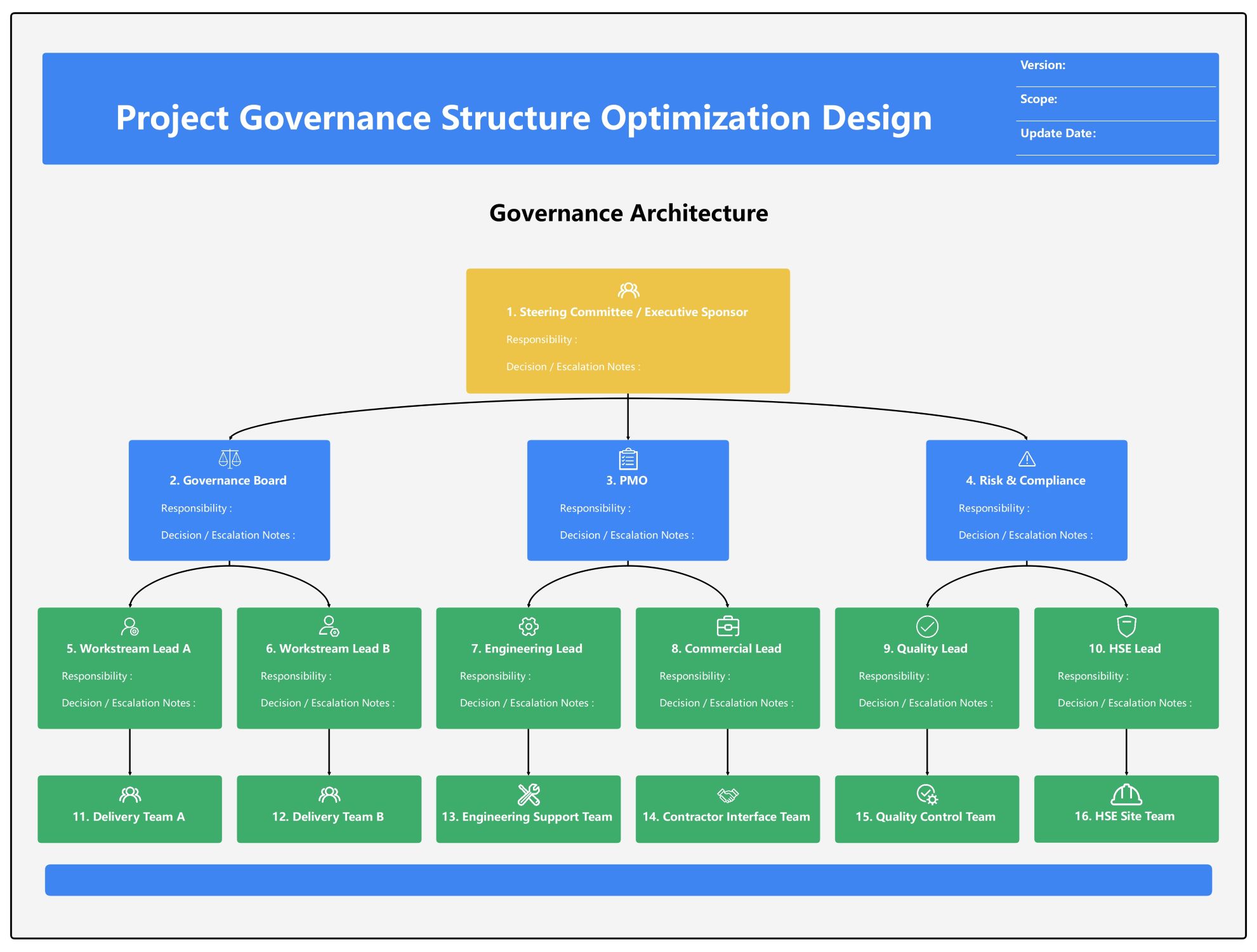
A project management team usually includes leadership, coordination, planning, reporting, and execution-support roles, though the exact structure depends on the project scale. What matters most is that accountability, communication, and decision paths are clear enough for work to move without constant confusion.
-
How do you structure a project management team?
A project management team is usually structured by defining ownership first, then deciding how planning, communication, risk management, and stakeholder coordination will be handled. The best structures fit the project’s complexity instead of copying a chart that looks tidy but does not match actual work.
-
Why is team structure important in project management?
Team structure is important because delivery quality depends heavily on whether people understand who decides, who tracks, and who resolves problems. Weak structure often creates duplicated work, slow escalation, and handoff mistakes even when the individual team members are capable.
-
What's the difference between a project manager and a PMO role?
A project manager usually focuses on running a specific project, while a PMO role often supports broader standards, reporting, governance, and portfolio consistency across multiple projects. The two can work closely together, but their responsibilities are not identical.