About this Optimization Design of Project Governance Structure template
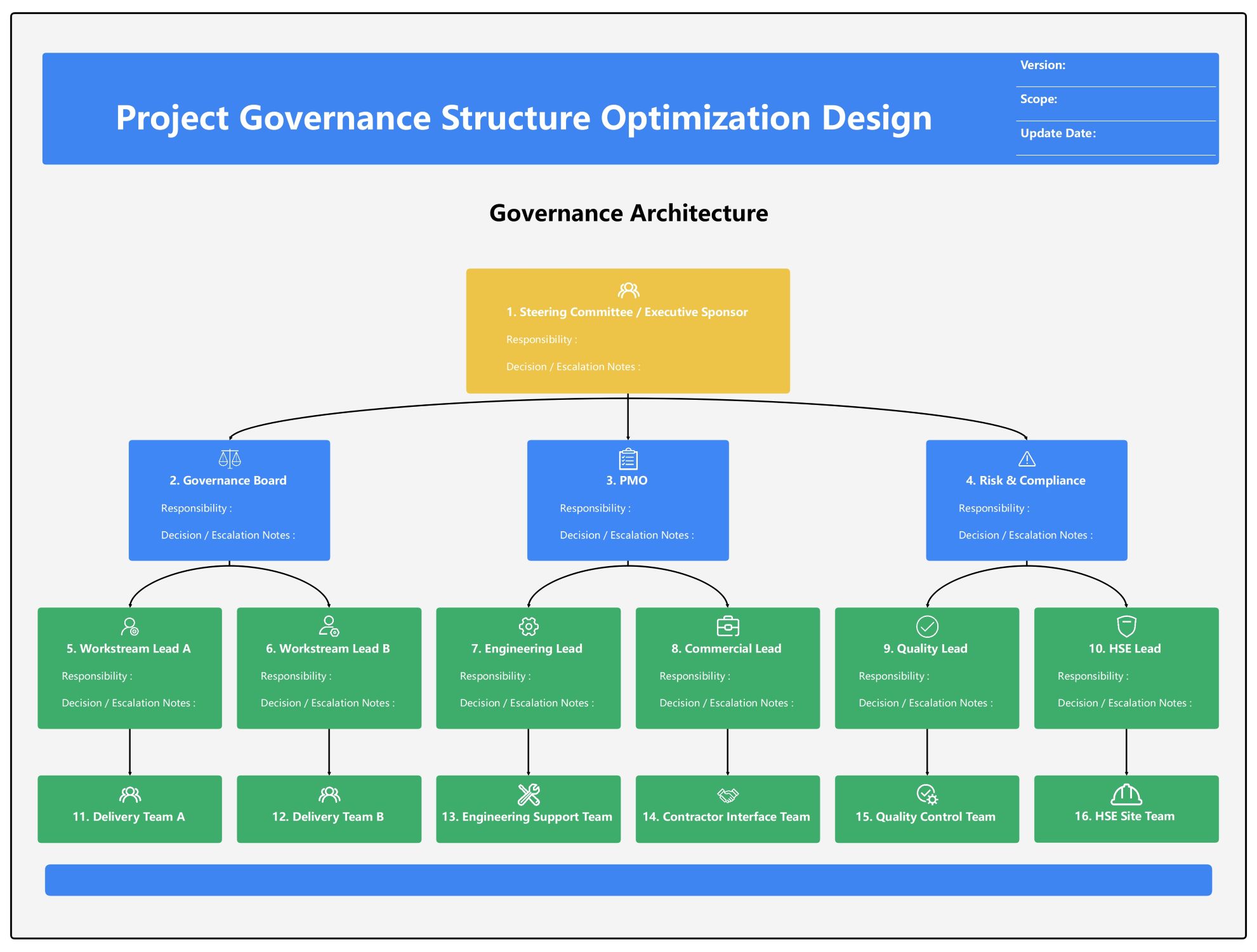
This template outlines a comprehensive governance architecture designed for complex project environments. it illustrates the reporting lines and functional groups necessary to maintain oversight, manage cross-functional workstreams, and ensure project success through clear communication.
Steering Committee and Executive Leadership
The Steering Committee represents the highest level of authority in the project governance framework. This group provides strategic guidance, secures funding, and makes critical high-level decisions to keep the project on track.
- Executive Sponsor
- Strategic Oversight
- Final Decision Authority
- Resource and Budget Approval
Oversight and Compliance Management
The second tier consists of the Governance Board, PMO, and Risk & Compliance functions. These entities ensure the project adheres to organizational standards, manages systemic risks, and maintains consistent reporting across teams.
- Governance Board Oversight
- Project Management Office (PMO)
- Risk Management and Mitigation
- Regulatory Compliance Monitoring
Workstream and Technical Leadership
Functional leads manage specific areas such as engineering, commerce, quality, and HSE. They act as the bridge between strategic management and daily operations, ensuring that technical requirements and workstream milestones are achieved.
- Workstream Leads A and B
- Engineering and Commercial Leadership
- Quality and HSE Management
- Technical Strategy Implementation
Operational Execution and Support Teams
The base level consists of the delivery and support teams responsible for hands-on project tasks. These teams include engineering support, contractor interfaces, and site-specific safety units focused on high-quality execution.
- Delivery Teams A and B
- Engineering Support Team
- Contractor Interface Management
- Quality Control and HSE Site Teams
FAQs about this Template
-
What is the primary role of a Steering Committee in this structure?
The Steering Committee serves as the top-level governing body, providing essential strategic direction and executive support. They are responsible for resolving high-level conflicts, approving major changes in project scope, and ensuring the initiative remains aligned with the company’s broader mission. By involving executive sponsors, the project gains the necessary authority to overcome organizational obstacles and secure vital resources for long-term success.
-
How does the PMO assist in optimizing project governance?
A Project Management Office (PMO) optimizes governance by standardizing management processes and providing a centralized source of project data. It ensures that all workstreams follow the same methodology, which improves reporting accuracy and performance tracking. By maintaining high standards and providing tools for consistency, the PMO helps leadership make informed decisions based on reliable, real-time information across the entire organization.
-
Why is the Risk and Compliance team integrated into the governance model?
The Risk and Compliance team is integrated to proactively identify potential legal, financial, or operational threats that could derail the project. By sitting within the oversight tier, they ensure that every decision accounts for regulatory requirements and safety standards. This integration prevents costly delays and legal issues by embedding risk assessment directly into the project's daily management and strategic planning activities.