About this Business Planning template
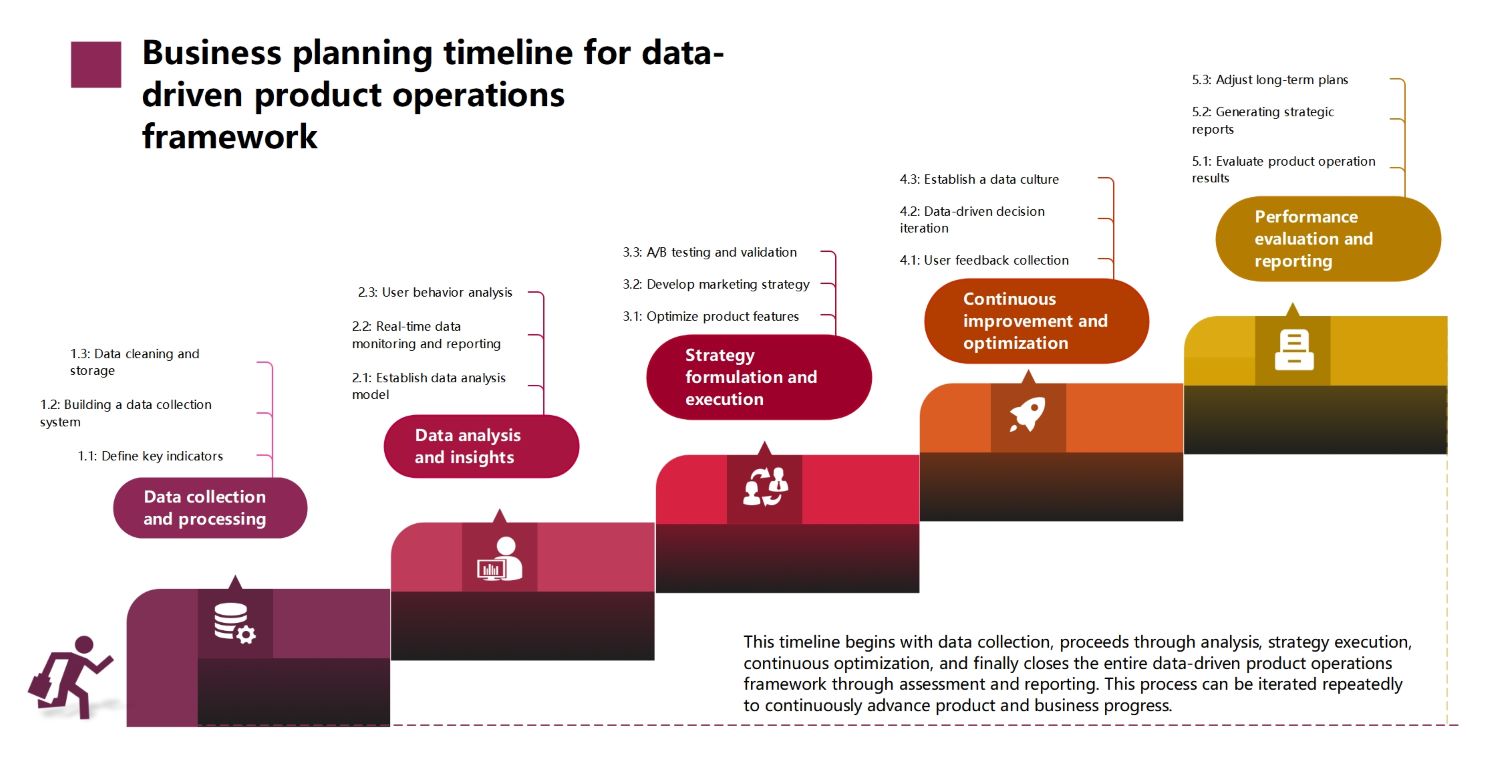
This business planning timeline template is designed for data-driven product operations. It helps teams visualize the entire lifecycle of a project. Use it to track progress, assign tasks, and ensure that data informs every strategic move your business makes during its growth phase.
Data collection and processing
The foundation of any business plan relies on high-quality information. This stage focuses on setting the right metrics and building systems to gather and store data. It ensures your team starts with accurate and clean insights.
- Define key indicators
- Building a data collection system
- Data cleaning and storage
Data analysis and insights
Once data is collected, you must interpret it to find value. This section involves modeling and monitoring user behavior in real-time. These insights provide the evidence needed to support your future business strategies and product decisions.
- Establish data analysis model
- Real-time data monitoring and reporting
- User behavior analysis
Strategy formulation and execution
In this phase, you turn insights into actionable plans for your product and marketing. Testing different versions of your ideas helps validate assumptions before a full launch. It bridges the gap between raw data and real-world results.
- Optimize product features
- Develop marketing strategy
- A/B testing and validation
Continuous improvement and optimization
Successful businesses never stop refining their approach based on feedback. This node emphasizes gathering user opinions and iterating on decisions using data. Establishing a strong data culture ensures everyone contributes to the product's ongoing success and growth.
- User feedback collection
- Data-driven decision iteration
- Establish a data culture
Performance evaluation and reporting
The final stage measures the success of your operations against initial goals. By generating strategic reports, you can see what worked and what didn't. This allows you to adjust your long-term plans for even better future performance.
- Evaluate product operation results
- Generating strategic reports
- Adjust long-term plans
FAQs about this Template
-
Why is a data-driven approach important in business planning?
A data-driven approach removes guesswork from the decision-making process. By using concrete metrics and user insights, businesses can identify trends and potential risks early. This results in more efficient resource allocation and higher success rates for new initiatives. Ultimately, relying on data ensures that every strategic move is backed by evidence rather than assumptions.
-
How can I customize this timeline for my specific business?
You can easily adapt this template by modifying the specific tasks under each main node. For example, if you are in e-commerce, your data collection might focus on conversion rates and cart abandonment. The flexible structure allows you to add or remove steps while maintaining the core logical flow from analysis to execution.
-
What are the benefits of using a visual timeline for product operations?
Visual timelines improve team communication by providing a shared roadmap that everyone can understand at a glance. They help in tracking project milestones and identifying bottlenecks before they become major issues. By visualizing the sequence of events, team members can see how their individual tasks contribute to the overall business goals, fostering better accountability.