About Monthly Tax Filing and Invoice Management Schedule Template
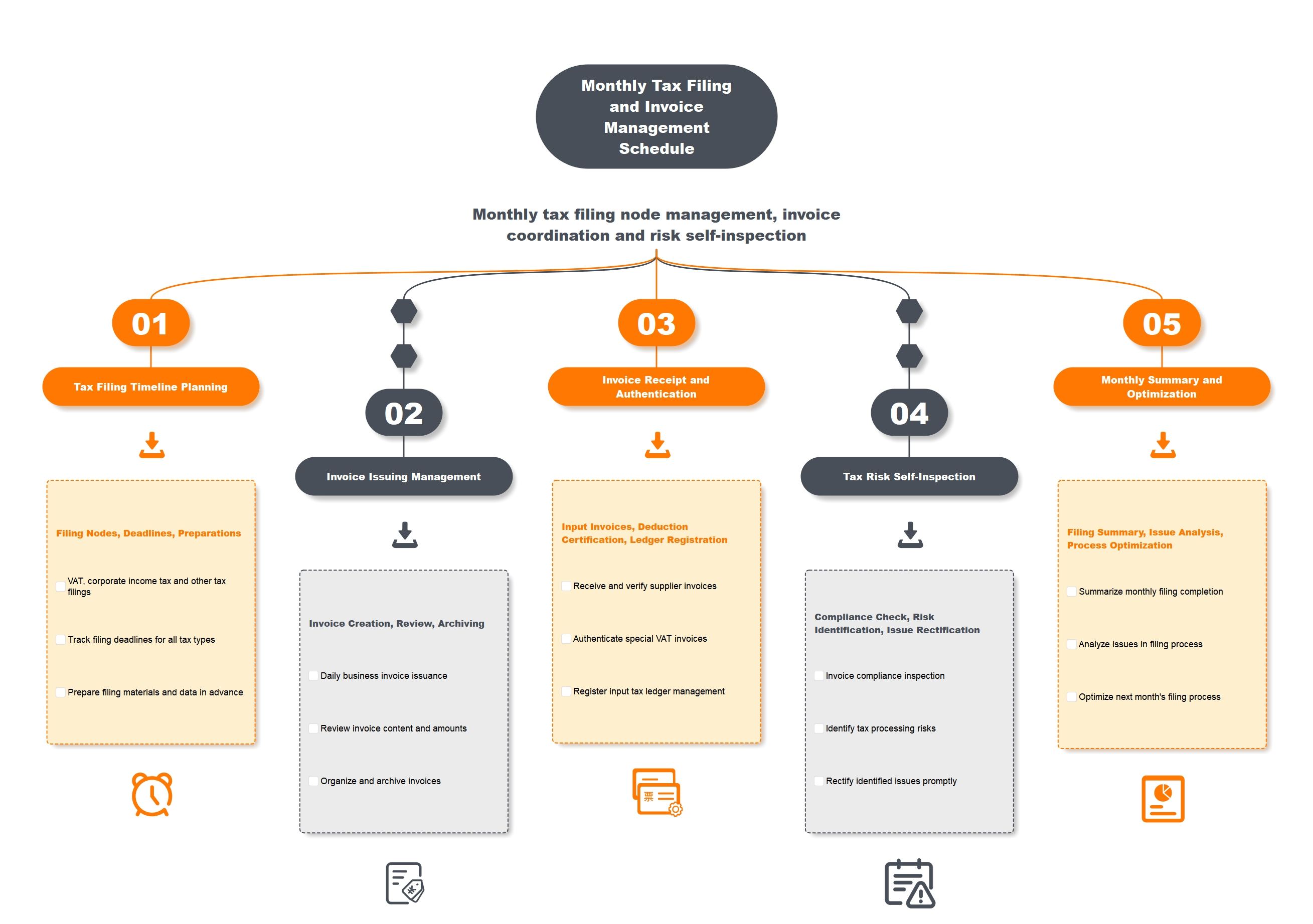
This template is built to show the actual structure of a monthly tax and invoice workflow, not just a general finance checklist. It separates filing preparation, invoice handling, tax verification, risk review, and monthly optimization into distinct branches, making it easier for finance teams to manage the full cycle with more clarity and less operational overlap.
Tax Filing Timeline Planning
This branch focuses on the scheduling side of tax work. It includes filing nodes, deadlines, and preparations, which means the template helps users see when each filing stage happens and what needs to be prepared in advance. It is especially useful for teams that need a clear monthly filing rhythm instead of relying on fragmented reminders.
- Filing Nodes
- Deadlines
- Preparations
Invoice Issuing Management
This section covers the outgoing invoice process, including invoice creation, review, and archiving. It shows that the template is not limited to tax return timing, but also includes the internal work needed to issue business invoices accurately, check invoice details, and keep records properly organized.
- Invoice Creation
- Review
- Archiving
Invoice Receipt and Authentication
This branch handles incoming invoice processing. It includes input invoices, deduction certification, and ledger registration, which means the template also supports supplier invoice handling and input tax management. That makes it more useful for ongoing tax coordination because it covers both outgoing and incoming invoice responsibilities.
- Input Invoices
- Deduction Certification
- Ledger Registration
Tax Risk Self-Inspection
This section focuses on control and risk review. It includes compliance check, risk identification, and issue rectification, showing that the template is not only about finishing routine tasks but also about checking whether the tax process is safe, compliant, and properly corrected when issues appear.
- Compliance Check
- Risk Identification
- Issue Rectification
Monthly Summary and Optimization
This branch closes the monthly cycle by covering filing summary, issue analysis, and process optimization. It gives the template a management layer, because the work does not stop after filing is completed. Instead, the image supports review, learning, and process improvement for the following month.
- Filing Summary
- Issue Analysis
- Process Optimization
FAQs about this Template
-
What is monthly tax filing?
Monthly tax filing is the recurring process of preparing records, checking invoice data, calculating tax obligations, and submitting the required declarations on time. It usually sits inside a wider finance workflow that also includes invoice issuance, verification, reconciliation, and compliance review.
-
How do teams manage tax filing and invoice workflows effectively?
Teams usually manage tax filing and invoice workflows by separating preparation, invoice handling, verification, risk review, and final submission into clear stages. That structure matters because most filing problems come from timing gaps, incomplete support documents, or invoice mismatches rather than from one obvious mistake.
-
Why is invoice authentication important in tax management?
Invoice authentication is important because it affects whether invoice records can be verified, claimed, or used correctly in later tax work. A weak authentication step can create downstream problems in deduction, reconciliation, ledger accuracy, and compliance review, even when the rest of the monthly process looks organized.
-
What's the difference between input invoices and output invoices?
Input invoices are usually related to purchases or costs received by a business, while output invoices are the invoices a business issues for its own sales or services. Understanding the difference is important because the two invoice streams affect bookkeeping, tax treatment, and control checks in different ways.