About this Huawei HarmonyOS Ecosystem Technology Empowerment Architecture Template
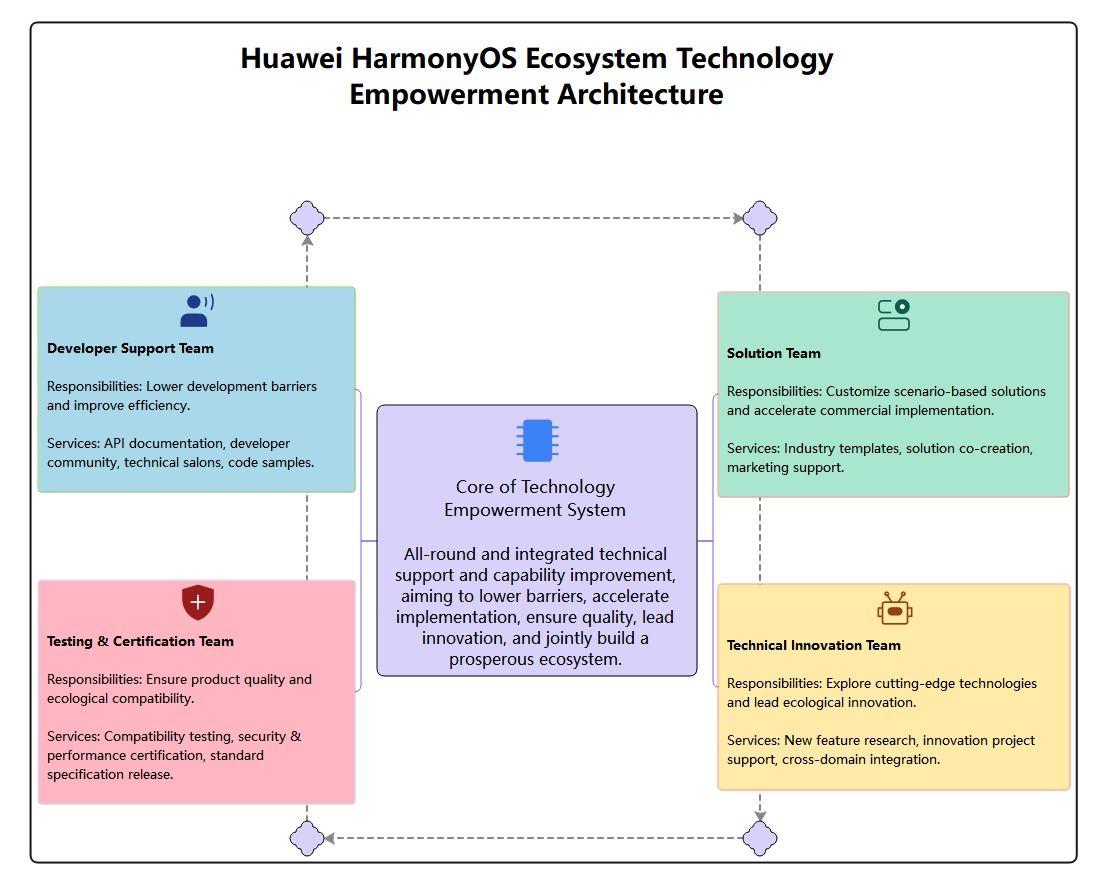
This “Huawei HarmonyOS Ecosystem Technology Empowerment Architecture” template organizes the system around a central capability node, making platform enablement easier to explain in a structured way.
Core of Technology Empowerment System
This central node defines the architecture as a capability-enablement model, giving the rest of the structure a clear conceptual anchor.
- Use this branch to frame the system from the center outward.
- Keep all supporting layers tied back to the core capability idea.
Platform Coordination Layer
This branch can be used to describe how different components or services connect around the core system rather than operating in isolation.
- Use this node to explain coordination across the architecture.
- Keep relationships between modules visible instead of flattened.
Capability Distribution
This branch represents how core technical power is extended across the ecosystem, helping explain what the system enables in practice.
- Use this node to describe what the architecture powers.
- Keep capability output tied to the central system.
Application Support
This branch can hold the practical side of enablement, showing how technology support reaches products, services, or business scenarios.
- Use this node to connect the architecture with actual use cases.
- Keep support roles tied to downstream application needs.
Integration Logic
This branch explains how the architecture stays coherent by linking components, functions, or layers into one system.
- Use this node to describe how the architecture works as a whole.
- Keep integration visible rather than treating branches as isolated.
Expansion Path
This branch can be used to show how the ecosystem grows over time by extending the core model into new scenarios or modules.
- Use this node to represent scalability and extension.
- Keep future-facing structure tied to the current system model.
FAQs about this Template
-
What is an ecosystem architecture?
An ecosystem architecture is a structured view of how different technologies, devices, services, or participants connect to support a larger system. It matters because complex platforms are much easier to understand when relationships and roles are visible instead of buried in isolated descriptions.
-
How does the HarmonyOS ecosystem work?
The HarmonyOS ecosystem works by linking devices, services, and platform capabilities into a coordinated environment that supports interaction across different usage scenarios. Understanding the architecture helps readers see how technical components contribute to a broader connected experience.
-
Why is ecosystem integration important in technology strategy?
Ecosystem integration is important because products rarely create full value alone. The real advantage often comes from how well devices, services, partners, and data work together as one experience instead of behaving like disconnected components.
-
What components should be included in an ecosystem architecture diagram?
An ecosystem architecture diagram should usually include the main platform layers, connected devices or services, enabling technologies, data or interaction flows, and the roles those elements play. The right structure helps people understand both capability and relationship, not just component names.