About this handling complaints from customers process template
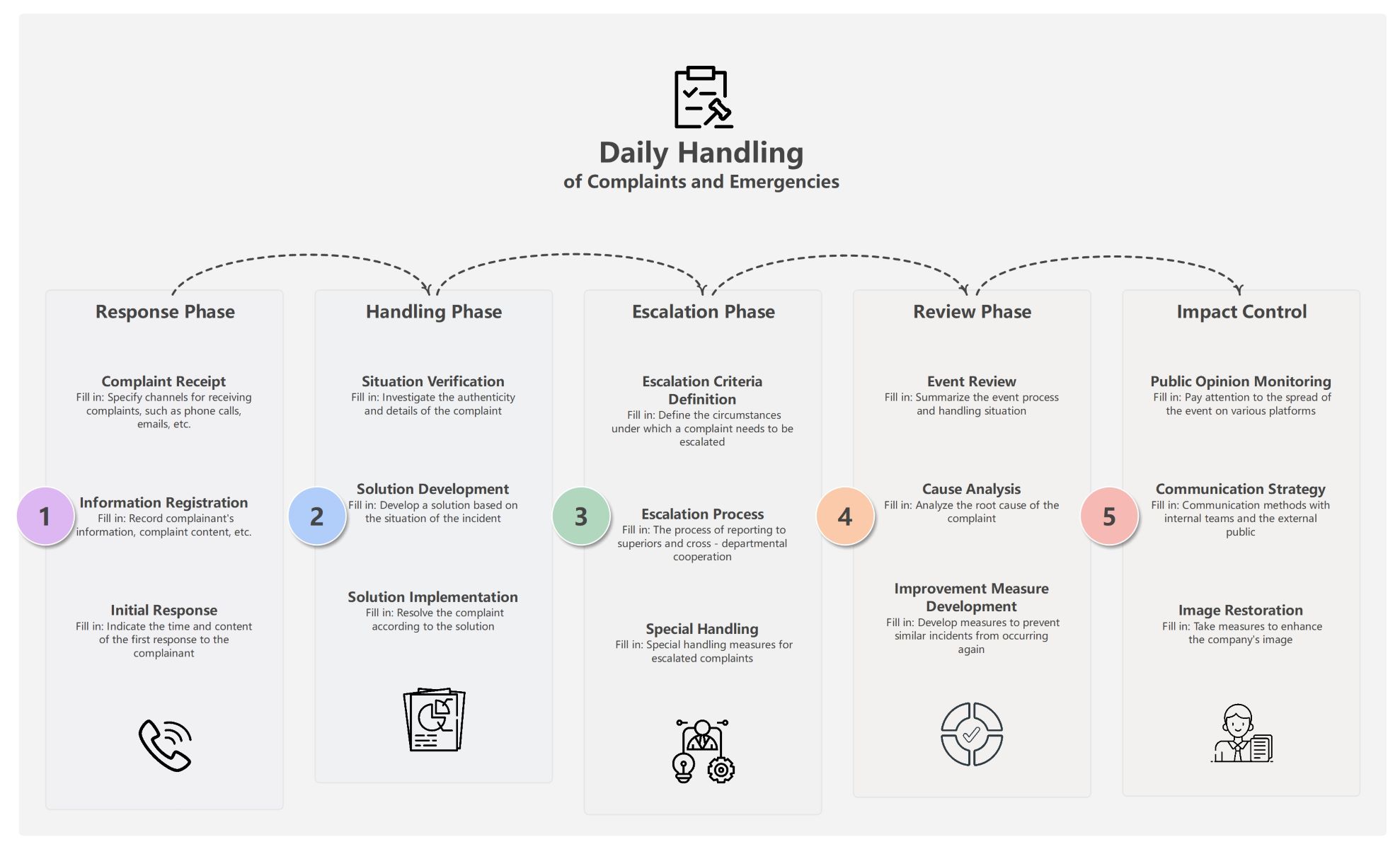
This comprehensive template provides a step-by-step roadmap for managing customer feedback and emergencies. It guides teams through five critical stages, ensuring every issue is tracked, resolved, and used as a learning opportunity to prevent future errors in the workplace.
Response Phase
The first stage focuses on capturing the complaint accurately and acknowledging the customer promptly. It ensures that no feedback is lost and that the customer feels heard from the very first moment of contact.
- Complaint Receipt
- Information Registration
- Initial Response
Handling Phase
During this stage, staff investigate the situation to understand the core problem. By verifying facts and developing a tailored solution, the team can implement effective measures that directly address the specific customer issue.
- Situation Verification
- Solution Development
- Solution Implementation
Escalation Phase
Some complex issues require intervention from senior management or other departments. This phase defines when a complaint needs extra attention and outlines the specific internal reporting path to ensure a swift, high-level resolution.
- Escalation Criteria Definition
- Escalation Process
- Special Handling
Review Phase
After resolving the immediate issue, the team must analyze why the complaint happened. This reflective stage focuses on identifying root causes and creating long-term strategies to improve internal systems and prevent repeated mistakes.
- Event Review
- Cause Analysis
- Improvement Measure Development
Impact Control
Managing the broader effects of a complaint is essential for brand protection. This phase monitors public perception and uses strategic communication to restore the company's image and maintain trust with all stakeholders.
- Public Opinion Monitoring
- Communication Strategy
- Image Restoration
FAQs about this Template
-
Why is an escalation process necessary in complaint handling?
Not every complaint can be solved by frontline staff. An escalation process ensures that complex or high-risk issues reach experienced decision-makers quickly. This prevents delays and shows the customer that the company takes their serious concerns seriously. Having clear criteria for when to escalate also empowers staff to seek help without feeling they have failed in their roles.
-
How does a review phase help improve customer service?
The review phase is where true business growth happens. By analyzing root causes instead of just fixing symptoms, a company can change its workflows to avoid similar problems. This proactive approach reduces the volume of future complaints and enhances overall service quality. It transforms individual customer frustrations into valuable data that drives continuous improvement across the entire organization.
-
What is the benefit of public opinion monitoring in impact control?
In the digital age, a single complaint can spread rapidly on social media. Monitoring public opinion allows a business to see where negative sentiment is growing. By identifying these trends early, companies can respond publicly and transparently. This strategy helps mitigate brand damage and demonstrates that the business is attentive to community feedback and committed to maintaining high standards.