About this Customer Churn Management template
This template provides a comprehensive framework for identifying at-risk customers and winning them back. It covers everything from data mining to executing personalized recovery strategies, helping businesses systematically reduce their churn rate and improve retention.
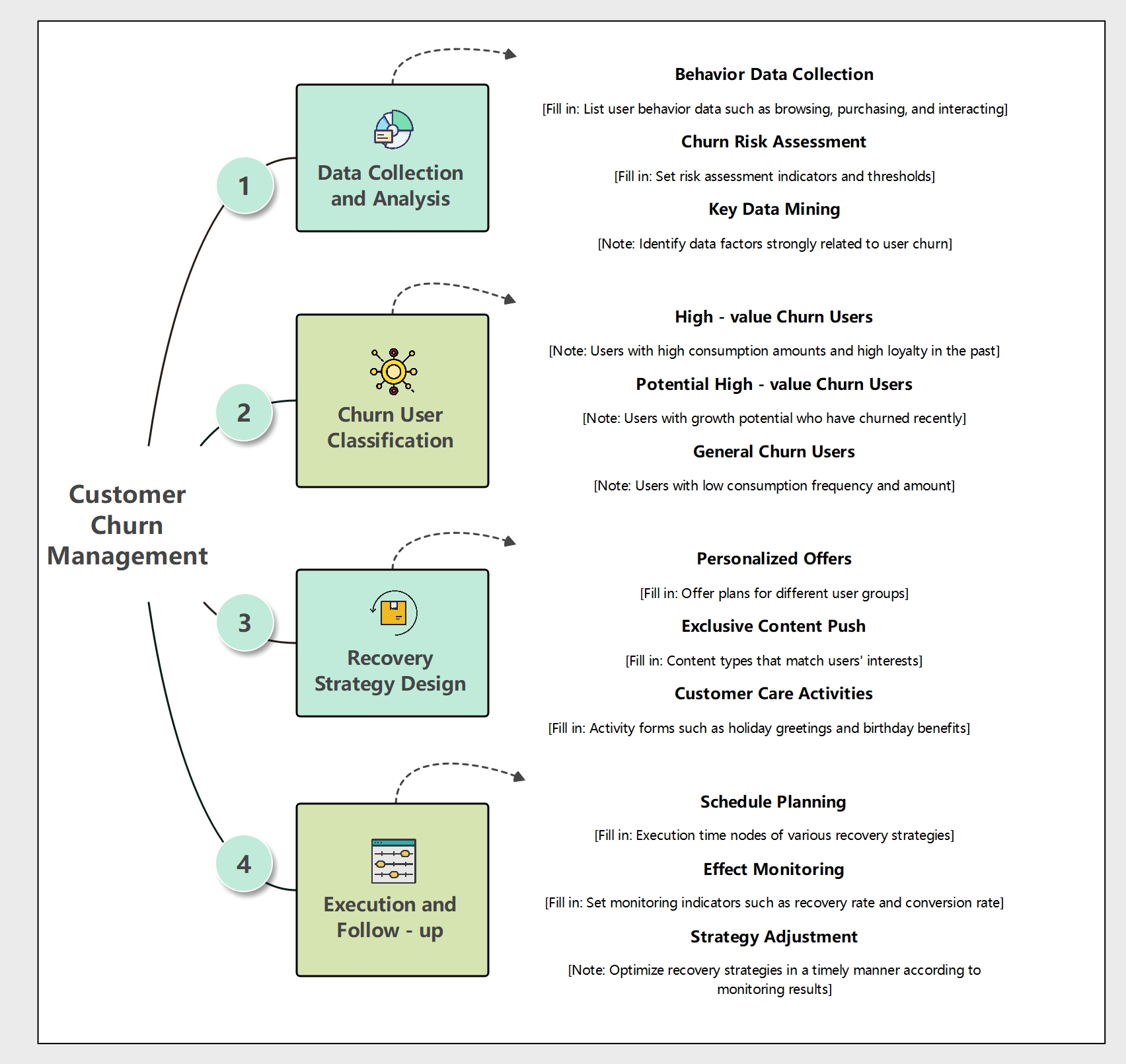
Data Collection and Analysis
Effective churn management starts with gathering deep insights into user behavior. Companies must identify specific triggers and risk indicators to predict when a customer might leave and what factors are driving that decision.
- Behavior Data Collection
- Churn Risk Assessment
- Key Data Mining
Churn User Classification
Not all customers who leave are the same. Segmenting users based on their historical value and potential growth allows businesses to prioritize their recovery efforts where they will have the most significant financial impact.
- High-value Churn Users
- Potential High-value Churn Users
- General Churn Users
Recovery Strategy Design
Once users are categorized, teams develop tailored incentives to bring them back. This involves creating unique offers, specialized content, and personalized outreach that addresses the specific needs or interests of each different customer segment.
- Personalized Offers
- Exclusive Content Push
- Customer Care Activities
Execution and Follow-up
The final stage focuses on putting plans into action and measuring success. Continuous monitoring allows for real-time strategy adjustments, ensuring that the recovery efforts remain effective and result in higher conversion and retention rates.
- Schedule Planning
- Effect Monitoring
- Strategy Adjustment
FAQs about this Template
-
How do you identify customers at risk of churning?
Identifying at-risk customers requires monitoring behavior data like declining usage frequency or missed payments. By setting specific risk assessment thresholds, you can flag users before they officially leave. Key data mining helps uncover patterns, such as a drop in website interaction, which serves as an early warning sign. This proactive approach allows teams to intervene with targeted support or offers.
-
Why is user classification important in churn management?
User classification helps businesses prioritize resources effectively by focusing on high-value clients who contribute most to revenue. Not all churned users warrant the same level of recovery effort. By segmenting customers into categories like high-value or potential-growth users, you can design cost-effective strategies. This ensures that expensive personalized offers are reserved for those with the highest long-term lifetime value.
-
How can you measure the success of a recovery strategy?
Measuring success involves tracking key performance indicators such as the recovery rate and the conversion rate of win-back offers. Effect monitoring provides data on whether specific personalized content or incentives actually brought users back. If results are poor, strategy adjustment is necessary to optimize the timing or nature of the outreach. Continuous analysis ensures your retention budget is spent efficiently.