About this User Satisfaction Survey Plan template
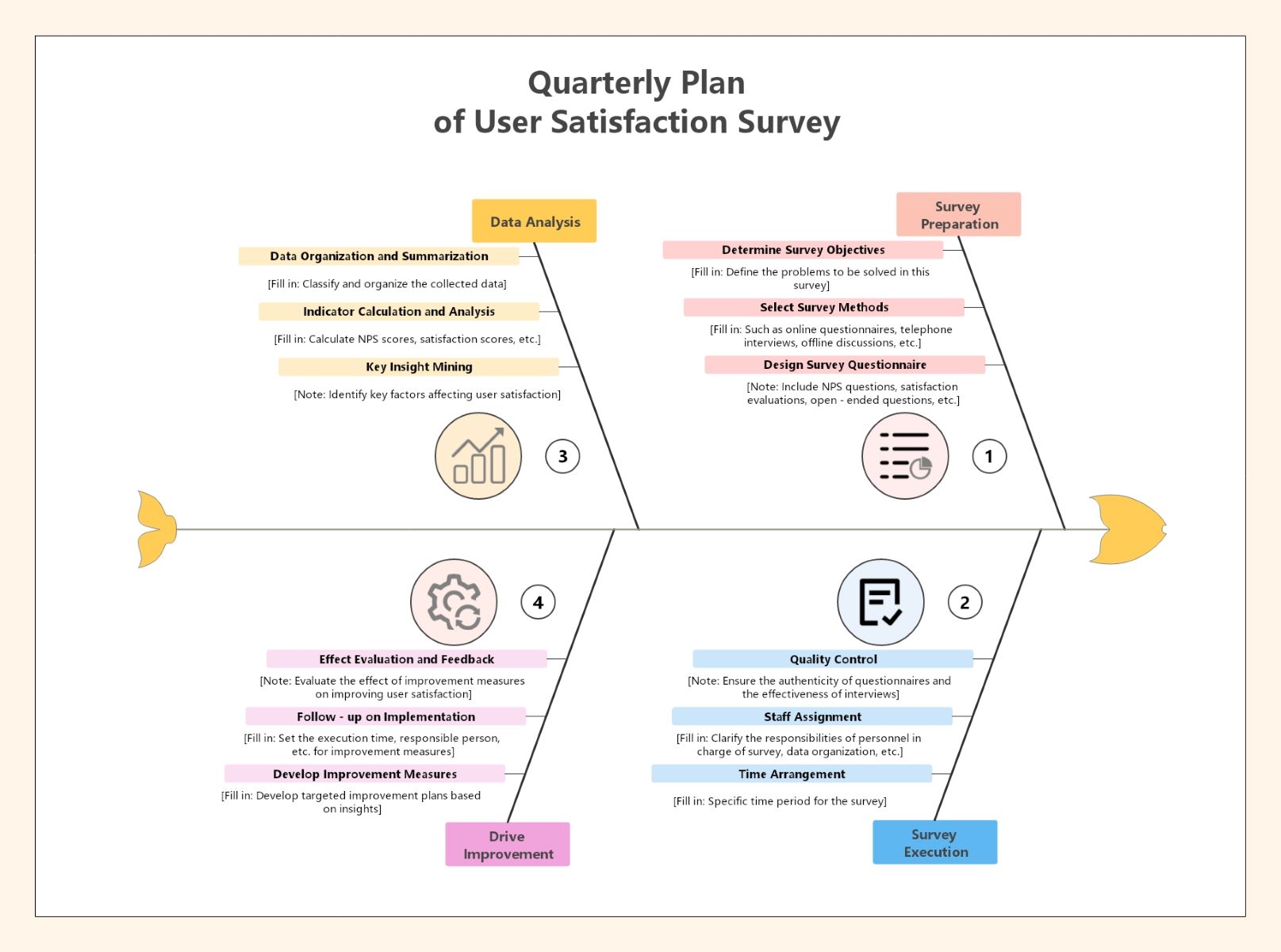
This template provides a clear roadmap for conducting quarterly feedback reviews. It uses a fishbone structure to help marketing and product teams organize preparation, execution, and analysis. Use it to ensure every survey step is intentional and results-driven.
Survey Preparation
This stage focuses on setting clear goals and choosing the right tools for data collection. By defining objectives early, you ensure the questionnaire gathers relevant insights that actually help solve business problems for your marketing team.
- Determine Survey Objectives
- Select Survey Methods
- Design Survey Questionnaire
Survey Execution
Execution involves managing the logistics of the survey to ensure high-quality data. This step requires clear staff roles and strict timelines. Proper quality control measures are used here to maintain the authenticity of all feedback responses.
- Quality Control
- Staff Assignment
- Time Arrangement
Data Analysis
In this phase, raw feedback is organized and turned into meaningful numbers like NPS scores. Analyzing these metrics helps identify the key factors affecting user happiness. It bridges the gap between raw data and actionable strategic insights.
- Data Organization and Summarization
- Indicator Calculation and Analysis
- Key Insight Mining
Drive Improvement
The final stage focuses on turning survey results into real-world changes. Teams develop targeted plans and track their implementation over time. Evaluating the feedback loop ensures that the measures taken actually improve the overall user experience effectively.
- Effect Evaluation and Feedback
- Follow-up on Implementation
- Develop Improvement Measures
FAQs about this Template
-
What is the most important part of a satisfaction survey plan?
The most critical part is defining clear survey objectives before starting. Without specific goals, you might collect data that is difficult to use for improvements. Clear objectives help you design better questions and select the right target audience. This focus ensures that your final analysis provides actionable insights that can truly solve existing problems and increase customer loyalty over time.
-
How often should a company conduct user satisfaction surveys?
Most businesses find success by conducting surveys on a quarterly basis. This frequency allows you to track changes in user sentiment without overwhelming your customers with too many requests. A quarterly schedule provides enough time to implement improvements based on previous feedback. It also ensures your team stays updated on new trends and can react quickly to any negative shifts in user experience.
-
Why is quality control necessary in survey execution?
Quality control is essential to ensure that the data you collect is authentic and reliable. It involves checking for duplicate responses, verifying interview effectiveness, and monitoring the staff’s performance. If the data is flawed, your entire analysis will lead to incorrect conclusions. High-quality execution protects your investment and ensures that your business decisions are based on real facts rather than errors or biases.