About this user lifecycle management template
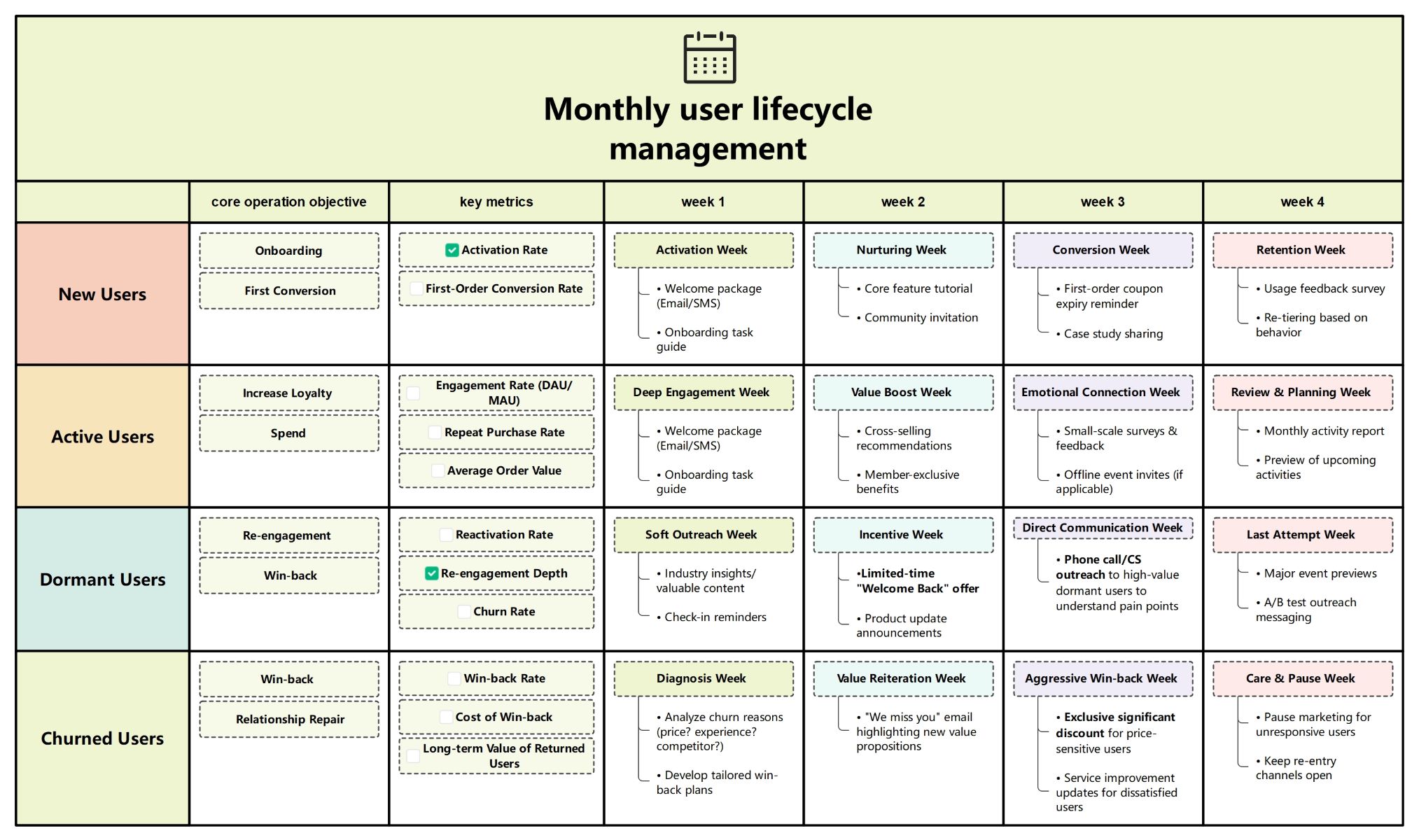
This template provides a comprehensive four-week roadmap for managing different user segments. It categorizes users into new, active, dormant, and churned groups. Use this guide to align your marketing operations, track essential metrics, and implement specific weekly tasks for growth.
Managing New User Onboarding
First impressions are critical for long-term success with new customers. This section focuses on activation and first-order conversions. By guiding users through their first month, you ensure they find value early and remain engaged with your brand.
- Welcome package via Email or SMS
- Onboarding task guide and tutorials
- First-order coupon expiry reminders
- Usage feedback surveys for improvement
Driving Active User Loyalty
Keeping current customers engaged is more cost-effective than acquiring new ones. This phase focuses on increasing loyalty and average order value. Through cross-selling and emotional connections, you can transform regular buyers into dedicated brand advocates during the month.
- Exclusive member benefits and offers
- Cross-selling and personalized recommendations
- Monthly activity reports and previews
- Small-scale surveys for direct feedback
Re-engaging Dormant User Groups
Dormant users represent a significant opportunity for recovery before they churn completely. The strategy involves soft outreach and targeted incentives. By understanding their pain points through direct communication, you can successfully reactivate their interest and bring them back.
- Industry insights and valuable content
- Limited-time welcome back offers
- Direct phone calls for high-value users
- A/B testing outreach messaging styles
Winning Back Churned Customers
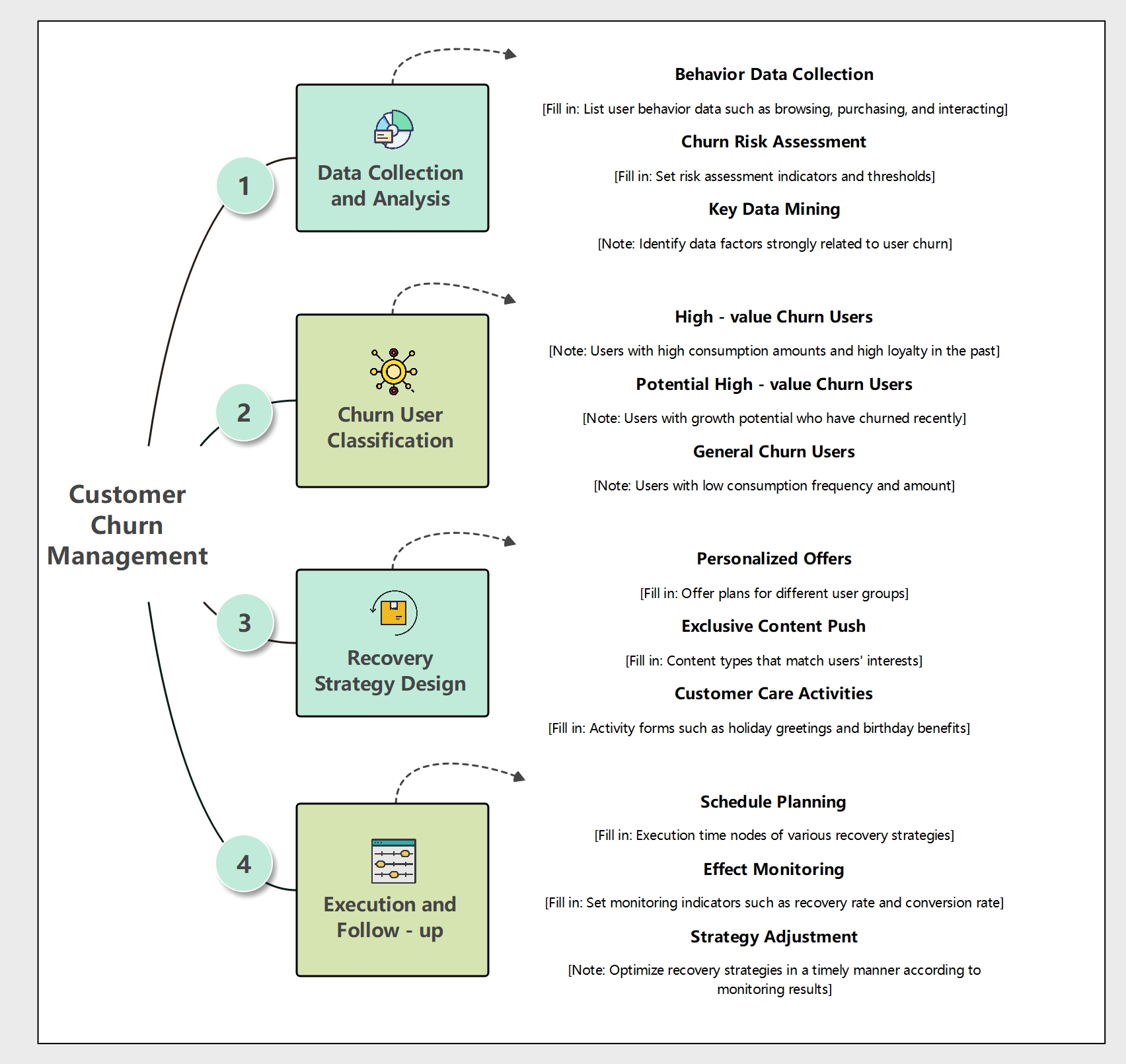
Losing a customer is not always permanent if handled correctly. This section outlines a diagnosis and repair strategy. By highlighting new value propositions and offering aggressive discounts, you can mend the relationship and encourage users to return to your platform.
- Analyze reasons for customer churn
- Highlighting new value propositions
- Exclusive significant discounts for users
- Pause marketing for unresponsive contacts
FAQs about this Template
-
What are the primary stages of user lifecycle management?
User lifecycle management typically involves four main stages: acquisition, engagement, retention, and win-back. Acquisition focuses on bringing new users in, while engagement ensures they use the product effectively. Retention aims to keep active users happy over time. Finally, win-back strategies target dormant or churned users to encourage them to return and find value in the service again.
-
Why is tracking key metrics important in the user lifecycle?
Tracking metrics like activation rates and churn helps businesses understand the health of their customer base. Without these data points, it is difficult to identify where users are dropping off or losing interest. By monitoring specific KPIs, teams can make informed decisions, optimize their weekly marketing tasks, and allocate resources more efficiently to areas that drive the highest growth and ROI.
-
How can personalized communication improve user retention?
Personalization builds a stronger emotional connection between the brand and the user. When customers receive content tailored to their specific behavior or needs, they feel valued and understood. This relevance reduces the likelihood of churn and increases brand loyalty. Using tutorials, special offers, and feedback surveys allows companies to address individual pain points, making the user experience more satisfying and productive overall.