About this Daily Follow-Up and Archiving Sheet for Sales Contracts Template
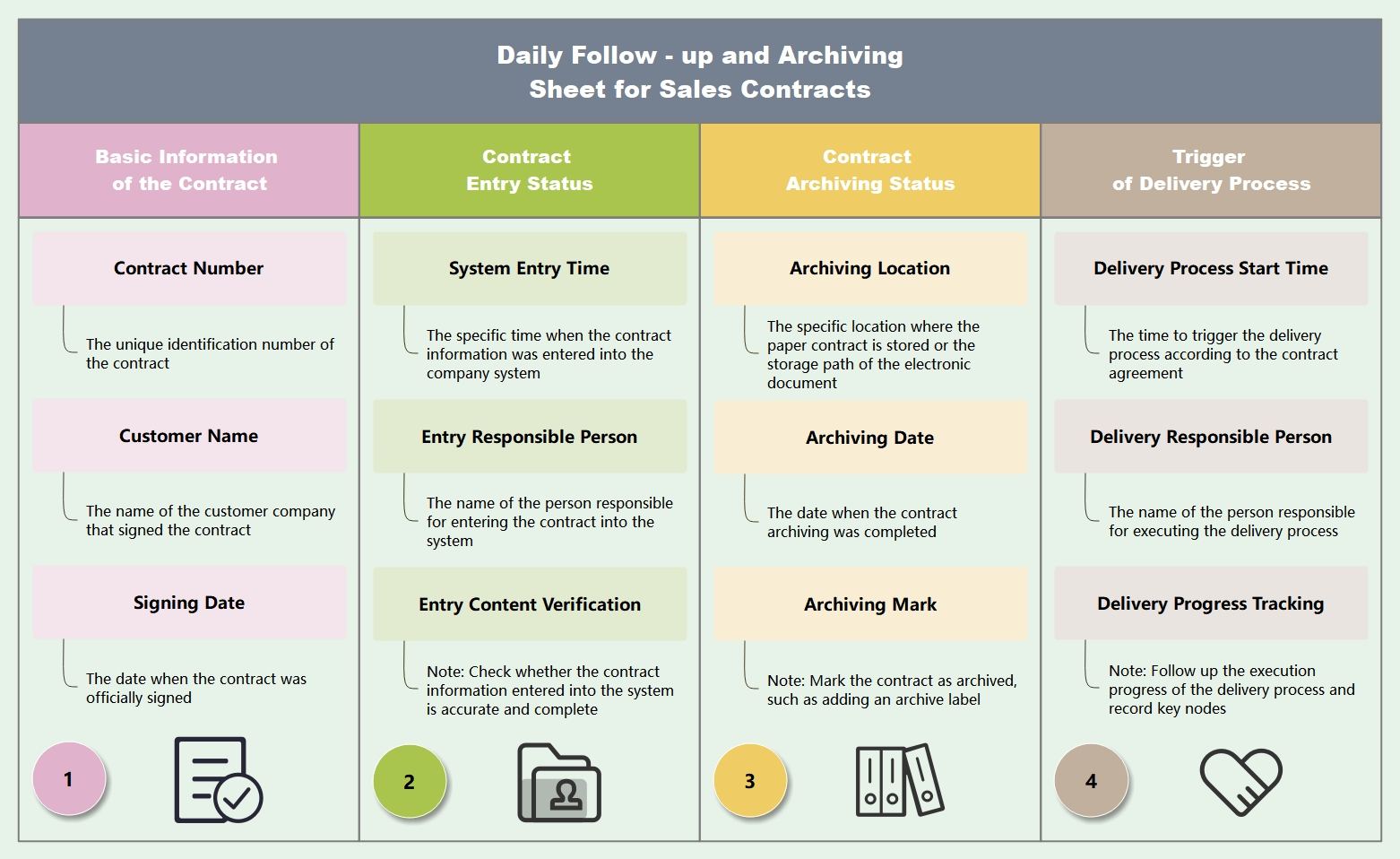
This “Daily Follow-Up and Archiving Sheet for Sales Contracts” template turns contract management into a node-based record system, making follow-up and filing work easier to track day by day.
Contract Number
This node gives each contract a clear identifier so the rest of the record can always be traced back to a specific agreement.
- Use this field to keep each contract uniquely traceable.
- Tie all follow-up records back to the same contract number.
Customer Name
This branch anchors the record to the company or client involved, making account-level follow-up much easier to manage.
- Use this field to identify the signing customer clearly.
- Keep customer-level follow-up linked to the same contract branch.
Signing Date
This node records when the agreement was finalized, helping teams understand contract timing and filing order.
- Use this field to track the official contract start point.
- Keep timeline-related follow-up tied to the signing date.
Follow-Up Status
This branch shows whether the contract is pending, progressing, or complete, giving the sheet practical value beyond storage.
- Use this field to reflect current follow-up progress.
- Update status consistently so the sheet stays operational.
Archiving Progress
This node tracks whether the contract has already been filed, is awaiting completion, or still needs supporting documents.
- Use this field to separate active work from finished filing.
- Keep archiving steps visible to avoid missed records.
Responsible Person
This branch ties the record to an owner, making accountability and later coordination easier during contract management.
- Use this field to assign responsibility clearly.
- Keep follow-up work connected to a named owner.
FAQs about this Template
-
What should be tracked in sales contract follow-up?
Sales contract follow-up should usually track status, approvals, obligations, deadlines, renewal or delivery milestones, and any unresolved issues that could affect execution. Good follow-up helps teams treat the contract as an active operational commitment instead of a file that disappears after signature.
-
How do teams archive sales contracts effectively?
Teams usually archive sales contracts effectively by using clear naming rules, consistent storage logic, version control, and accessible metadata so people can find the right document quickly later. Good archiving is not just filing. It protects continuity, auditability, and future review work.
-
Why is contract follow-up important?
Contract follow-up is important because many business risks appear after the contract is signed rather than before. Weak follow-up can lead to missed obligations, renewal surprises, billing confusion, or disputes that could have been prevented through better visibility.
-
What's the difference between contract tracking and contract archiving?
Contract tracking focuses on the active status and obligations of a live agreement, while contract archiving focuses more on storage, retrieval, and record integrity. Both are necessary, but they support different parts of the contract lifecycle.