About this Project Team Capability Building Planning template
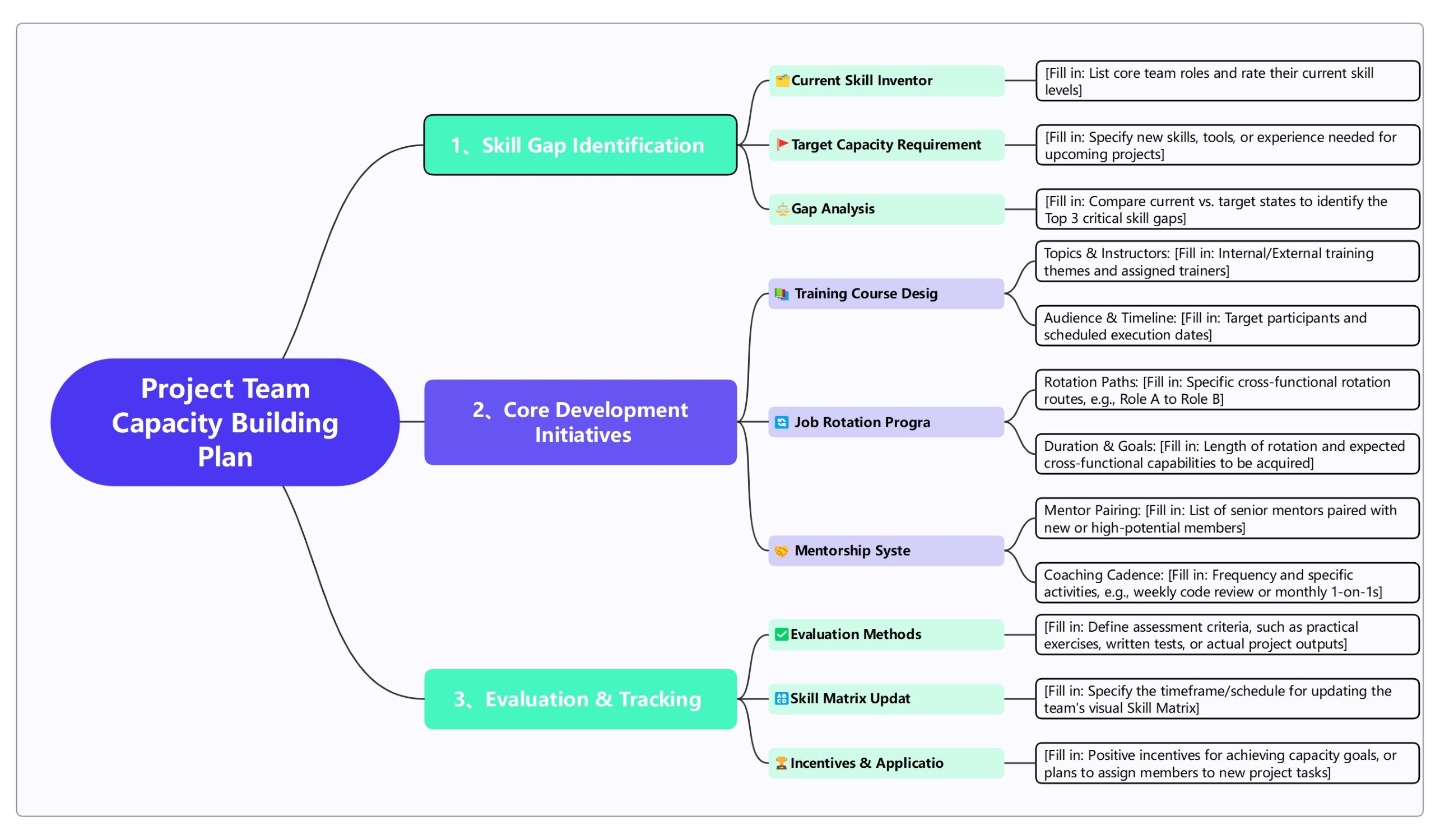
This template provides a clear roadmap for improving your team's expertise. It breaks down the complex process of talent development into three manageable stages. Use this visual guide to align your staff's skills with the strategic goals of your upcoming projects.
Skill Gap Identification
This section focuses on assessing the current abilities of your team members. It compares existing skills against future project needs. Managers can then pinpoint specific areas where the team requires more training to meet project goals.
- Current Skill Inventor
- Target Capacity Requirement
- Gap Analysis
Core Development Initiatives
This part outlines the various strategies used to improve team skills. It includes structured training sessions, practical job rotations, and mentorship programs. These activities provide hands-on experience and theoretical knowledge to help every employee grow professionally.
- Training Course Design
- Job Rotation Program
- Mentorship System
Evaluation & Tracking
This stage ensures that the training programs are actually working as intended. It involves testing team members and updating visual skill maps. Good tracking helps managers recognize progress and provide rewards to those who meet their goals.
- Evaluation Methods
- Skill Matrix Update
- Incentives & Application
FAQs about this Template
-
How do you identify team skill gaps effectively?
Identifying skill gaps begins with a thorough inventory of current employee roles and their proficiency levels. Managers compare these traits against the technical requirements of upcoming projects. This process highlights specific weaknesses that need training. By documenting these gaps, teams can create a focused roadmap for professional growth. This ensures everyone is prepared for future project demands and can handle complex tasks.
-
What are effective core development initiatives for projects?
Effective development initiatives include formal training courses, mentorship programs, and cross-functional job rotations. Training courses provide theoretical knowledge and technical skills. Mentorship allows experienced staff to guide newer employees through complex tasks. Job rotations help members learn different aspects of the project. These combined efforts create a well-rounded team that can handle various roles and responsibilities successfully while fostering collaboration.
-
Why is tracking and evaluation important for capability building?
Tracking progress is vital because it measures the effectiveness of your development plan. It allows managers to see if training translates into better project performance. By using evaluation methods like tests or practical exercises, you can verify skill acquisition. Regular updates to the skill matrix also keep the team motivated. This data helps in making informed decisions about future training investments and rewards.