About Weekly Calculation and Analysis of Production Costs Template
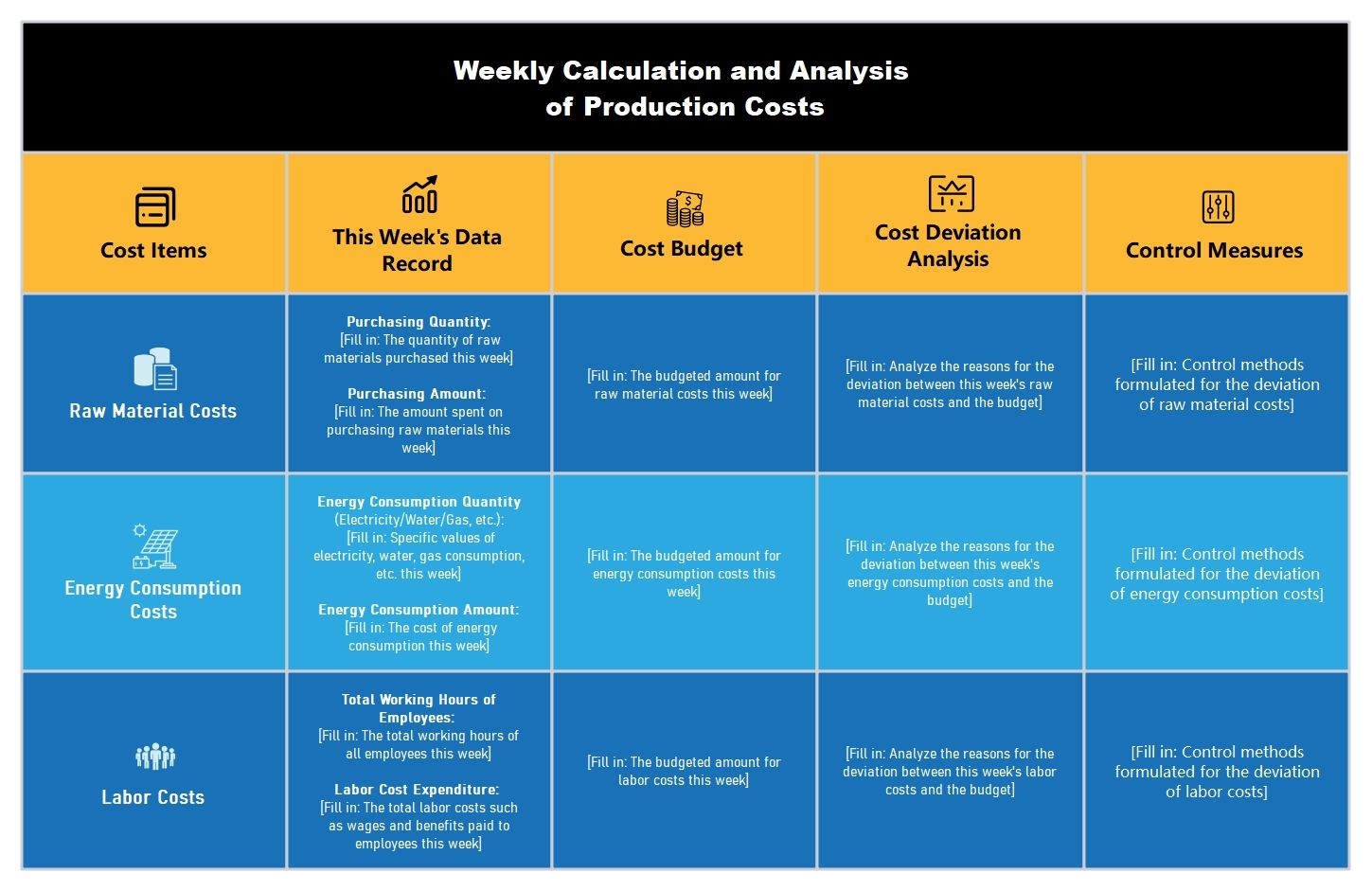
This template is designed to explain weekly calculation and analysis of production costs through a clear branch structure rather than a vague general summary. It shows the main content areas directly inside the map, helping readers understand what the template includes and how each section contributes to the full topic.
Cost Data Collection
This section focuses on the monitoring layer of the template. It helps show how information is collected, analyzed, or tracked, making the image more practical for ongoing review and decision support.
Calculation Items
This branch represents one of the main content areas shown in the template. It helps explain what information is included in this part of the image and why this section matters to the overall structure rather than functioning as a generic placeholder.
Variance Analysis
This section focuses on the monitoring layer of the template. It helps show how information is collected, analyzed, or tracked, making the image more practical for ongoing review and decision support.
Issue Follow-Up
This section highlights the control side of the template. It shows how risks, issues, or problem points are identified and handled, which adds a stronger management function to the page.
FAQs about this Template
-
How do you calculate production costs?
Production costs are usually calculated by combining the main cost components involved in making output, such as materials, labor, and overhead where relevant. The exact method depends on the production model, but consistent calculation is necessary if teams want useful cost comparison over time.
-
What should be included in a weekly production cost analysis?
A weekly production cost analysis should usually include major cost drivers, unit cost movement, abnormal variance, waste or loss factors, and the operational reasons behind any meaningful change. Good analysis explains not only the number, but also why it moved.
-
Why is weekly cost tracking important in production?
Weekly cost tracking is important because cost problems often build gradually through waste, inefficiency, rework, or input changes rather than one dramatic event. A shorter review cycle helps teams notice movement earlier and act before the issue becomes expensive or harder to reverse.
-
What's the difference between direct and indirect production costs?
Direct production costs are usually tied closely to making the product itself, while indirect costs support the production environment more broadly and are not always assigned as clearly to one output. Understanding the difference helps teams analyze where cost pressure is actually coming from.