About this LSAT Study Plan Template
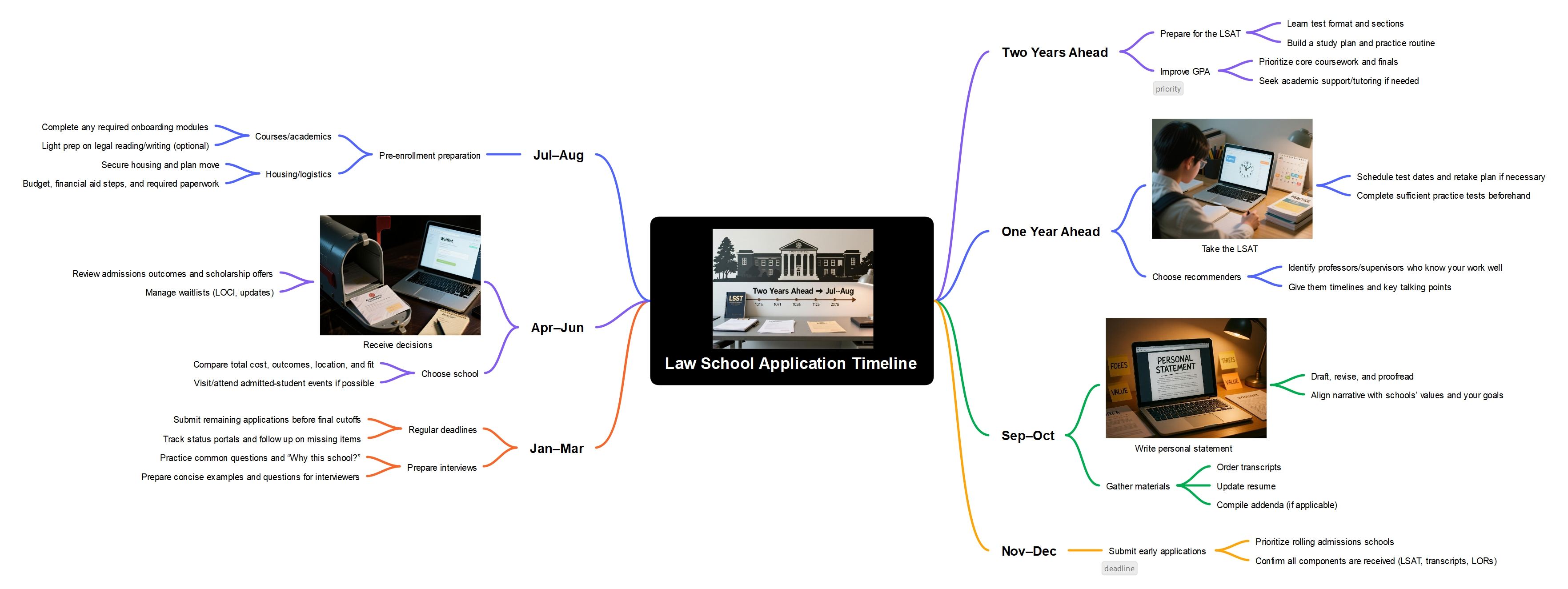
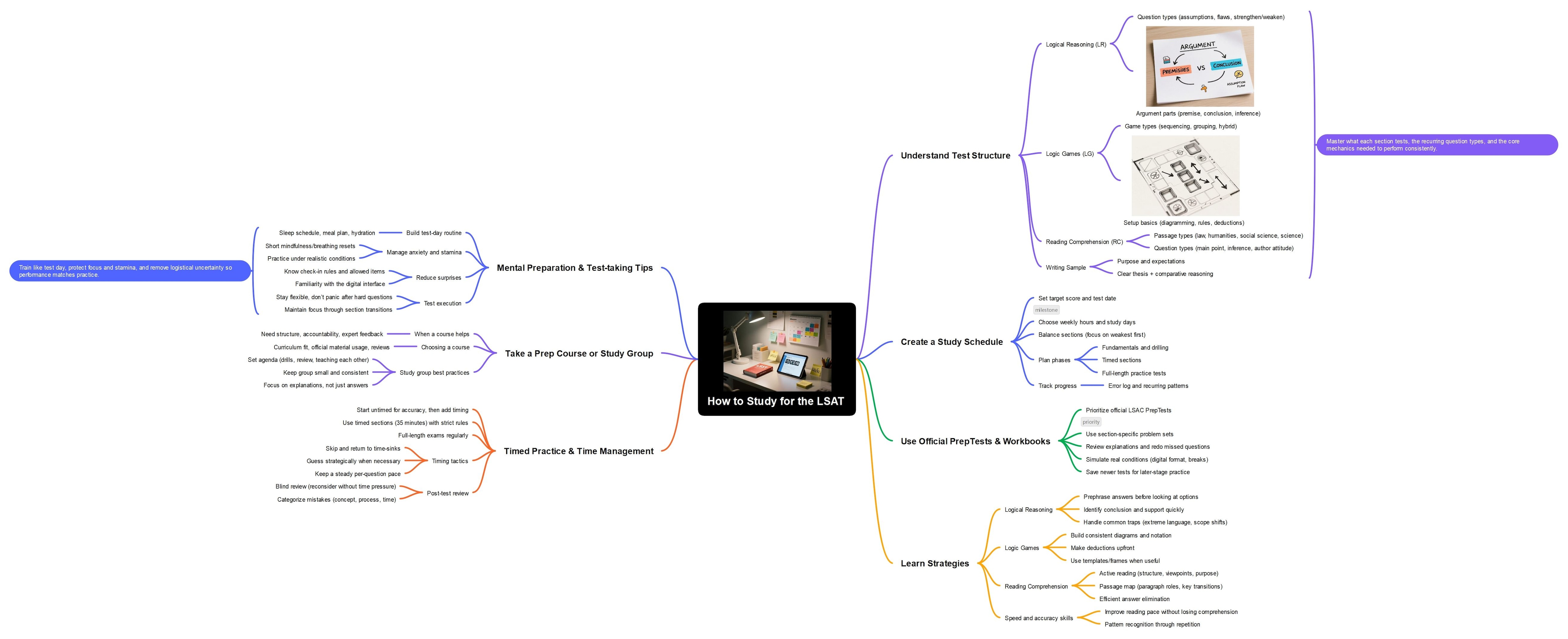
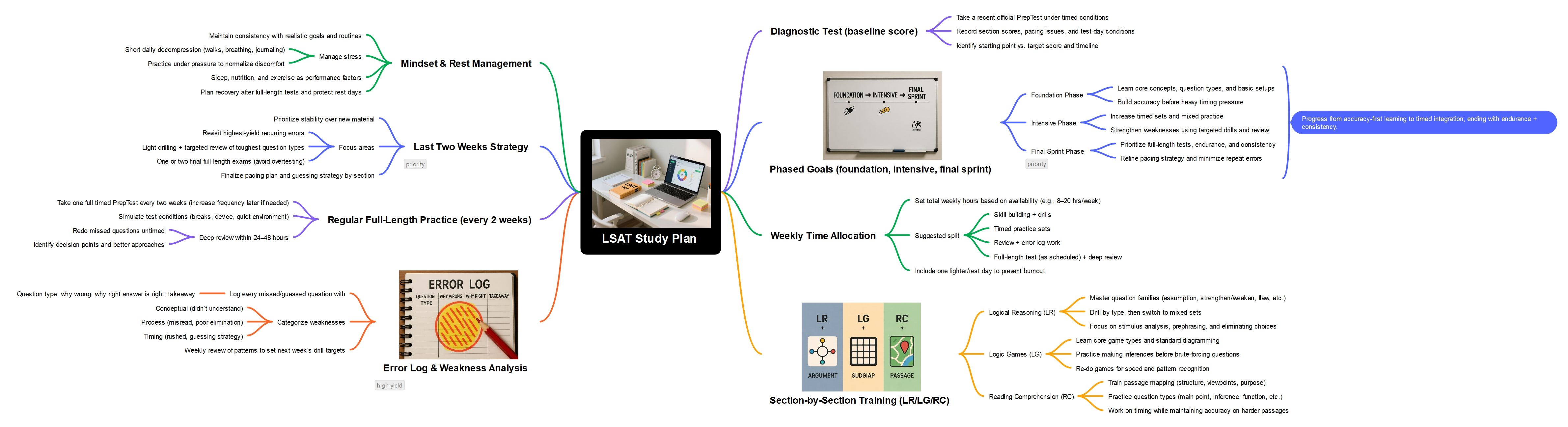
This “LSAT Study Plan” template structures preparation into phases, section training, and review habits, making long-term LSAT study easier to manage.
Diagnostic Test (baseline score)
This branch establishes a starting point for preparation, helping test-takers measure current performance before building the rest of the plan.
- Use this node to record the first timed result.
- Keep later progress tied to the initial baseline.
Take a recent official PrepTest under timed conditions
This branch emphasizes realistic practice conditions so the baseline reflects actual testing pressure rather than casual review.
- Use this node to anchor the first serious practice session.
- Keep timing realism built into the study plan.
Record section scores, pacing issues, and test-day conditions
This branch turns the diagnostic into usable data by capturing how performance varies across sections and conditions.
- Use this node to track weaknesses systematically.
- Keep pacing notes visible for later adjustment.
Identify starting point vs. target score and timeline
This branch connects current performance to long-range goals, helping students build a plan that matches both ambition and available time.
- Use this node to align goals with schedule reality.
- Keep score targets tied to a real timeline.
Phased Goals (foundation, intensive, final sprint)
This branch introduces the broader study structure, dividing preparation into phases instead of treating it as one flat routine.
- Use this node to separate stages of preparation.
- Keep each phase tied to a different type of work.
Foundation Phase
This branch highlights the early stage of study, where understanding methods and building consistency matter more than speed alone.
- Use this node to group core concept work.
- Keep early-stage priorities separate from full-test pressure.
FAQs about this Template
-
What is the LSAT?
The LSAT, or Law School Admission Test, is a standardized exam used by many law schools as part of the admissions process. It is designed to measure skills such as reading comprehension, reasoning, and analytical thinking rather than testing whether someone already knows substantive law.
-
How do you study for the LSAT effectively?
The most effective way to study for the LSAT is to build a structured plan around timed practice, logic-heavy review, and regular analysis of mistakes. Strong preparation usually combines official-style questions, pattern recognition, pacing control, and enough repetition to improve both accuracy and confidence over time.
-
Why is the LSAT important?
The LSAT is important because it is a major admissions factor for many law schools and can affect both acceptance outcomes and scholarship opportunities. A stronger score can improve options significantly, which is why focused preparation matters even for applicants with solid academic records.
-
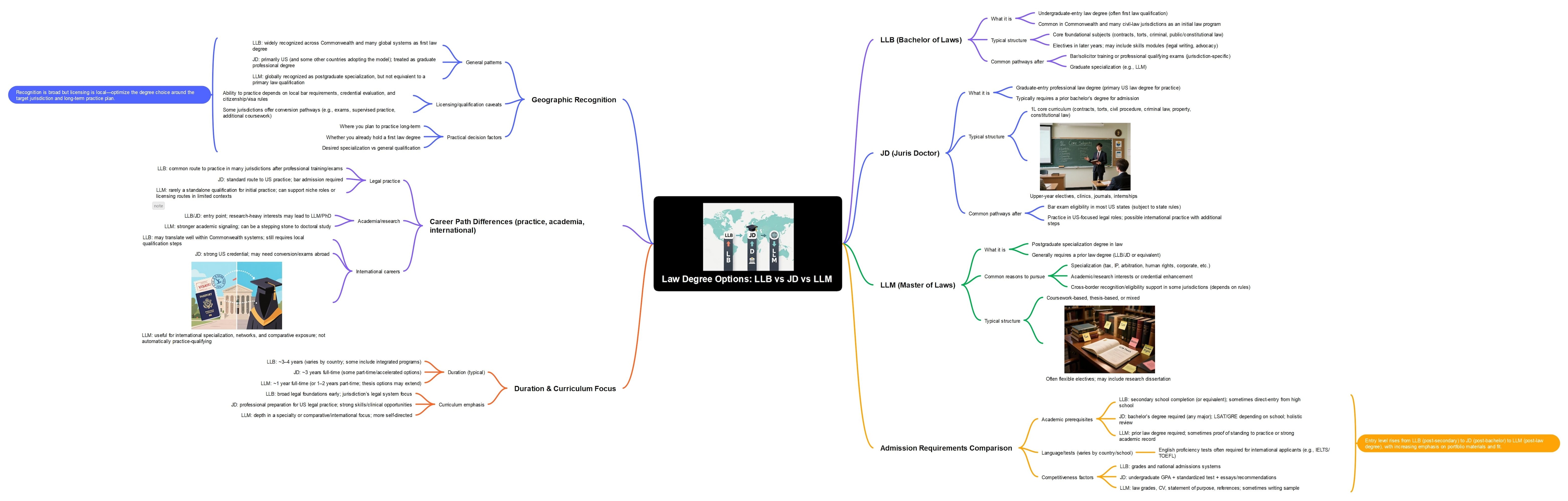
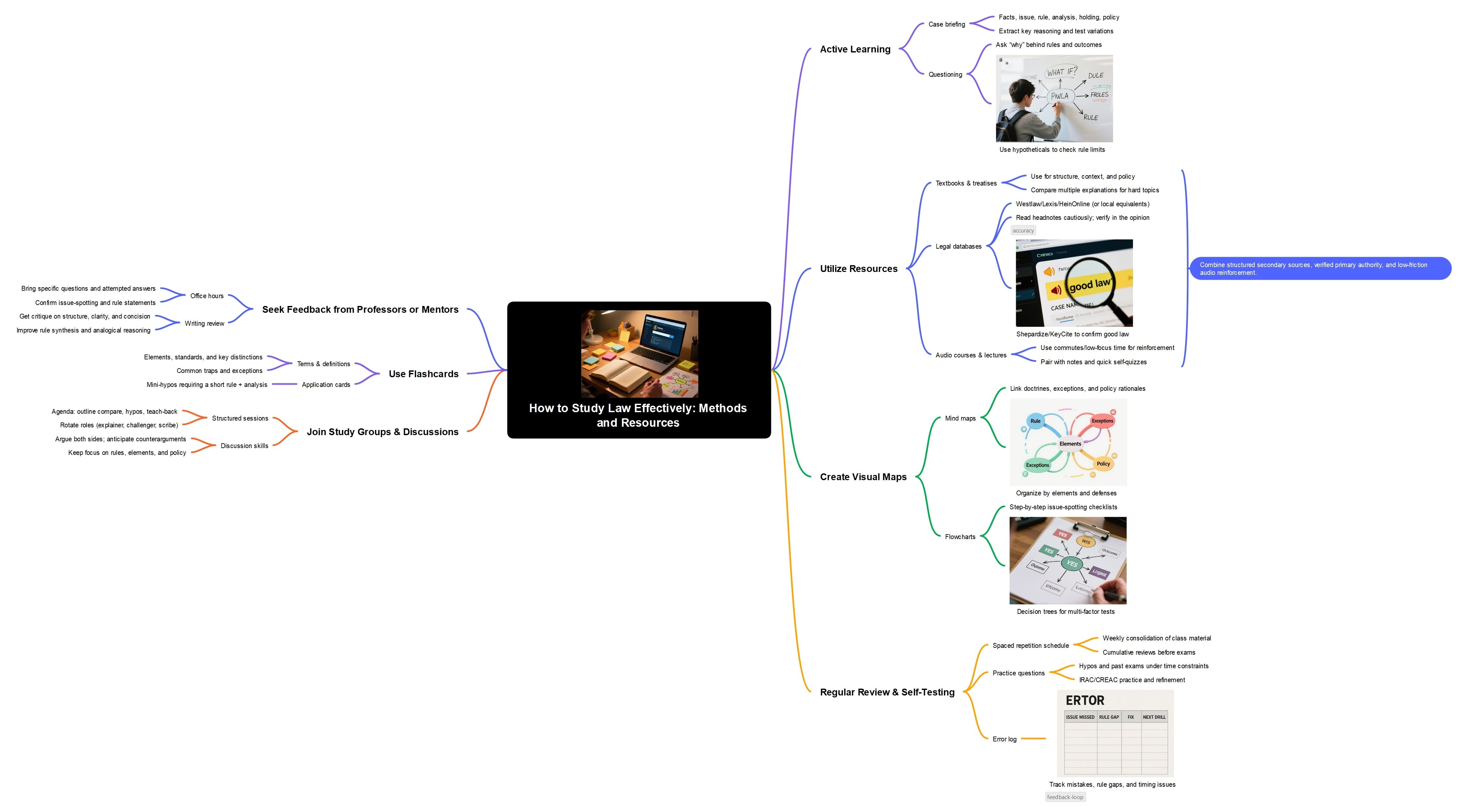
What's the difference between LSAT practice and general law study?
LSAT practice focuses on reasoning, reading, timing, and question strategy, while general law study focuses more on legal concepts, cases, doctrines, and interpretation. That difference matters because doing well on the LSAT requires exam-specific preparation rather than simply reading more about law as a subject.