About this ACT Preparation Core Strategy template
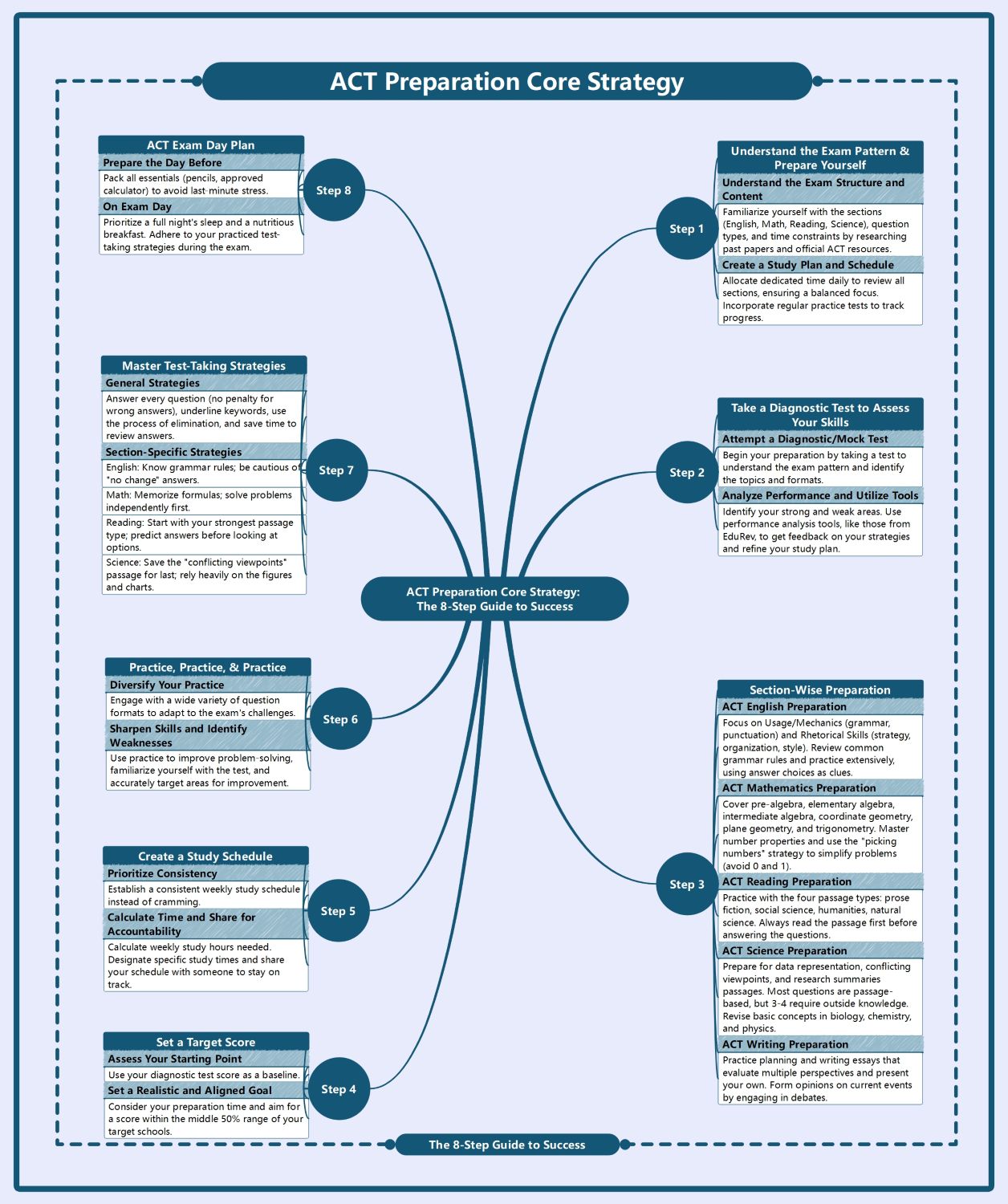
This comprehensive template provides an 8-step roadmap for students preparing for the ACT. It guides users through diagnostic testing, section-specific study techniques, and final exam day plans to ensure peak performance and efficient time management throughout the process.
Understand the Exam Pattern
Start your preparation by researching the ACT structure and timing. Knowing the content for English, Math, Reading, and Science helps you build a solid foundation. This ensures you are never surprised on test day.
- Familiarize yourself with section types
- Research official ACT resources
- Create a balanced daily study plan
- Incorporate regular practice tests
Assess Skills with Diagnostic Tests
Taking a mock test early helps you identify your current strengths and weaknesses. Use performance analysis tools to see where you need improvement. This data allows you to refine your study plan for maximum efficiency.
- Attempt a full-length mock test
- Analyze performance for weak areas
- Use tools like EduRev for feedback
- Identify your starting score baseline
Master Section-Wise Preparation
Every ACT section requires a unique approach to study. Focus on grammar rules for English and algebra for Math. For Reading and Science, practice interpreting data and reading passages quickly. These targeted efforts lead to results.
- English: Review grammar and usage rules
- Math: Solve geometry and trigonometry problems
- Reading: Practice with various passage types
- Science: Interpret data and research summaries
- Writing: Plan and practice multi-perspective essays
Set Goals and Create Schedules
Setting a target score gives you a clear objective. Once your goal is set, create a weekly schedule to stay consistent. Daily accountability helps prevent cramming and keeps your study habits on the right track for success.
- Set a realistic and aligned goal
- Aim for the middle 50% of target schools
- Establish a weekly study routine
- Designate specific study times daily
Master Test-Taking Strategies
Success on the ACT is about more than just knowledge. You must learn how to eliminate wrong answers and manage your time. Practicing diverse question formats ensures you are ready for any challenge the exam may present.
- Answer every question (no penalty)
- Use the process of elimination
- Memorize key Math formulas
- Save 'conflicting viewpoints' Science passages for last
Plan for Exam Day
Reduce stress by preparing for the exam day well in advance. Pack your pencils and approved calculator the night before. A good night's sleep and a healthy breakfast help you maintain focus during the testing session.
- Pack all essentials early
- Get a full night of sleep
- Eat a nutritious breakfast
- Follow your practiced test strategies
FAQs about this Template
-
How early should I start preparing for the ACT?
You should ideally start preparing three to four months before your scheduled test date. This timeline allows you enough time to take a diagnostic test, identify your weaknesses, and focus on specific sections without feeling rushed. Regular, consistent study sessions are far more effective than last-minute cramming. Starting early also provides the flexibility to retake the exam if needed.
-
Is the Science section mostly about science facts?
No, the ACT Science section primarily tests your ability to interpret data, analyze graphs, and understand scientific research processes. While having basic knowledge of biology, chemistry, and physics is helpful, the answers are usually found within the provided charts and passages. Success in this section depends on your reading speed, logic, and your ability to quickly extract information from complex visual data.
-
Should I guess if I don't know an answer on the ACT?
Yes, you should always answer every question on the ACT because there is no penalty for incorrect answers. If you are stuck, try to use the process of elimination to remove obviously wrong choices first. Even if you can only eliminate one option, your chances of guessing correctly increase significantly. Never leave a bubble blank on your answer sheet before time expires.