About this creeer-path-example template
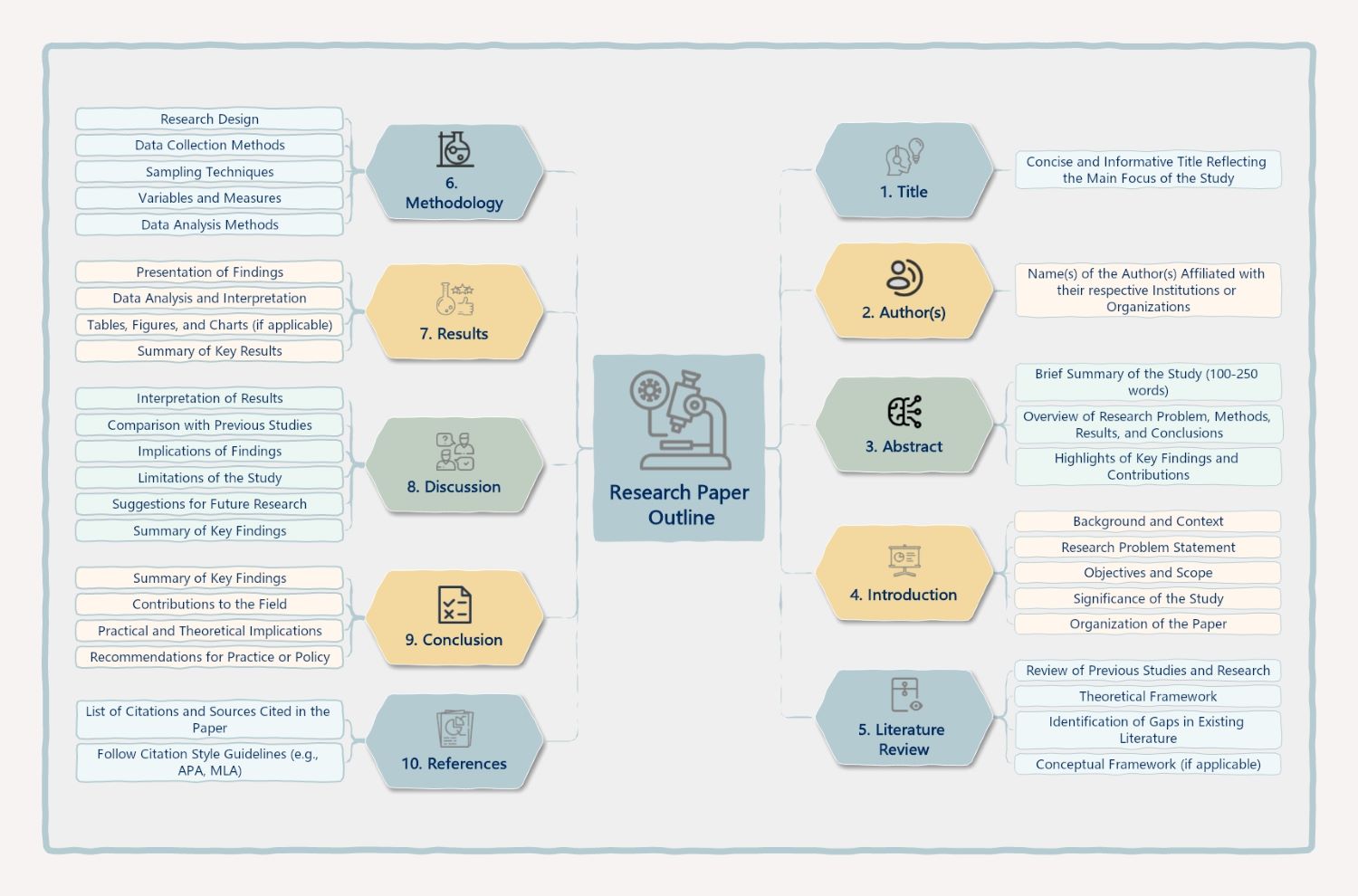
This research paper outline template provides a comprehensive framework for students and professionals. It breaks down the complex writing process into ten manageable sections. By following this guide, you can ensure your academic work is structured, logical, and meets high institutional standards.
Title
This section focuses on creating a concise and informative name for your study. It should reflect the main focus clearly. A good title helps readers understand your research topic immediately. It is the first thing they see.
- Concise and Informative Title
- Reflecting the Main Focus of the Study
Author(s)
This node lists the names of the researchers involved in the project. You must also include their respective institutions or organizations. Identifying the authors provides transparency. It helps establish the academic background and credibility of the research team.
- Name(s) of the Author(s)
- Affiliated Institutions or Organizations
Abstract
The abstract is a brief summary of the entire study. It usually ranges between 100 and 250 words. This section highlights the research problem, methods, and key results. It allows readers to quickly assess the value of your paper.
- Brief Summary of the Study
- Overview of Research Problem and Methods
- Highlights of Key Findings and Contributions
Introduction
The introduction provides the background and context for your research. It includes a clear problem statement and outlines the objectives and scope. This section sets the stage for your work and explains why the study is significant and necessary.
- Background and Context
- Research Problem Statement
- Objectives and Scope
- Significance of the Study
- Organization of the Paper
Literature Review
This section explores previous studies and existing research related to your topic. It identifies gaps in the literature and provides a theoretical framework. A strong review shows how your work fits into the current academic landscape and knowledge base.
- Review of Previous Studies
- Theoretical Framework
- Identification of Gaps in Literature
- Conceptual Framework (if applicable)
Methodology
The methodology explains the steps you took to gather and analyze data. It covers research design, collection methods, and sampling techniques. This section is vital for replication. It proves that your research was conducted in a systematic and professional manner.
- Research Design
- Data Collection Methods
- Sampling Techniques
- Variables and Measures
- Data Analysis Methods
Results
In this section, you present your findings clearly. It includes data analysis and interpretation through tables, figures, or charts. A summary of key results helps readers understand the outcome of your study. This node focuses on raw data facts.
- Presentation of Findings
- Data Analysis and Interpretation
- Tables, Figures, and Charts
- Summary of Key Results
Discussion
The discussion interprets your findings and compares them with previous studies. It explains the implications of your work and notes any limitations. This section also suggests areas for future research and provides a high-level summary of your main findings.
- Interpretation of Results
- Comparison with Previous Studies
- Implications of Findings
- Limitations of the Study
- Suggestions for Future Research
Conclusion
The conclusion summarizes your research contributions to the field. It highlights practical and theoretical implications of your study. Finally, you provide recommendations for future practice or policy. This node brings the entire research paper to a logical and professional end.
- Summary of Key Findings
- Contributions to the Field
- Practical and Theoretical Implications
- Recommendations for Practice or Policy
References
The references section lists all citations and sources used in your paper. It is essential to follow specific style guidelines like APA or MLA. This node ensures academic integrity. It allows others to find and verify the original source materials.
- List of Citations and Sources
- Follow Citation Style Guidelines (e.g., APA, MLA)