About this 2026 FIFA World Cup Prediction Analysis Diagram Template
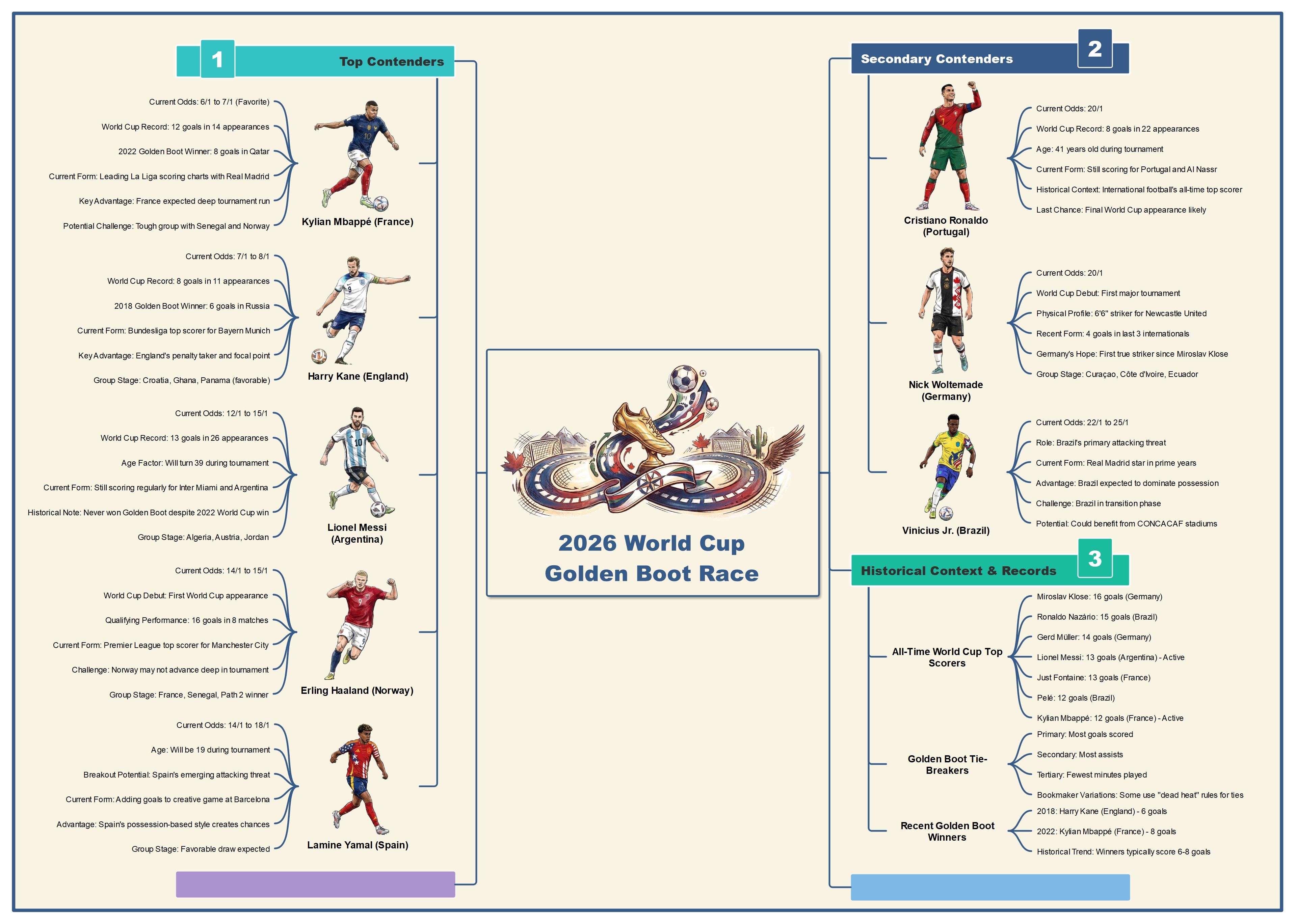
This template is structured as a contender analysis board rather than a single-team preview. It compares championship favorites, supporting evidence, tactical strengths, key player groups, dark-horse potential, and the major variables that could change the tournament picture.
Top teams to win the championship (multi-dimensional deduction)
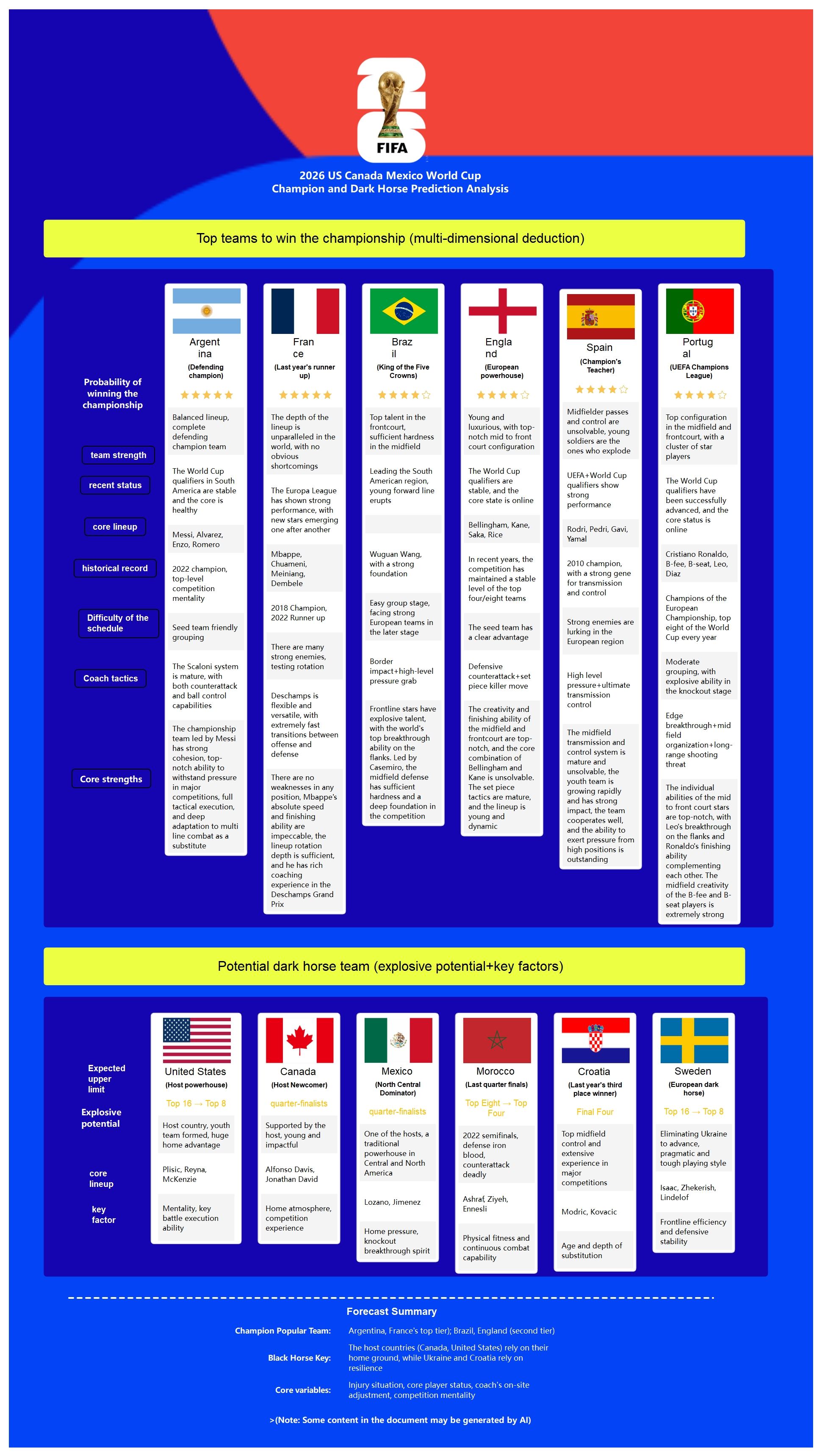
This branch introduces the main title contenders and frames the forecast as a comparative exercise. It helps readers see that the map is ranking teams through multiple lenses rather than offering a one-line winner prediction.
Champion Popular Team
This section focuses on the leading favorites such as Argentina, France, Brazil, and England. It summarizes which sides sit in the top tier of expectation and gives the forecast a clear shortlist of the most trusted championship candidates.
Probability of winning the championship
This branch explains why those teams sit at the top of the prediction ladder. It draws attention to squad quality, recent form, tactical maturity, and competitive history so the favorite rankings feel reasoned rather than arbitrary.
Potential dark horse team (explosive potential+key factors)
This section shifts from favorites to disruptors. It helps readers compare teams such as Croatia, Morocco, the United States, Canada, Mexico, or other emerging sides whose ceiling may exceed the baseline expectation if key conditions break their way.
Forecast Summary
This branch condenses the overall forecast into a readable conclusion. It highlights the most popular champion choices, the most interesting dark-horse routes, and the general hierarchy that the full map is trying to defend.
Core variables
This final section focuses on what could overturn the rankings. Injuries, player form, coaching adjustments, mentality, draw difficulty, and knockout-stage execution appear here as the factors most likely to change the tournament story once the competition begins.
FAQs about this Template
-
When will the 2026 World Cup start?
The 2026 FIFA World Cup is expected to start in June 2026. Prediction analysis usually becomes more active before kickoff as squad news, qualification results, injuries, and draw outcomes give fans more reasons to compare title favorites and possible tournament paths.
-
Where will the 2026 World Cup be held?
The 2026 World Cup will be held across host cities in the United States, Canada, and Mexico. That matters for prediction analysis because geography, travel demands, climate variation, and venue spread can all influence team preparation and how difficult the tournament becomes over several weeks.
-
Who is predicted to win the 2026 World Cup?
Predicted winners are usually teams with strong squad depth, reliable attacking production, and enough balance to survive knockout matches. Analysts often compare traditional powers and current form leaders, but the strongest prediction models also look at injuries, draw difficulty, and how complete a team looks across all phases of play.
-
What makes a team a World Cup favorite?
A true World Cup favorite usually combines elite individual talent, tactical balance, squad depth, and enough mental stability to handle knockout pressure. Teams become stronger favorites when they can create chances consistently, defend transitions well, and avoid overreliance on only one star player or one tactical pattern.