About The History of FIFA World Cup Template
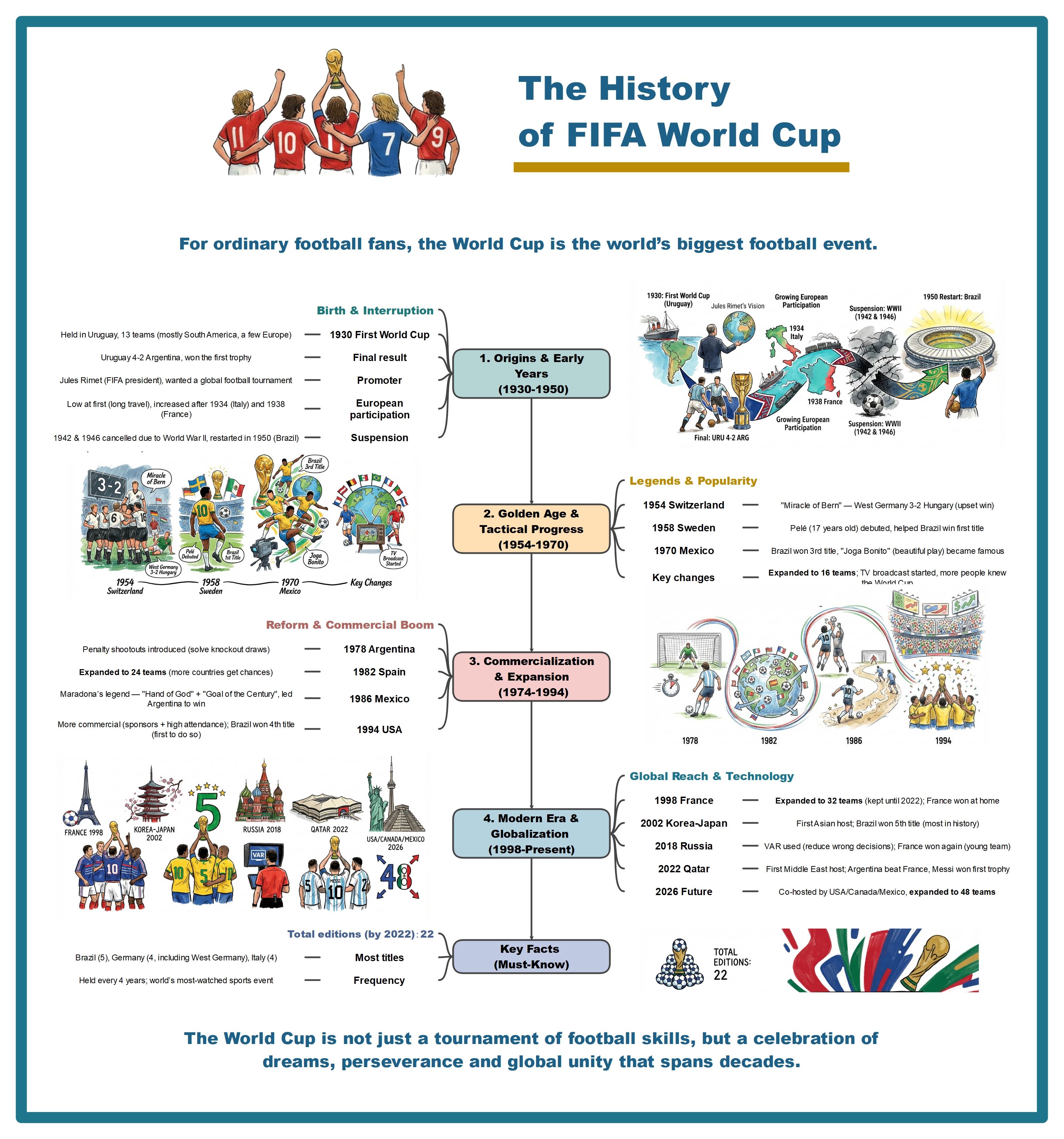
This template is designed to explain the history of fifa world cup through a clear branch structure rather than a vague general summary. It shows the main content areas directly inside the map, helping readers understand what the template includes and how each section contributes to the full topic.
Tournament Origins
This branch represents one of the main content areas shown in the template. It helps explain what information is included in this part of the image and why this section matters to the overall structure rather than functioning as a generic placeholder.
Champion Timeline
This branch focuses on timing and sequence. It helps readers understand when the work happens, how stages are arranged, and why the order of actions matters inside the overall template.
Classic Moments
This branch represents one of the main content areas shown in the template. It helps explain what information is included in this part of the image and why this section matters to the overall structure rather than functioning as a generic placeholder.
Format Evolution
This branch represents one of the main content areas shown in the template. It helps explain what information is included in this part of the image and why this section matters to the overall structure rather than functioning as a generic placeholder.
Record and Legacy
This branch focuses on the competitive or historical core of the topic. It helps the page explain who or what is being compared and why that comparison matters within the full structure of the template.
FAQs about this Template
-
When was the first FIFA World Cup?
The first FIFA World Cup was held in 1930. That tournament established the foundation for the modern competition and gave later generations a starting point for comparing title history, famous teams, legendary players, and the overall evolution of international football across different eras.
-
How often is the FIFA World Cup held?
The FIFA World Cup is usually held every four years. That long cycle is one reason each tournament carries so much weight, because players and teams get only limited chances to build a lasting World Cup legacy across their careers.
-
Which country has won the FIFA World Cup most often?
The most successful World Cup nation is usually identified by total titles, repeated final appearances, and long-term influence across different football eras. This question matters because it is one of the clearest ways to compare sustained international dominance rather than judging teams only by one successful generation.
-
Why is FIFA World Cup history important?
FIFA World Cup history is important because it helps readers see how football styles, dominant nations, tournament formats, and legendary players changed over time. Historical context makes it easier to understand why certain records, rivalries, and title runs carry so much meaning beyond one single edition of the tournament.