About this Tour de France: A Century of Race History Template
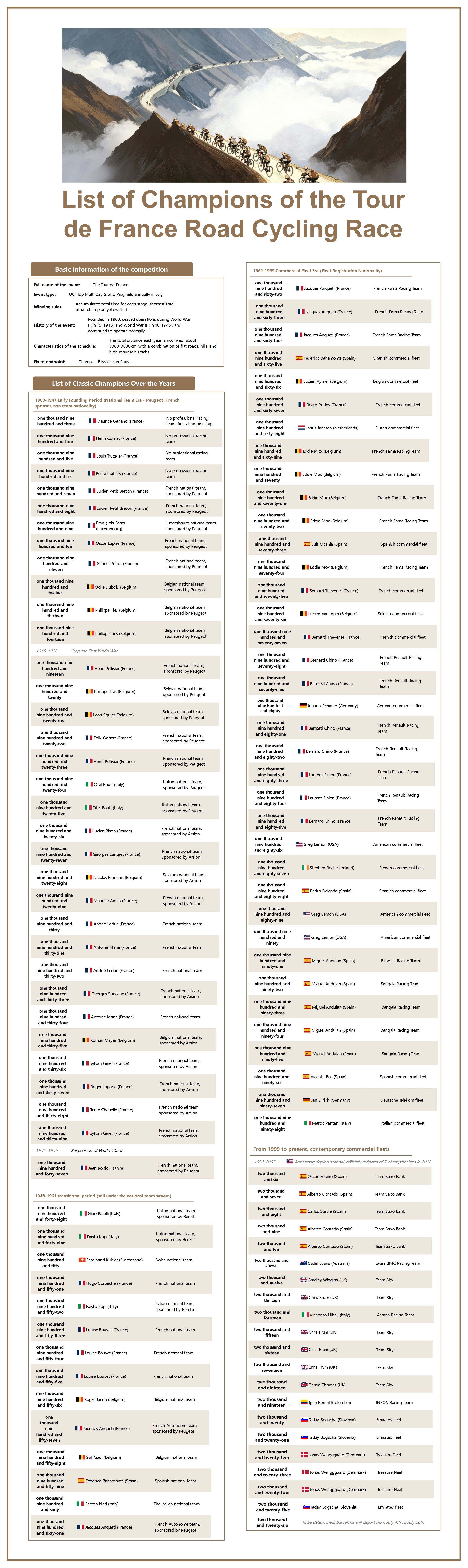
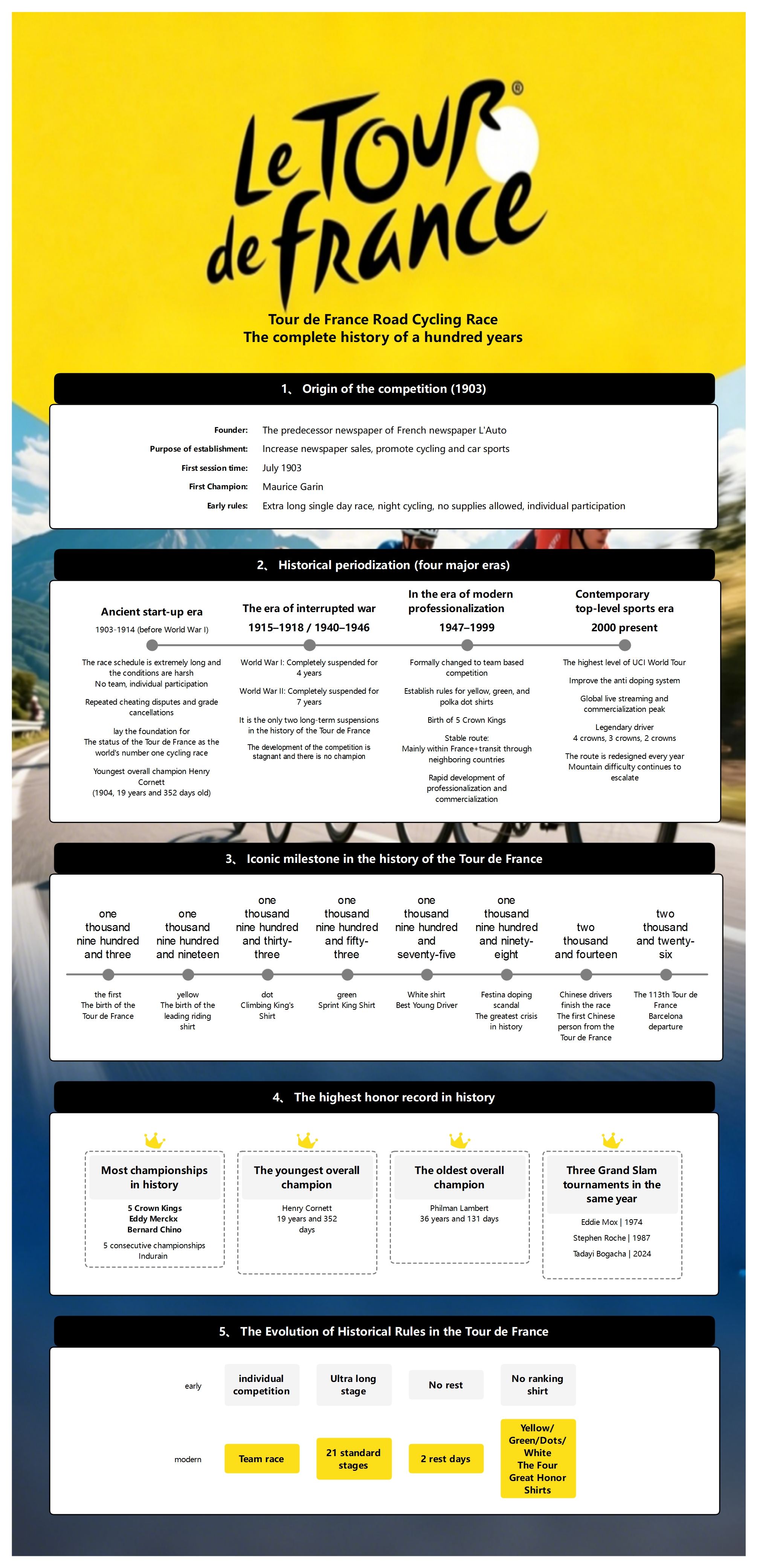
This “Tour de France: A Century of Race History” template organizes the race through eras, champions, and long-term development, making cycling history easier to review.
The Tour de France
This branch establishes the race itself as the subject, giving the rest of the structure a clear sporting and historical anchor.
- Use this node to introduce the event before breaking down eras or winners.
- Keep all later branches tied to the race context.
Early Founding Period
This branch captures the earliest era of the race, showing how the competition developed from its beginning.
- Use this node to organize the race’s foundational stage.
- Keep early historical context separate from later eras.
Transitional Period
This branch marks a middle phase in the race’s history, helping readers see that the event evolved rather than remaining static.
- Use this node to explain a shift from one race era to another.
- Keep structural change visible in the timeline.
Classic Champions Over the Years
This branch gathers notable winners into one recognizable historical track, helping the map connect eras with riders.
- Use this node to center the race around champion history.
- Keep winner discussion tied to the larger timeline.
Race Structure and Prestige
This branch helps explain why the race matters, adding context around format, status, and long-term significance.
- Use this node to explain the race beyond individual winners.
- Keep prestige and structure connected to history.
Long-Term Legacy
This branch turns the map toward endurance and influence, helping readers see the race as a historical institution rather than only a sporting event.
- Use this node to connect past eras with continuing relevance.
- Keep legacy tied to the race’s century-long development.
FAQs about this Template
-
When was the first Tour de France?
The first Tour de France was held in 1903. That early edition started what became the most famous stage race in cycling and created a long historical timeline for comparing champions, race formats, mountain eras, and the changing demands of elite endurance competition.
-
How long does the Tour de France last?
The Tour de France usually lasts about three weeks. That length is one reason it holds such importance in cycling history, because success depends not only on speed but also on recovery, consistency, tactical discipline, and the ability to survive very different race stages over time.
-
Who has won the Tour de France the most times?
The riders most associated with multiple Tour de France victories are usually those who combined climbing strength, time-trial skill, and long-term consistency across several editions. This question matters because repeated wins are one of the clearest markers of historical dominance in stage-racing history.
-
Why is Tour de France history important?
Tour de France history is important because it helps readers understand how cycling evolved through tactics, technology, race structure, and legendary rivalries. Historical context makes it easier to see why certain champions, mountain stages, and eras still define the sport far beyond one modern edition.