



Some people are remembered for inventions, others for ideas. But Arthur Guinness? For a pint that became Ireland’s most famous export. Back in 1759, the man signed a 9,000-year lease for a small Dublin brewery. It was a move that turned into history in a glass. Quite the legacy, don't you think?
And just like his famous stout, his story didn't stop there. His family carried that same bold spirit through generations. Brewers, philanthropists, and dreamers who kept his vision alive. In this article, we’ll meet every one of them, one by one.
In this article
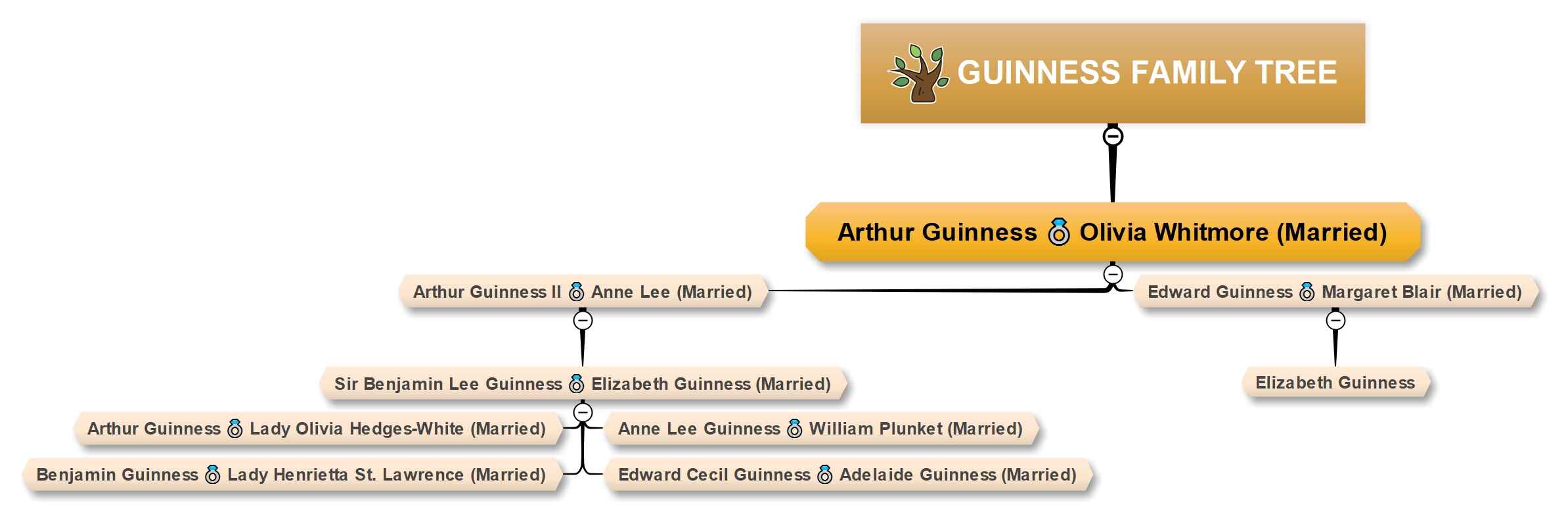
Arthur Guinness Family Tree
Arthur Guinness, who started the Guinness Brewery in 1759, became the patriarch of a large Anglo-Irish family. His children and siblings formed several notable branches, including brewing, banking, and philanthropy. Each generation added its own achievements while carrying forward Arthur’s vision.
Let’s explore each family member and see how they shaped the Guinness story.


Founder of the Guinness:
Arthur Guinness (1725-1803)
Let's start with Arthur Guinness, the man who started it all! He signed a 9,000-year lease for a small brewery in Dublin in 1759. A brave move. He had a simple dream of making great beer for a better life. Arthur's stout quickly became a source of pride for Ireland. He was a visionary who believed in family, faith, and hard work.
Arthur Guinness's Wife: Olivia Whitmore (1742-1814)
There is often a great woman behind every great man, and Olivia Whitmore was one of those women. She married Arthur Guinness and helped him run his growing brewery. Along with that, she also raises their busy family. Olivia was the quiet heart of the first chapter of the Guinness story.
2nd Generations of the Guinness
Arthur and Olivia had many sons and in here, we will only focus on the most famous two: Arthur Guinness II and Edward Guinness.
Elder son: Arthur Guinness II (1768-1855)
Arthur Guinness II took his father's dream into the next century. He was a smart businessman and a proud Irishman who grew the brewery far beyond its humble beginnings. He also became a politician and confidently represented Dublin. Arthur II made the legacy stronger while his father built it.
Anne Lee (1774-1817)
When Anne Lee married Arthur Guinness II, she added both charm and strength to the Guinness family. Life in Dublin in the 18th century was hard, but she handled it with grace. Anne was very devoted to her family and her faith. Her gentle influence shaped the next generation, which included the smart and driven Benjamin Lee Guinness.
Younger Son: Edward Guinness (1772-1833)
Edward was one of Arthur and Olivia Guinness's elder sons and part of the early expansion of the family business. Though less prominent than his brother Arthur II, he helped establish the foundation that future generations would build upon.
Margaret Blair (1775-1839)
Margaret Blair married Edward Guinness, adding steadiness and grace to the family's early years. While her husband worked in the family business, she focused on raising their children and maintaining family unity. Margaret's quiet dedication played an important role in preserving the warmth and strength of the Guinness household.
3rd Generations of the Guinness
For the third generations of the family, we will focus on Arthur Guinness II and Anne Lee's son and his wife. They were the main branch of the family.
Sir Benjamin Lee Guinness (1798-1868)
Benjamin Lee was a man who literally made Dublin shine! In addition to expanding the brewery, Sir Benjamin Lee Guinness funded significant city projects and restored St. Patrick's Cathedral. Benjamin, a brewer, MP, and philanthropist, felt that prosperity should benefit others. Although he transformed the family business into an empire, he will always be remembered for his generosity.
Elizabeth Guinness (1813-1865) - Daughter of Edward Guinness
Benjamin's cousin and wife, Elizabeth Guinness, was a quieter but equally important part of the family's history. Each of the four children Elizabeth raised contributed to the history of Ireland. Through wealth, politics, and change, the family remained stable thanks to her composed strength.
Fourth Generation of the family
Eldest daughter: Anne Lee Guinness (1839-1889)
Anne was the daughter who was always kind and had a purpose. She married William Plunket, who later became the Archbishop of Dublin. She was a match of faith and love. Anne gave money to many charitable causes and lived by her father's belief that giving back is what makes you successful.
William Plunket (1828-1897)
William Plunket, husband of Anne Lee Guinness, was a respected church leader who rose to become Archbishop of Dublin. Together, they formed a partnership built on faith, compassion, and public service. William carried his wife's spirit of generosity into his ministry, strengthening both the church and the Guinness family's philanthropic reputation.
Eldest Son: Arthur Edward Guinness, 1st Baron Ardilaun (1840-1915)
Arthur Edward Guinness, also known as Lord Ardilaun, was the family's kind-hearted philanthropist. He fixed up St. Stephen's Green in Dublin and let people use it. It was like turning a private park into a gift for everyone. Arthur was a kind and generous person. Even though he didn't have any kids, his name will always be linked to beauty, kindness, and Irish pride.
Lady Olivia Hedges-White (1850-1925)
Lady Olivia added class and nobility to the Guinness family. She was married to Arthur Edward Guinness and was respected because of her charity work and her fine spirit. They both lived together beautifully, benefiting the people of Dublin and conserving the parks and churches. Olivia and Arthur's relationship became one of the family's most admired love stories.
Son: Benjamin Guinness (1842-1900)
Benjamin was adventurous, like-minded, and occasionally unpredictable, but that is what made him interesting. He was an MP of South Dublin and the Guinness tradition of serving the people. Married to Lady Henrietta St. Lawrence, he led a colorful life full of society events and politics. Benjamin kept the Guinness name lively, proud, and always in motion.
Lady Henrietta St. Lawrence (1851-1935)
Lady Henrietta was remembered for her grace and warmth. Married to Benjamin Guinness, she balanced family life with the busy world of society. She often attended social events and supported many charities. At the same time, she stood beside her husband in his political career.
Son: Edward Cecil Guinness, 1st Earl of Iveagh (1847-1927)
Arthur may have started the dream, but Edward Cecil Guinness carried it further than anyone imagined. As the 1st Earl of Iveagh, he expanded Guinness into a global brewery. Yet he never forgot those in need. He created the Iveagh Trust, which provided homes for the poor. Edward's story showed that great success and generosity could exist side by side.
Adelaide Maria Guinness (1844-1916)
Adelaide was more than Edward's wife, she was his partner in everything. She came from the banking side of the family and brought both smart ideas and a caring heart. Together, they used their money to build schools, homes, and hospitals. Her kindness still lives on in Ireland's charities, a gentle legacy of love and care.
How to Make a Similar Family Tree?
Before you start making your family tree, it is important to pause and plan. Think about who to include, what details matter, and how to show connections. A little preparation will make the process easier and your tree clearer. Here are some key tips to get started.
- Decide the purpose: Think about why you’re making this tree. Is it for a school project, family keepsake, or genealogy research?
- Gather family details: Collect names, dates, relationships, and photos from relatives or old documents. The more complete your information, the better.
- Select a tool: Choose how you’ll make your family tree. You can draw it by hand, use online software, or try an easy diagram maker like EdrawMind.
- Choose a layout: Pick a style that fits your goal: a traditional ancestor tree, a descendant layout, or even a circular chart for a creative look.
- Organize generations clearly: Start from yourself or a common ancestor and work outward so each level is easy to read.
- Add personal touches: Include small photos, notes, or family memories to make your tree feel alive and meaningful.
Steps to Make a Family Tree
Family trees show your heritage connections to your ancestors. For sketching a large family as the Guinness family, it is vital to choose easy software. I have used EdrawMind (a free family tree maker) to make the diagram above. Here is how I’ve done it:
 Try the app & get 500 free AI tokens


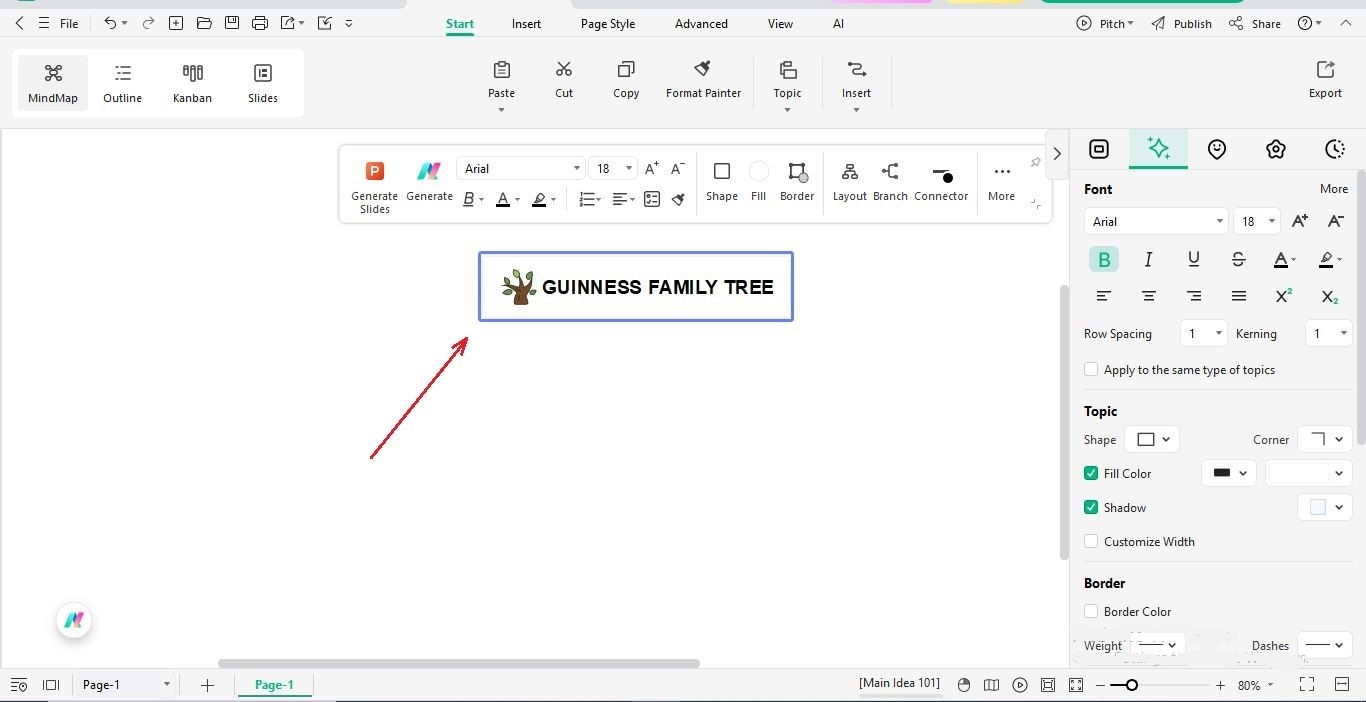
Step1 Create a New File & Add Title
- Open Wondershare EdrawMind.
- Click the Create button at the top-left corner.
- Select Blank Mind Map to start with a clean canvas.
- Rename the central topic as “Guinness Family Tree”.
Step2 Add Founding Members
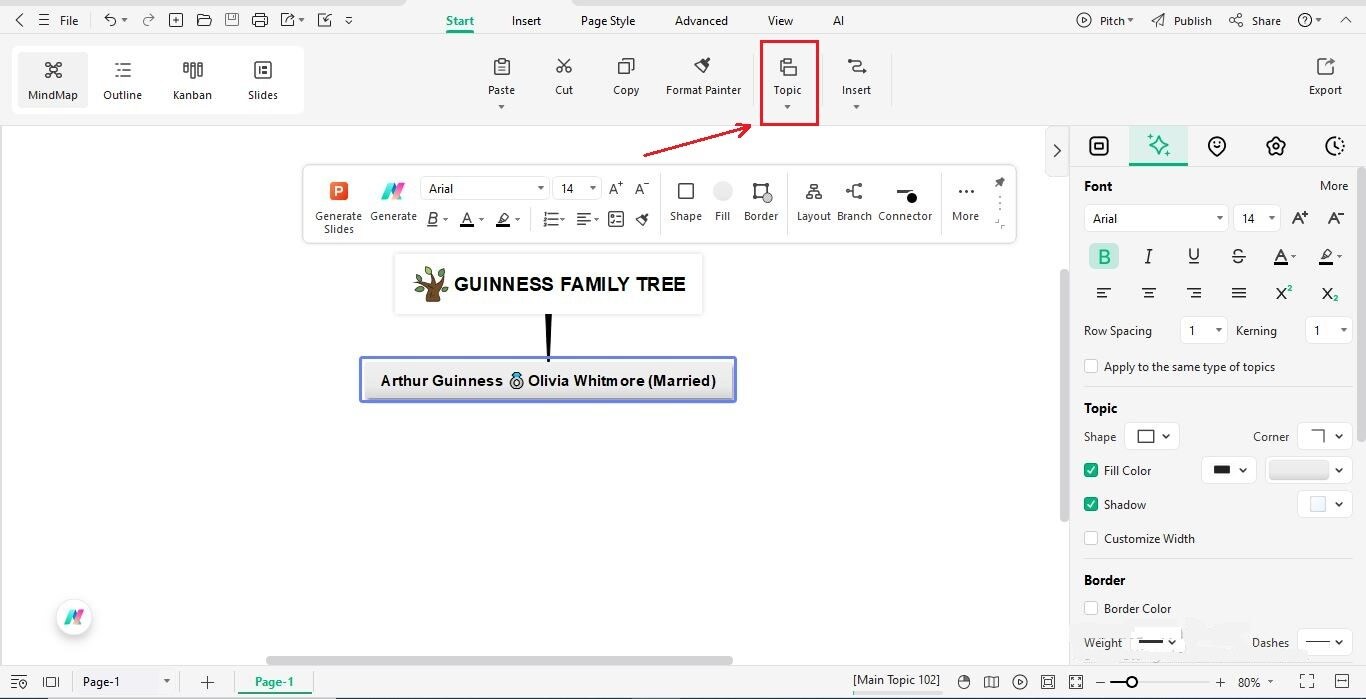
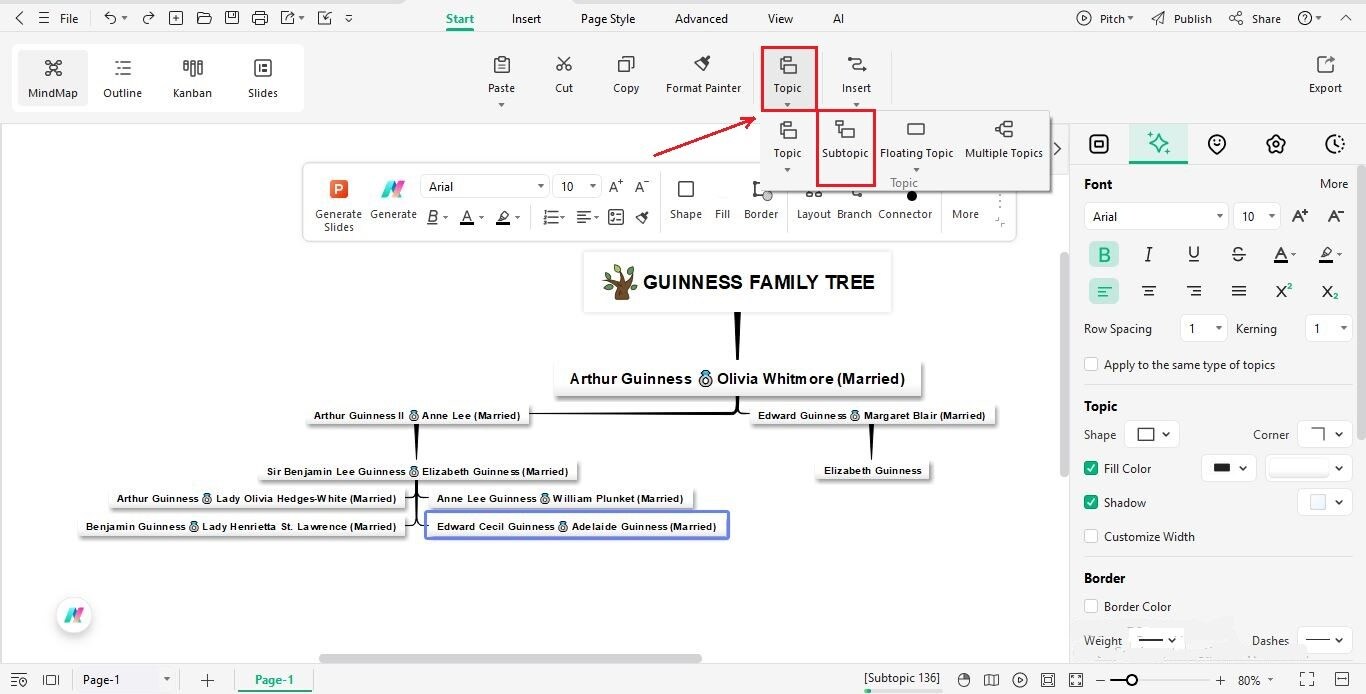
- Click the main node and add subtopics for the first couple (Arthur Guinness and Olivia Whitmore).
- Mark them as married using a ring or marriage symbol.
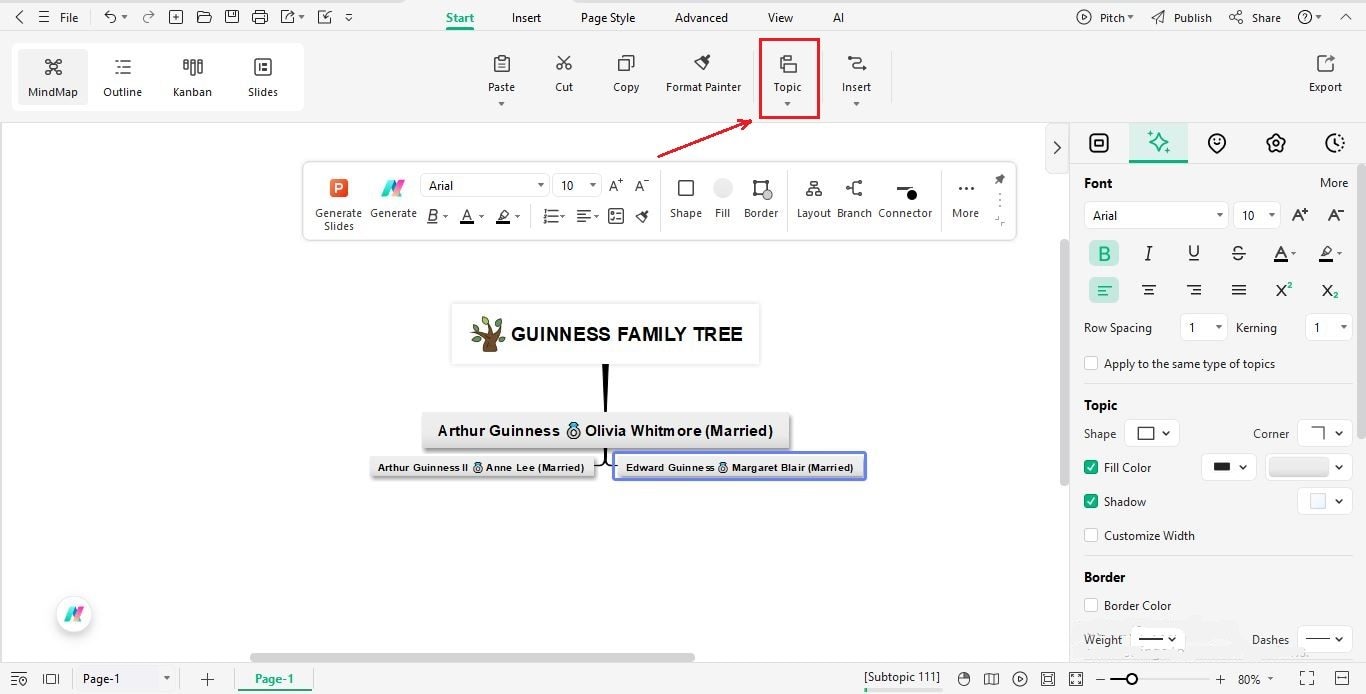
Step3 Add Their Children
- From each parent node, create new branches for their children like Arthur Guinness II and Edward Guinness.
Step4 Add Next Generations
- Under each child, keep adding branches for their spouses and children, such as Sir Benjamin Lee Guinness, Anne Lee Guinness, and others.
- Keep all relationships properly connected to maintain a clear structure.
Step5 Customize Your Tree Design
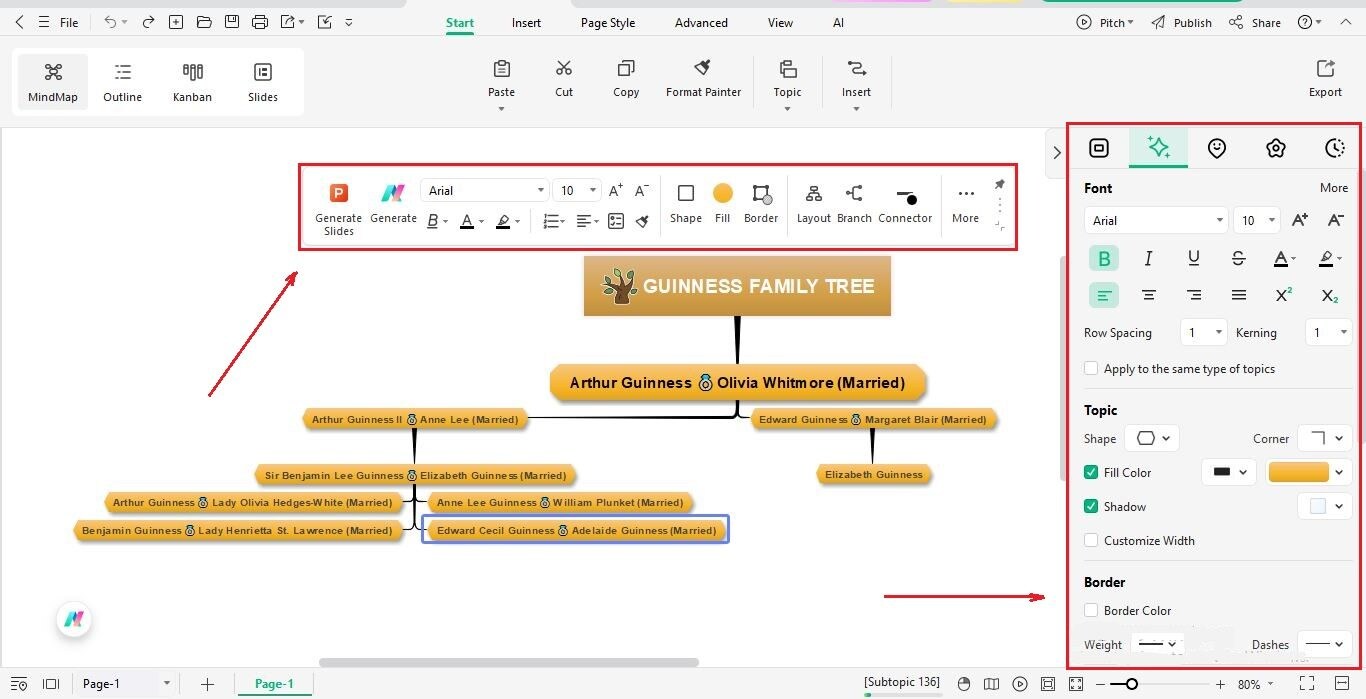
- Use the floating or right toolbar to change colors, fonts, or shapes.
- Highlight marriage links, use soft backgrounds, and adjust spacing for readability.
Step6 Save or Export Your Family Tree
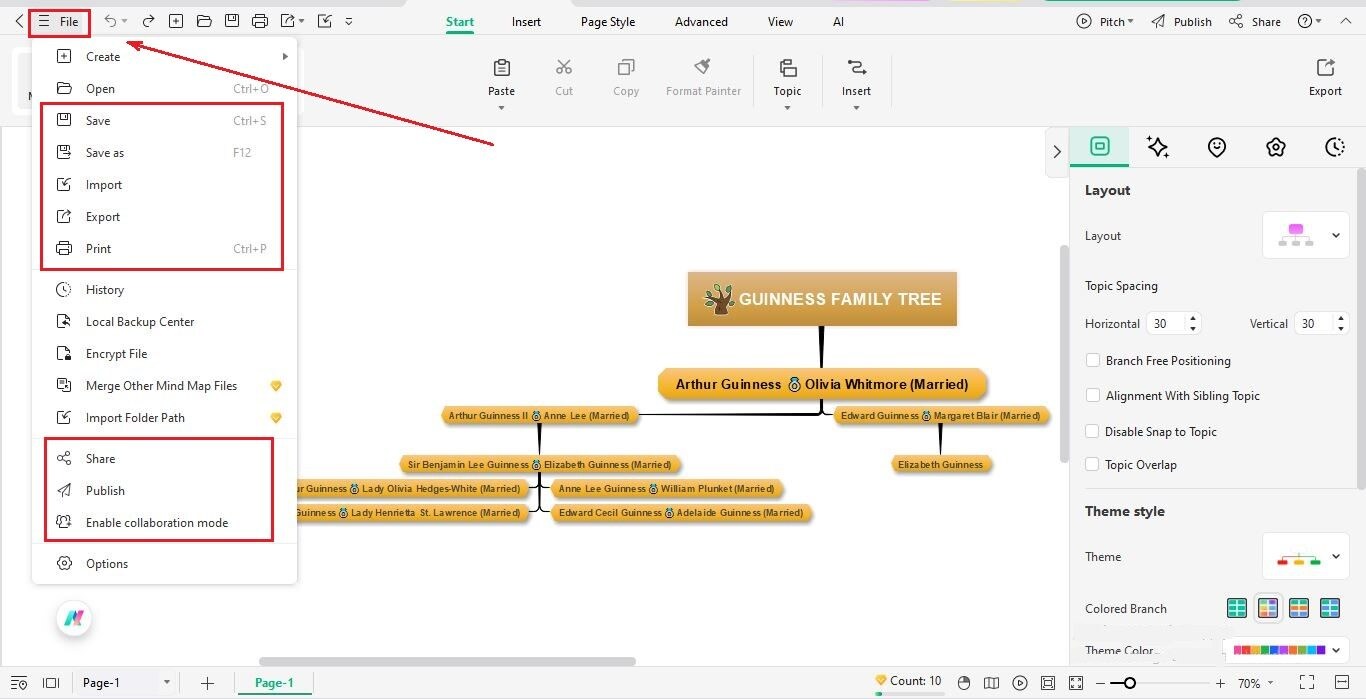
- Click the File tab at the top-left.
- Choose Save to store your work.
- Click Export to download it as an image (PNG, JPG) or PDF and in other formats.
Conclusion
Now that you’ve read about the Guinness family, it’s clear their story is more than just about brewing beer. It’s about vision, hard work, and the courage to try new things. From Arthur Guinness to his modern descendants, each generation added something special to the family’s name.
If you’d like to map your own family history, EdrawMind makes it simple. You can easily create a family tree and visualize your story in a beautiful, organized way.
 EdrawMind
AppsEdrawMind Online
EdrawMind
AppsEdrawMind Online