

Every project comes with risks. Project managers often build a risk breakdown structure (RBS) to manage them. This chart organizes risks from broad categories down to smaller, specific factors.
An RBS usually includes deliverables, control accounts, and work packages. It can be shown as a flowchart or a mind map, clearly showing where risks may arise.
This guide explains how an RBS supports project management and provides instructions on creating one using EdrawMind for easy sharing with your team.
In this article
What Is RBS?
When a project undergoes the development cycle, project managers create multiple phases in which they plan to deliver it to their clients or stakeholders. At the same time, they break down the entire project into different risks (from highest to lowest).
These factors might affect the deliverables or cause project delivery delays. This hierarchical system that project managers create is a risk breakdown structure, or RBS.
In a risk breakdown structure, a project manager identifies and categorizes all the possible risks that might affect the project's life cycle. Here are the key categories that you should take note of when making an RBS:
External Risks
These are risks outside the organization’s control. Examples include natural disasters, pandemics, changes in government policies, or economic downturns. External risks are difficult to predict but can disrupt primary project timelines and deliverables.
For example, you did not include COVID-19 or a similar pandemic when working on any project. The pandemic has created unforeseen delays or issues for many companies, which is why it comes under external risk.
Therefore, it’s essential to evaluate these external risks.
Internal Risks
Internal risks are those that occur within the business organization. They may include a lack of funding, poor team communication, unclear stakeholder requirements, or misaligned priorities.
Because they originate within the business, these risks can be mitigated through improved planning and management.
Technical Risks
Most IT-related projects face ambiguities in the work scope or technology obsolescence.
For example, one might have started working on a mobile application in Native but, in later stages, have found the code to be extremely unstable. This will fall under the technical risk category.
Project Management Risks
These risks arise from how the project itself is managed. Poor planning, inadequate monitoring, or miscommunication in reporting can all lead to delays and errors. Strong leadership, transparent processes, and consistent updates help reduce this risk.
Why a Risk Breakdown Structure Is Important
Having identified the four most crucial risk category factors in the previous section, it’s time to discuss why creating an RBS is highly beneficial to project management.
It is worth noting that every project is unique, yet they all share similar risk factors. Therefore, creating a risk breakdown structure is always considered good practice.
At the same time, a risk breakdown structure helps project managers identify all risks and subsequently find suitable solutions, making it an invaluable tool for understanding any project's potential dangers.
Some of the essential reasons behind using RBS in project management are:
- It provides all the project's potential risks from the highest to the lowest level.
- One can group different risk sources and find a standard solution.
- One can easily define the total risk exposure for a particular project.
Without an RBS, project managers may struggle to execute projects efficiently, as they will have difficulty tracking and mitigating otherwise avoidable or manageable risks.
RBS in Project Management
As explained earlier, a risk breakdown structure allows project managers to organize risks into a clear hierarchy. This makes it easier to identify challenges, prepare responses, and reduce their impact on the project life cycle.
By ranking risks, teams can focus on the most critical issues without overlooking smaller ones.
To illustrate how this works, consider the following example. The four main categories of risks can be divided into smaller subcategories. For instance, under technical risks, a manager might list requirements, system complexity, or technology limitations.
Each of these can then be broken down further into specific risk factors. Once identified, the project manager and team can design solutions or mitigation plans for each.
Categorization of Risks in Project Management
For starters, you’ll need to understand the concept of risk categorization. In project management, you can prefer methodical, numerical rankings to understand the impact of such risks. It is based on the following metrics:
- High Probability: It would fall between 80% and 100%.
- Medium-High Probability: Any risk with an occurrence chance equal to or greater than 60 percent.
- Medium-Low Probability: Any risk with an occurrence chance equal to or greater than 30 percent.
- Low Probability: Any risk with a chance of less than 30 percent.
When you create the hierarchy of all those risks, you can use the above probability and impact factors to categorize them correctly. To understand the impact, use the basic formula:
Risk Score = Potential Risk x Risk Impact
For instance, a potential risk with a 50 percent chance of occurring and is designated catastrophic will have a risk score of 50 out of 100.
Ways To Use an RBS
In project management, a risk breakdown structure (RBS) can be applied in several ways:
As a Risk Identification Tool
An RBS helps you recognize risks more clearly because it categorizes them into subcategories.
This makes it easier to trace the source of a risk and find solutions. Techniques like SWOT analysis, root-cause analysis, or the Delphi method can also be used alongside RBS for stronger results.
As such, it’s essential to ask questions like:
- What could go wrong during planning or execution?
- What similar risks have we seen in past projects?
From there, a risk identification method will be finalized. Useful approaches include:
- Brainstorming potential risks.
- Reviewing the project’s scope of work multiple times.
- Applying SWOT or root-cause analysis.
As a Risk Analysis Tool
Once risks are identified, an RBS helps you analyze their impact. Project managers often combine qualitative and quantitative analysis to measure the probability and effect of risks.
After assigning risk scores, update project documents with the factors considered and strategies planned. This ensures alignment across the team and provides transparency in decision-making.
As a Risk Reporting Tool
An RBS can also be used to prepare structured risk reports. These reports keep stakeholders informed and prevent unexpected issues.
The main goals of risk reporting are to:
- Help the team understand existing risks.
- Guide stakeholders in making risk-informed decisions.
It’s important to note that a risk report differs from a risk register. The register records all identified risks, while the report highlights the most significant risks for senior management.
For Post-Project Guidance and Review
Reviewing risks after a project is often overlooked, but it is valuable for long-term improvement. You can identify recurring risks and refine future strategies by analyzing past projects.
Key points to include in post-project reviews are:
- Evaluate how risk management contributed to project success or failure.
- Identify recurring risks that consistently arise across projects. For example, if remote teams consistently deliver buggy code, address it with new processes or tools in future planning.
For Project Comparisons
RBS can also be used to compare risks across projects. By applying the same framework to multiple projects, managers can identify patterns and differences in risk exposure.
Best practices include:
- Always use the same framework for comparison to ensure consistency and accuracy.
- Use a risk matrix for deeper insights into overall exposure.
How To Create an RBS?
Now that you have understood the benefits of having a risk breakdown structure in project management, you can see some of the basic steps a project manager must take to create an RBS.
First, take a piece of paper for Steps 1-3 and jot down your needs. This guide will help you understand the content of your actual diagram as you reach Step 4.
Step 1: Identify Risk Categories
Start by defining the main categories of risks. These usually fall under four groups: internal, external, project management, and technical. Identifying these broad categories gives you a foundation for breaking risks down further.
Step 2: Create Subcategories/Add the Risks
Next, divide each category into subcategories for more detail. This makes risks easier to understand and manage. For example, under “External,” an export company might list subcategories like poor weather or product quality.
Or, these subcategories can refer to the actual risks themselves if you don’t need any subcategories. Breaking risks into finer details helps teams spot solutions or strategies to reduce their impact.
Step 3: Using a Risk Breakdown Structure Creator: EdrawMind
Wondershare EdrawMind is a practical tool for creating RBS diagrams. It provides ready-made templates and over 210 diagram types, so you can start quickly without building from scratch. The drag-and-drop interface allows you to add categories, subcategories, and notes easily.
EdrawMind also supports real-time collaboration, making it ideal for teams working remotely. With features like AI-generated mind maps, built-in brainstorming tools, and export options, you can share the final RBS with stakeholders in just a few clicks.
Instead of managing risks through scattered documents, EdrawMind keeps everything organized in one visual workspace.
How To Make a Risk Breakdown Structure With EdrawMind for Free Online
Here are the steps you should follow when using Wondershare EdrawMind, or any diagram creator for that matter, when making a risk breakdown structure (RBS) for your project.
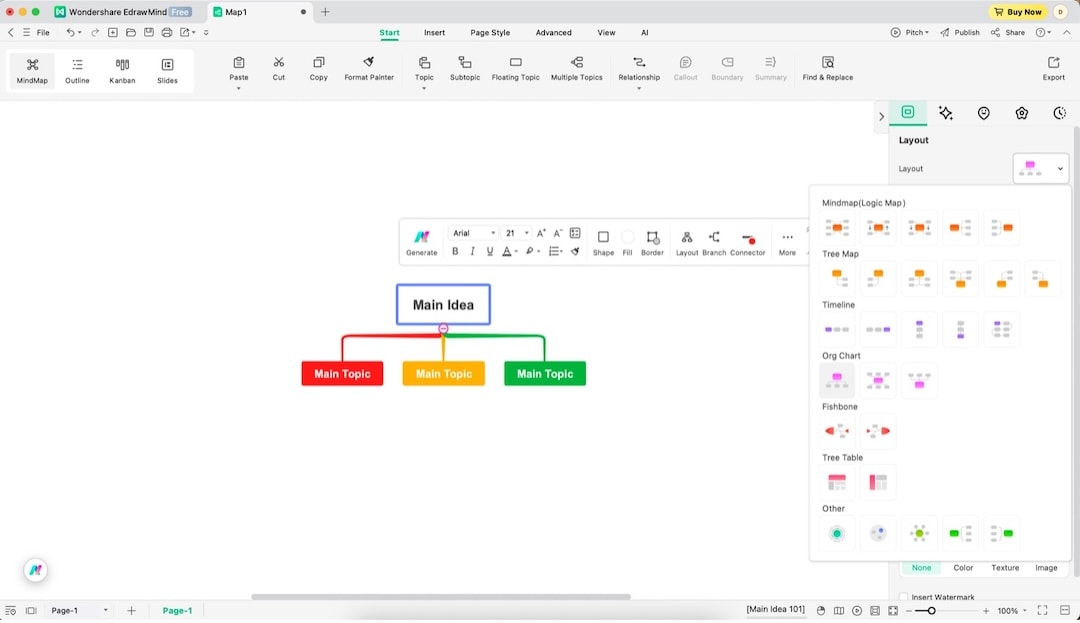
Step 1: Choose a Diagram Layout
- Go to Layout from the right-hand panel
- Choose from the options of MindMap, Tree Map, Org Chart, or Fishbone
 Try the app & get 500 free AI tokens


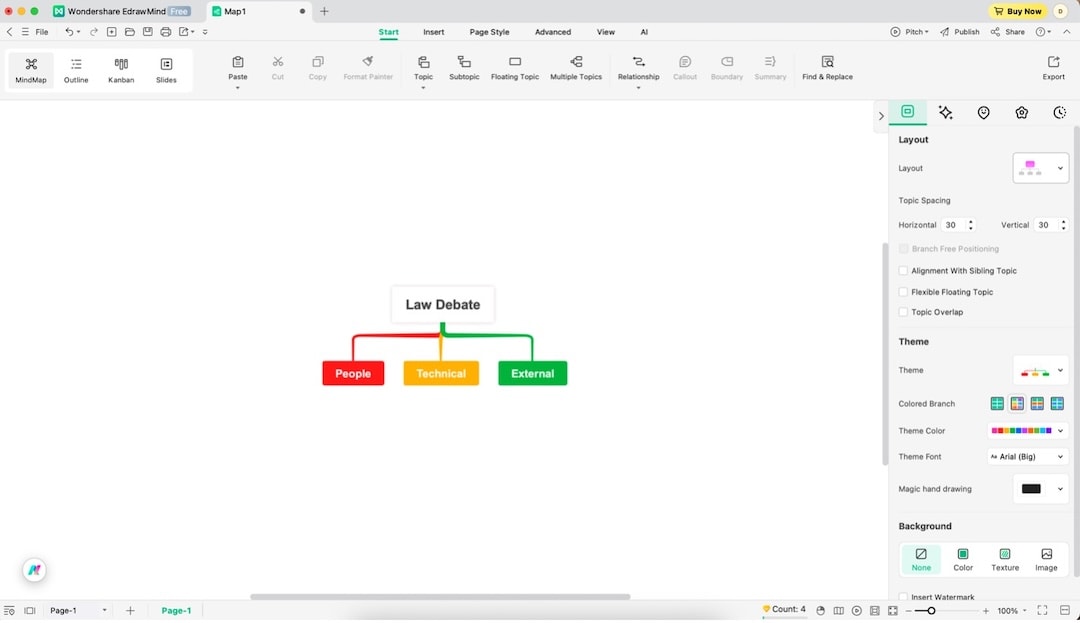
Step 2: Type in Your Content
- Double-click the nodes to edit the Main Topic and Main Ideas
- Choose text styles from the Layout tab
Change the “Main Idea” to your project’s title. Then, change the “Main Topic(s)” to the different areas of your risk breakdown chart based on the earlier discussion under “Step 1: Identify Risk Categories.”
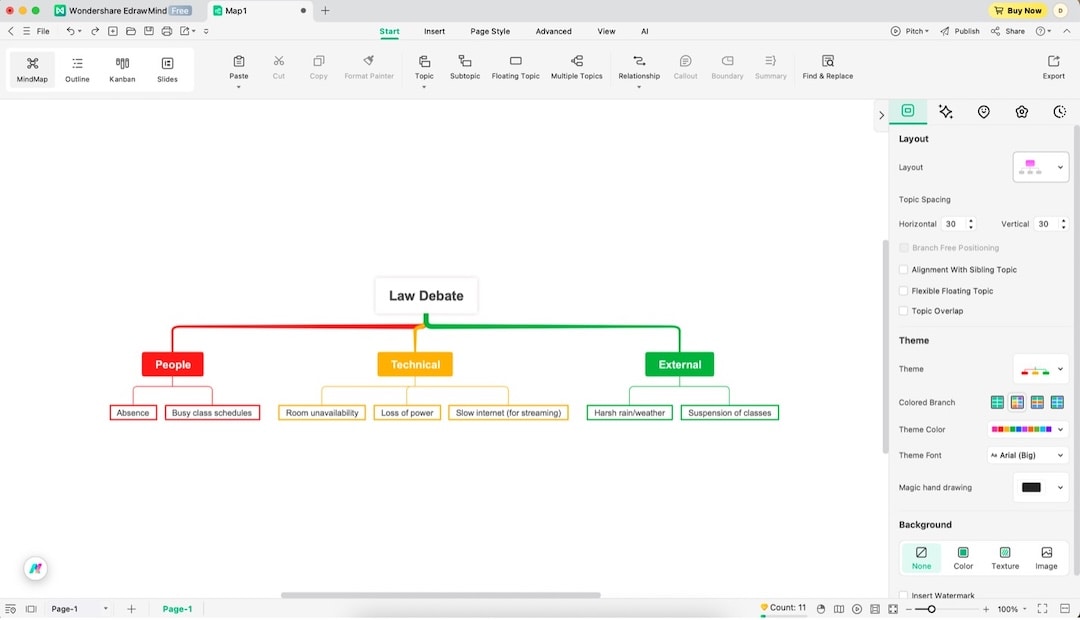
Step 3: Add Subtopics
- Add content under the main branches with the Subtopic tool
- Similarly, you can hit Enter on your keyboard to add more topics
Step 4: Design Your Mind Map
- Use the right-hand panel to change the mind map based on the Layout or Themes tab
- Select a specific element to bring up the floating customization bar
- Drag-and-drop images
- Choose icons from the Mark and Clip tabs on the right-hand panel
Step 5: Export Your Map
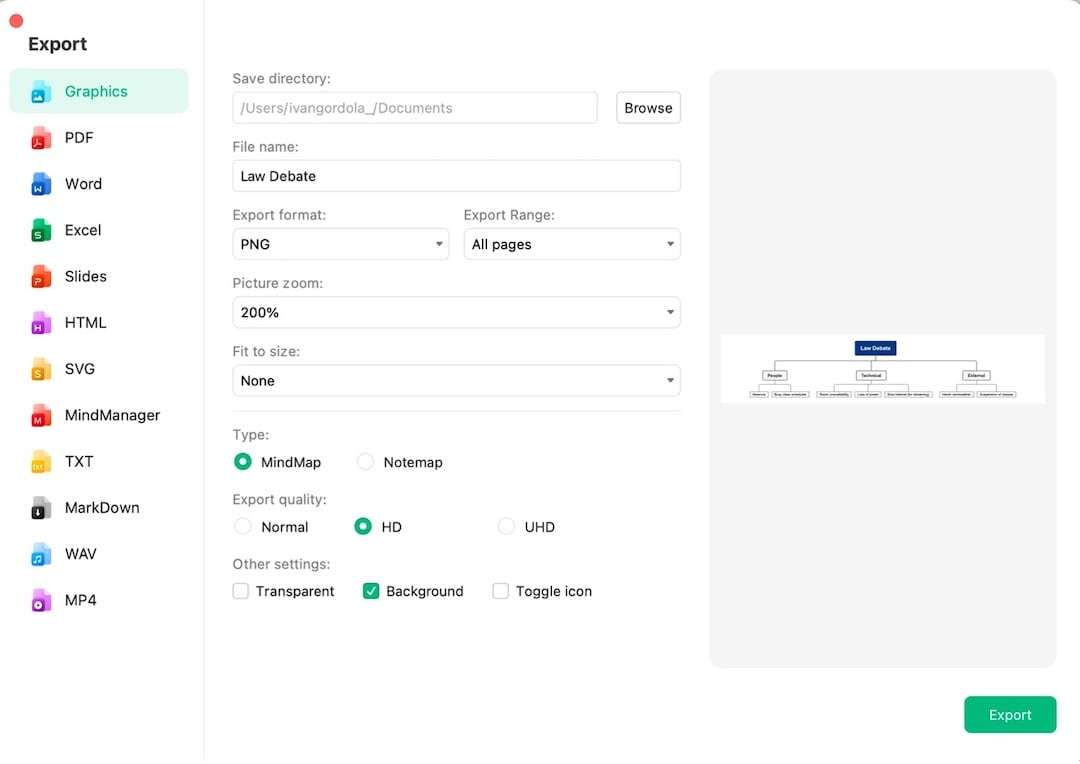
- Press the Export button
- Choose from JPG, PDF, PPT, and other file types
- Edit the export parameters: File name, Export format, Export Range, Picture Zoom, etc.
Examples of the RBS
Learning the technical steps for making one is one thing, but finding inspirations or examples to enrich your knowledge or provide techniques is another.
In this section, you can find various Risk Breakdown Structure examples for reference.
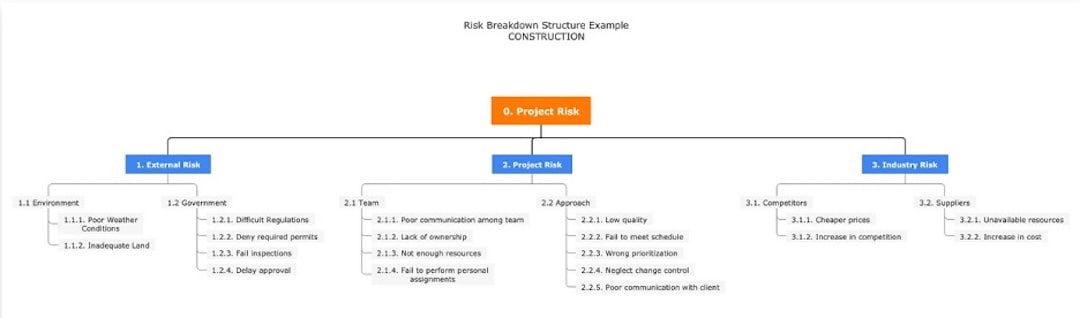
Construction Project RBS
A construction project involves complex parts, including multiple stakeholders, partners, builders with different skill sets, and managers assigned various construction-related tasks.
Thus, an RBS can be beneficial for construction companies looking to identify factors that may hinder their success.


Software Development RBS
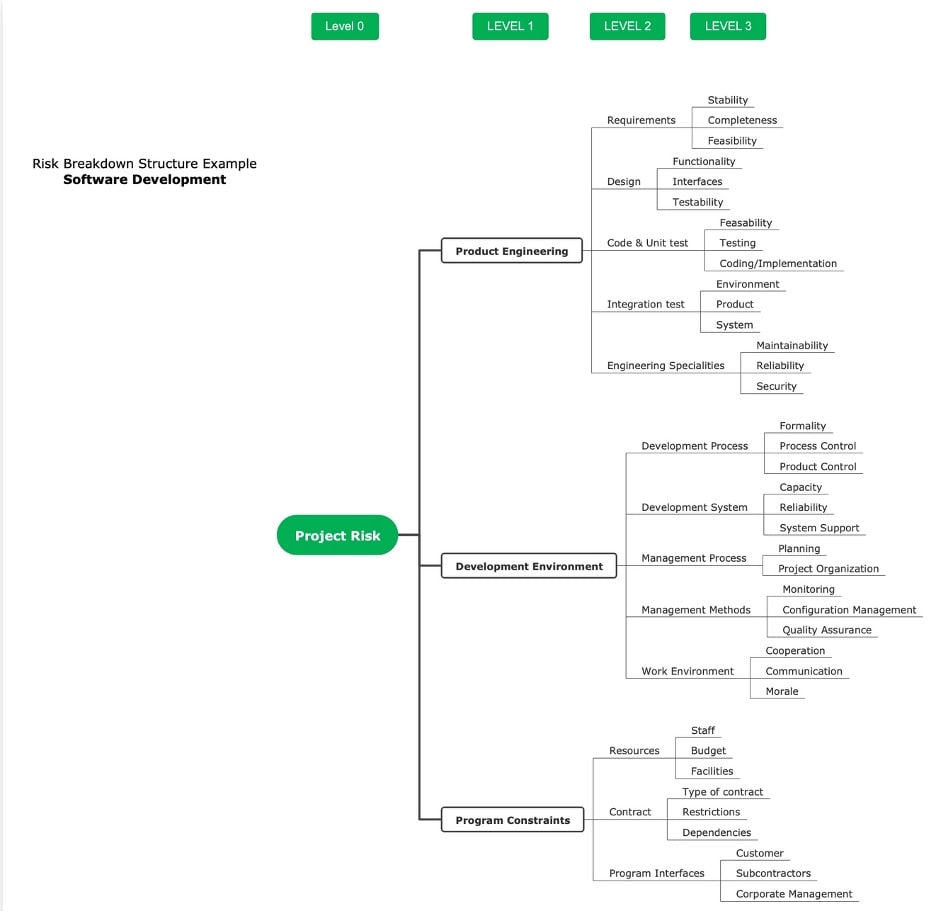
Software development is another critical vertical, and creating an RBS is crucial. Multiple levels of project risks can be involved in the software development life cycle (SDLC).
Thus, creating a risk breakdown that details all of these can be helpful as you develop the software to minimize problems in execution.
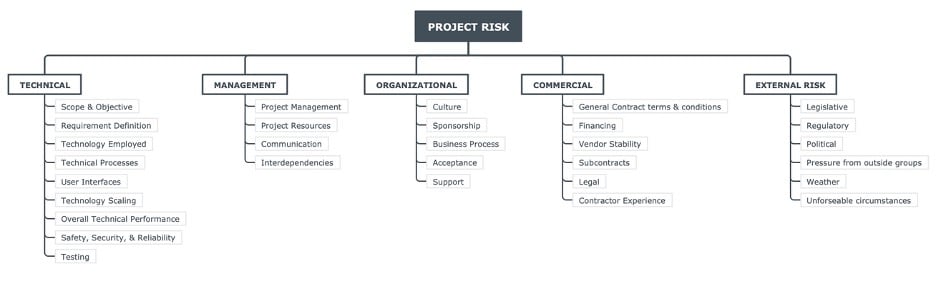
Generic/Blank RBS Template
For the third example, here’s a generic or blank RBS template that you can use. You can edit this with your risk factors, as it already involves the basic parts of an RBS for any project.
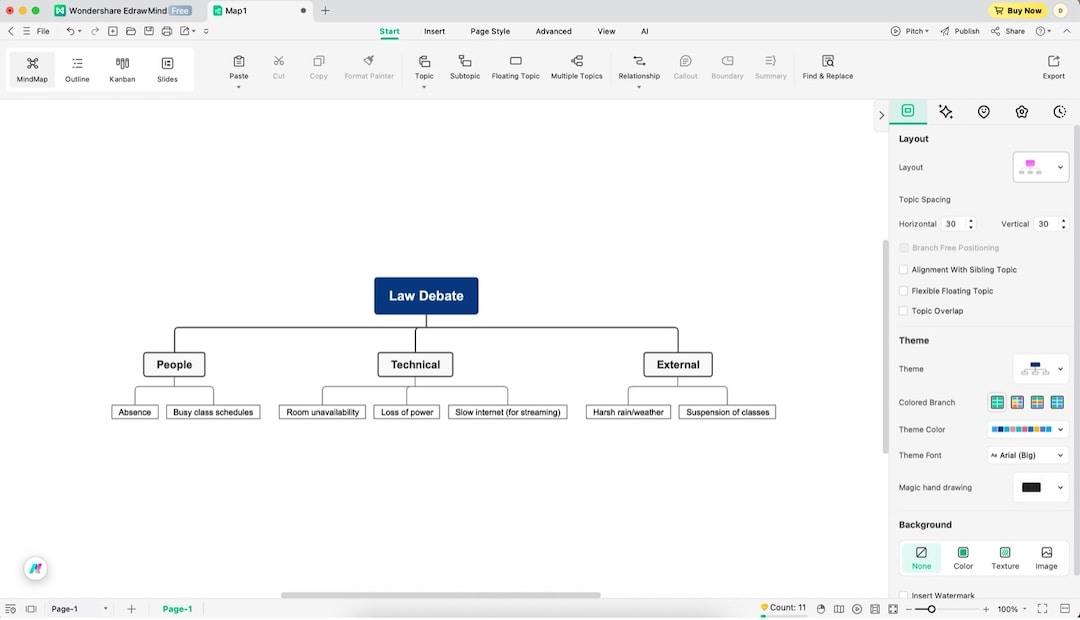
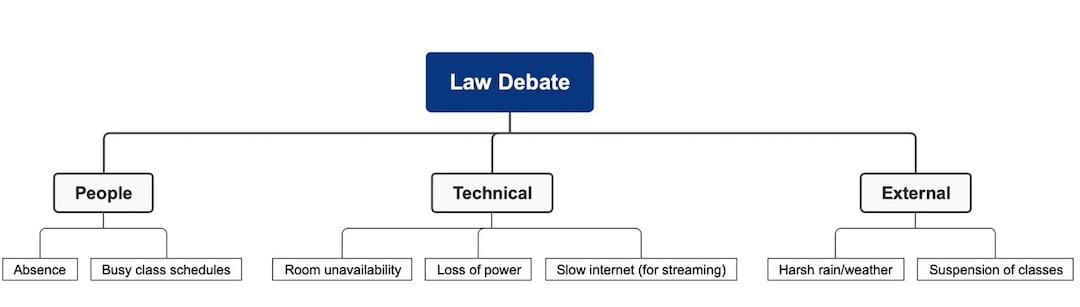
Law Debate Risk Breakdown Structure
This one’s the RBS made from the earlier section. Here, you can see the different categories of risk that a law debate in a university setting may face.
They have to consider the People, Technical, and External factors before staging the event.
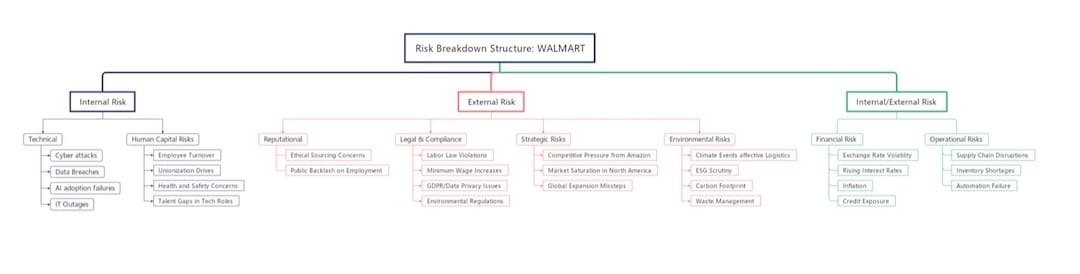
WALMART Risk Breakdown Structure
Here’s a real-life example of a risk breakdown structure. You can see Walmart’s internal, external, and external-internal risks here. This is a great example to learn from, especially since it’s from a successful corporation.
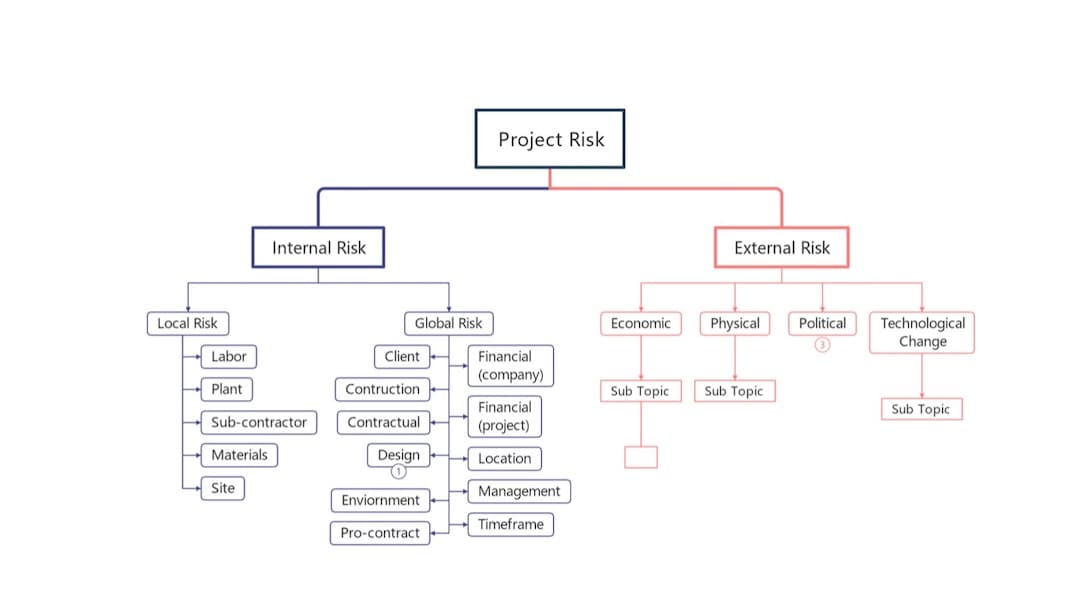
Internal and External Risk Breakdown Structure
Another generic or blank template you can use is this example. Here, you can find factors that may readily apply to different projects –keep what you need. This is great if you want to focus on a few key factors.
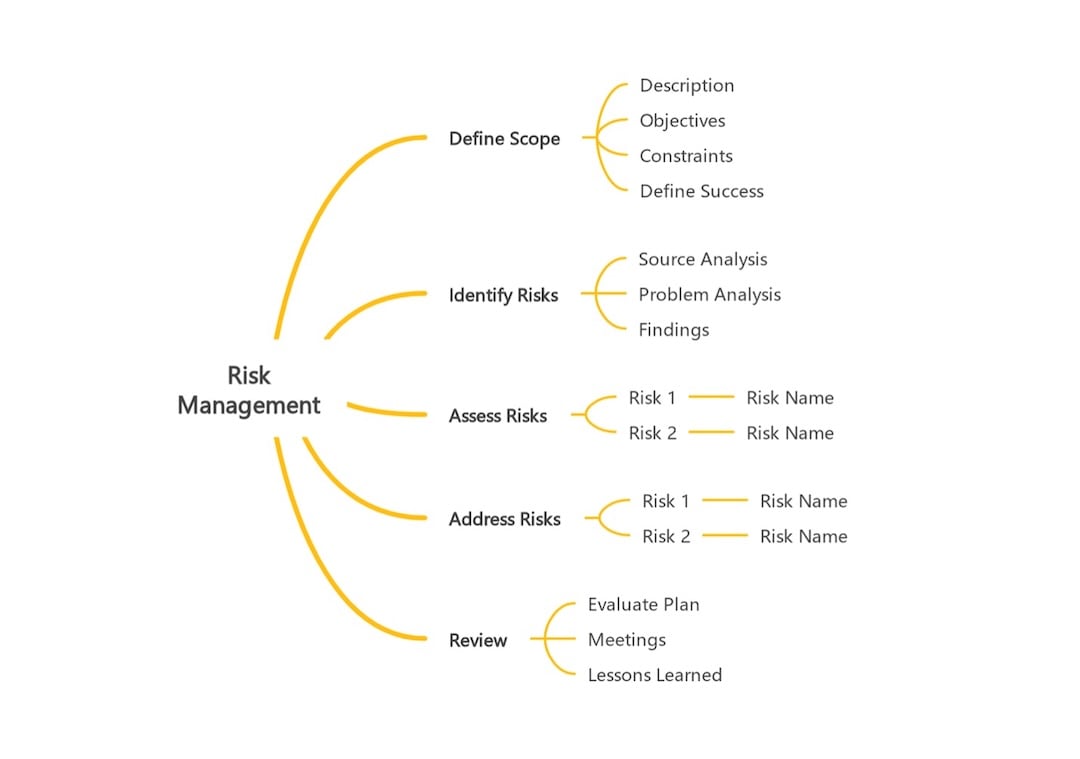
Risk Management Diagram
Another term for RBS is “risk management diagram.” This blank template is more expensive because it involves addressing the risks you’ve identified before. This way, you have an all-in-one reference for anything that may happen.
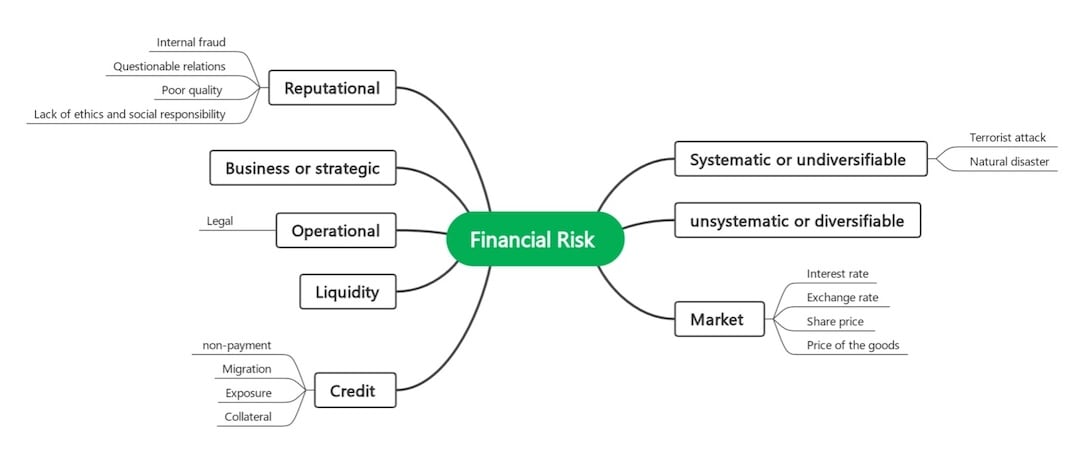
Financial Risk Breakdown Structure
Here’s a specific RBS for financial risks that your project may face. It involves several factors that you can reference and ponder as you create your diagram. After all, finance is one of the most critical parts of a project.
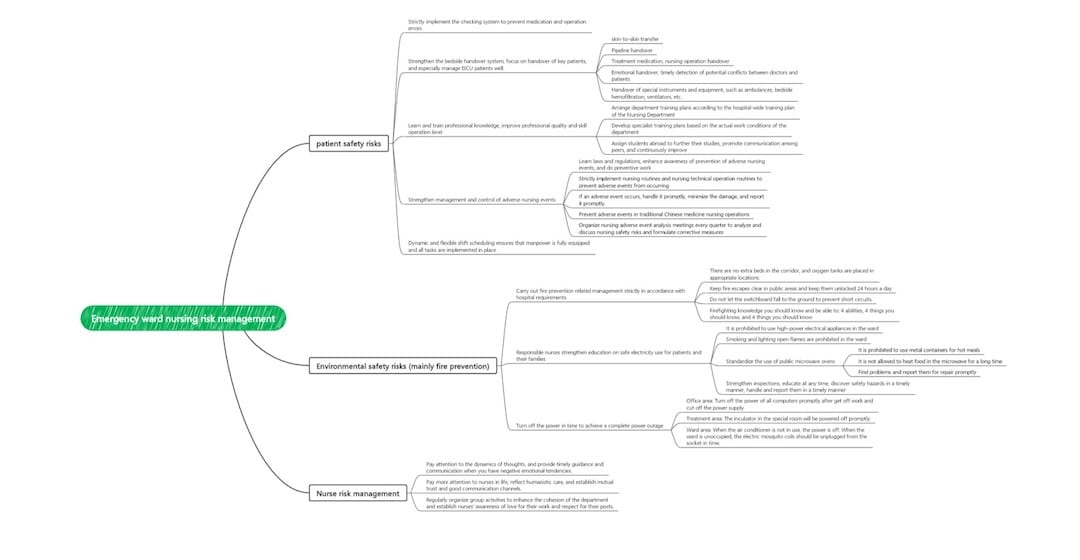
Emergency Ward Nursing Risk Management
For hospitals, this example/template will be invaluable. Not only does it identify common risks, but it also provides rational solutions for any situation that may arise in the emergency room.
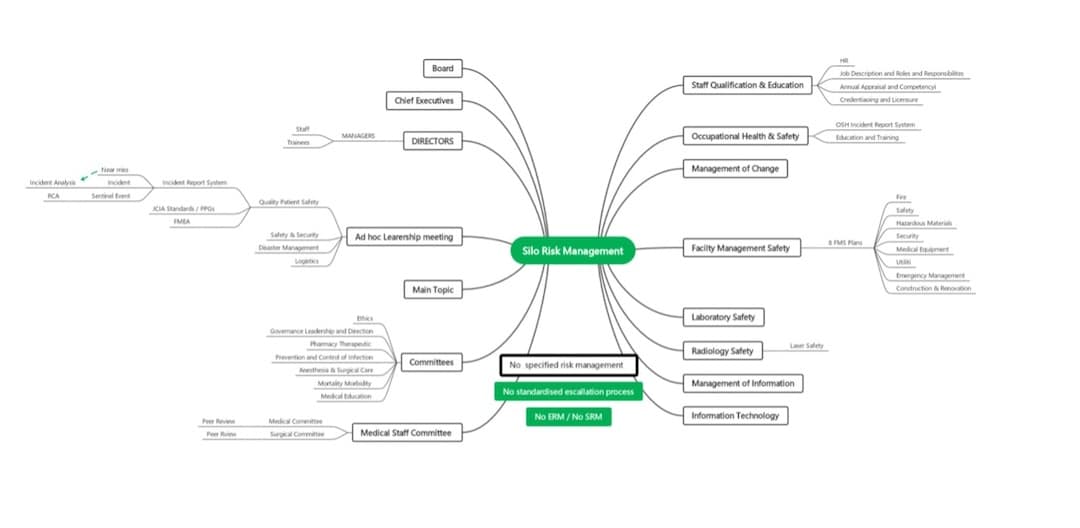
Silo Risk Management
Lastly, here’s a sample risk management or breakdown structure from an organization called Silo. This is a very specific management structure, so you will learn a great deal from it about the factors to look out for.
Key Takeaways
 EdrawMind
AppsEdrawMind Online
EdrawMind
AppsEdrawMind Online