
An environment mind map is most useful when it shows relationships among environmental systems, pressures, and responses rather than simply listing “green” topics. Start with one scope—such as climate change, pollution, biodiversity, waste, or an ecosystem—then connect causes, effects, stakeholders, and possible actions.
Scope note: Environment mind maps are strongest when the center topic is narrow enough to show cause–effect relationships. Climate, pollution, biodiversity, waste, and ecosystem topics should not be collapsed into one undifferentiated branch set.
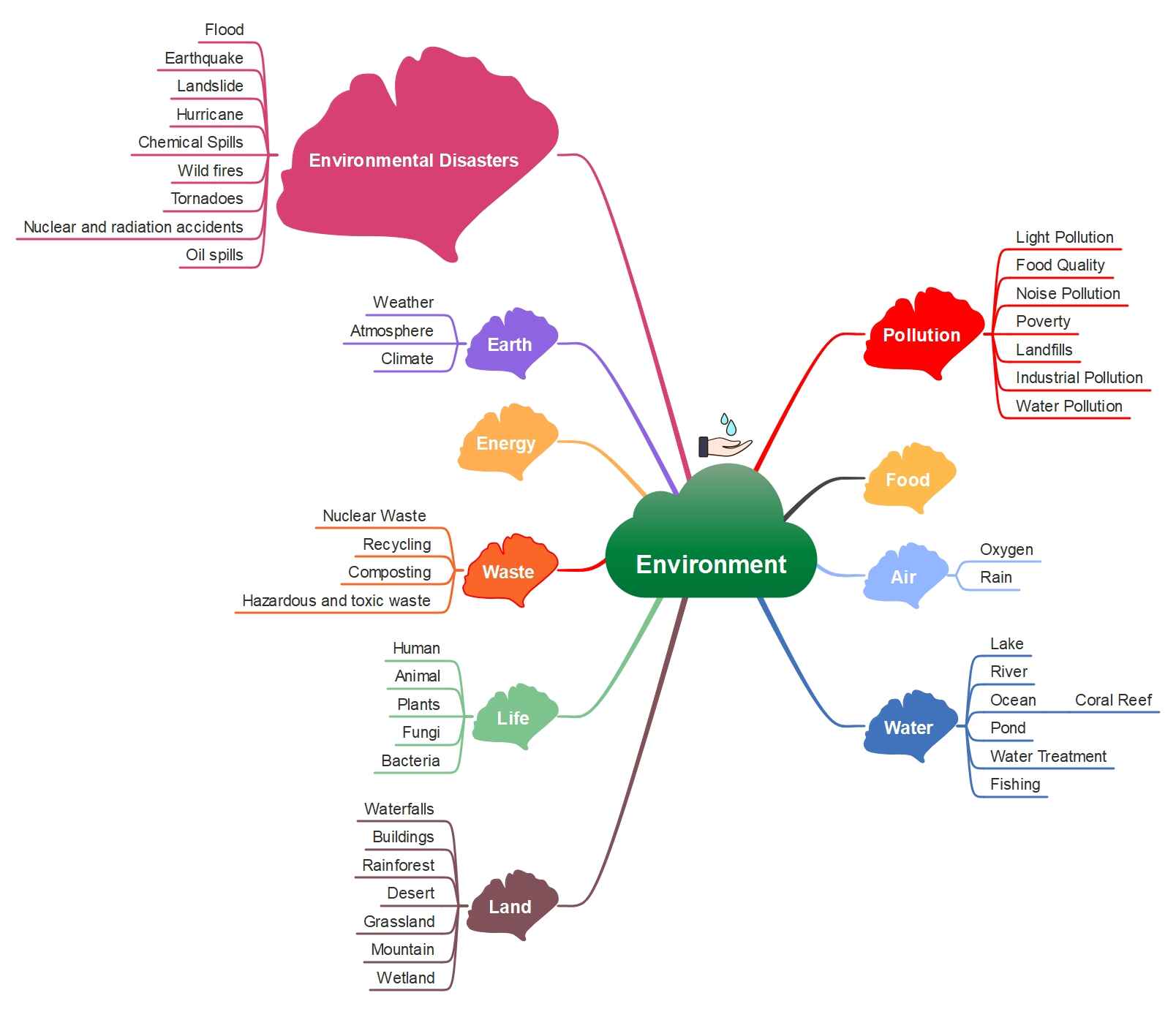


Types of Environment
The word “environment” may seem like a rather casual and frequently used word, but it encapsulates the entire natural world. It includes and sustains a multitude of ecosystems, both big and small.
Marine ecosystems: Considering 70% of the surface of our planet is water, and it comes as no surprise that the marine ecosystem is probably the most abundant, life-sustaining ecosystem on our planet. It shelters and supports an estimated 228,450 documented and over 2 million undocumented species of marine flora and fauna.
Freshwater ecosystems: Freshwater ecosystems are the same as marine ecosystems. However, they are a separate ecosystem as the water itself is not saline, and flora and fauna differ from that of saltwater ecosystems.
Forest ecosystems: The diverse flora and fauna that inhabit the forested areas of the seven continents are forest ecosystems. They get categorized based on their latitudinal location and the type of vegetation that they support.
Desert ecosystems: Regions that receive less than 10 inches of rainfall annually are called desert ecosystems. They are bound together by their windy, arid, and sparse landscape. Flora and fauna in such ecosystems have adapted to their environment and are usually never found anywhere else.
Tundra ecosystems: The cold, barren swaths of the landscape with perennially frozen permafrost are known as Tundra ecosystems. Like the desert ecosystems, vegetation is sparse, and they mostly grow when the snow melts during the spring and summer. Animals highly adapted to these extreme climatic conditions thrive here.
Grassland ecosystems: The vast sweeping grasslands known as steppes, savannah, and prairie are collectively known as grassland ecosystems. Such areas receive low rainfall. Trees are sparse and even non-existent in certain areas.
Free Environment Mind Map Examples
Let us now analyze a few sound samples where mind maps help you identify
1. Air pollution mind map:
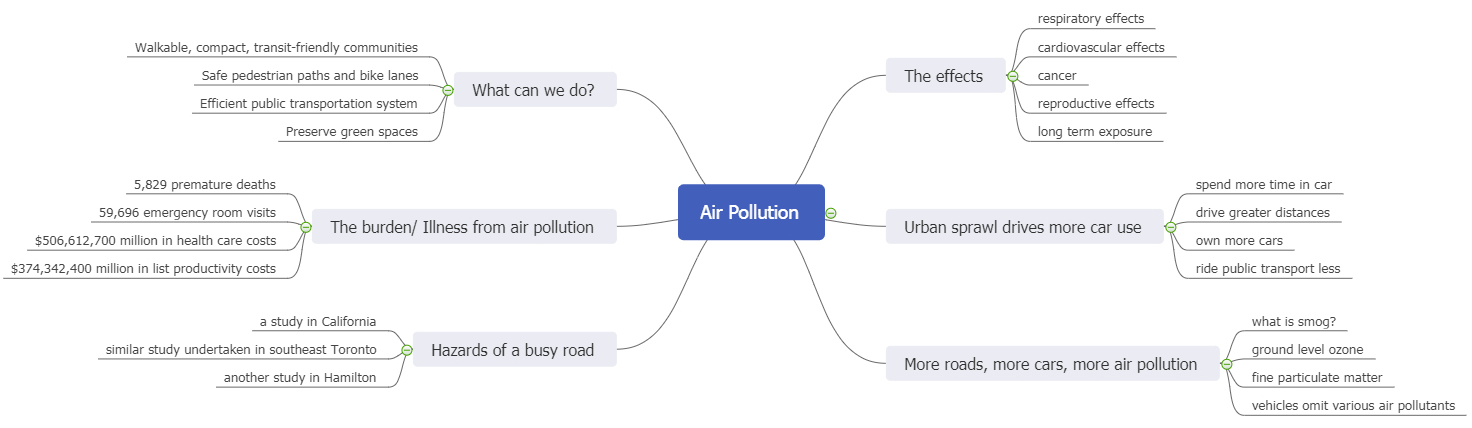
This environment mind map takes air pollution as its central concept and tries to analyze the impact of sprawling urbanization on the air quality of that region. The increase in urban settlements results in higher air-pollution and driving-related hazards. The consequences of sprawling urban areas range from cardio-pulmonary diseases and cancer to other conditions related to long term exposure, like infertility.
2. Energy sources mind map
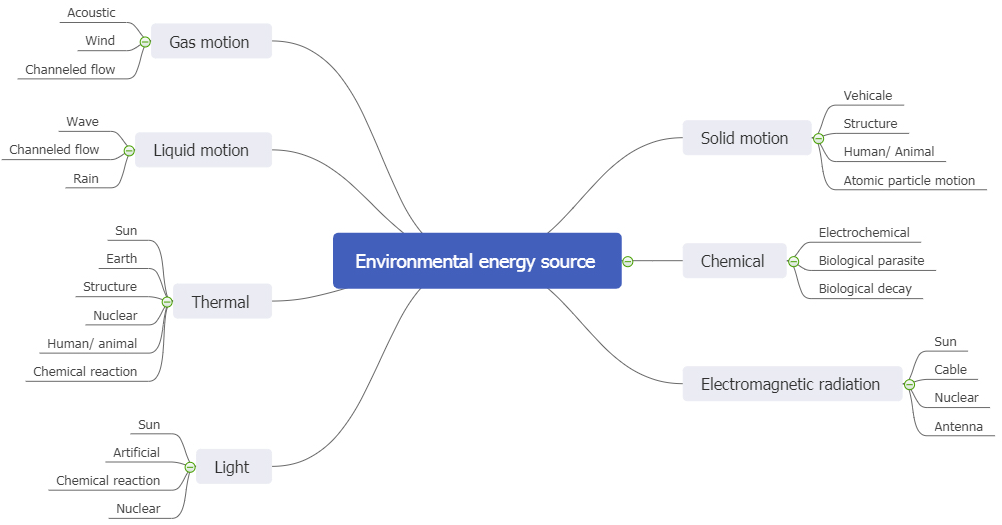
Two-thirds of the global greenhouse gas emission gets attributed to the consumption and generation of energy. Now we should start looking at alternative energy sources that are both sustainable and green. Apart from the known alternative sources of energy like solar, wind, and nuclear power, in this environment mind map, we can find innovative ideas like a chemical reaction and thermal heat.
3. Backyard burning mind map:
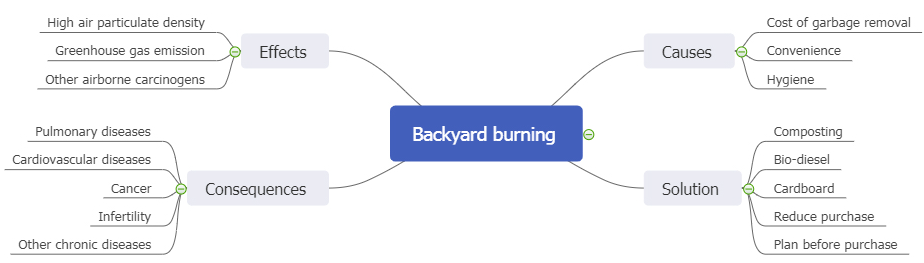
Backyard burning as a practice is probably as old as civilization itself. But today they are a significant contributor to air pollution and greenhouse emissions. The density of particulates in the air increases due to backyard burning and prolonged exposure can lead to cardio-pulmonary severe diseases. Finding alternative solutions to convert this biomass into other useful products is the way of the future. Bio-diesel is one such innovative by-product of this recent shift in thinking.
4. Climate change mind map
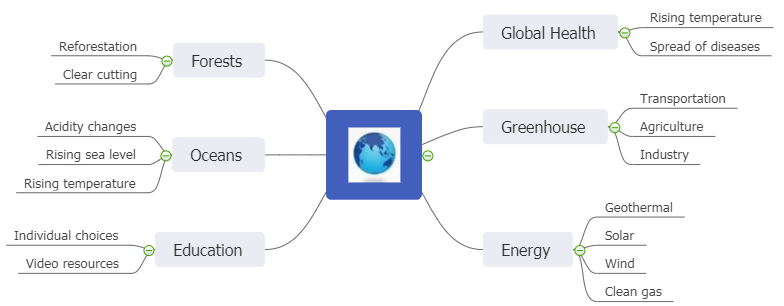
Climatic change is a broad subject with numerous contributors and an equally high number of consequences. The contributing factors may range from improper garbage disposal to excessive greenhouse gas emissions. While the effects range from medical and health issues to extinction of certain species of flora and fauna. Preventive measures like embracing green technology and education are a step towards the right path.
5. Domestic waste classification mind map
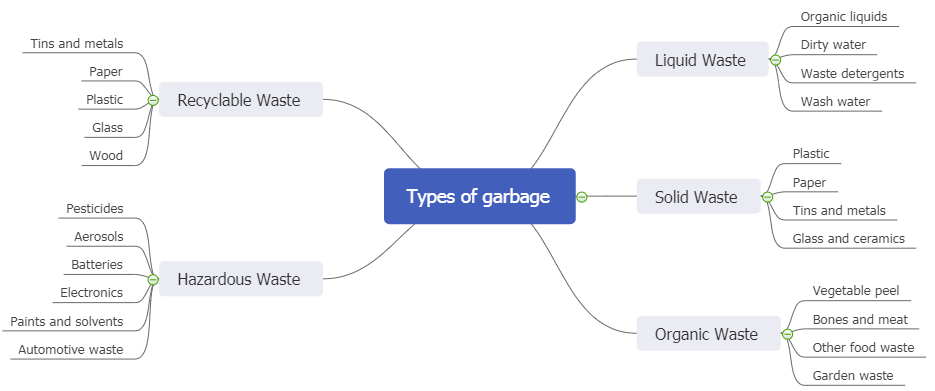
Reduce your carbon footprint or greenhouse gas emissions from your home. An excellent way to start is by managing your domestic waste and its disposal thereof. As we see in the environment mind map above, you can classify domestic waste into five categories: liquid, solid, organic, recyclable, and hazardous. Once you have identified the nature of the garbage generated in your household, you can proceed towards its disposal.
6. Ecosystem mind map
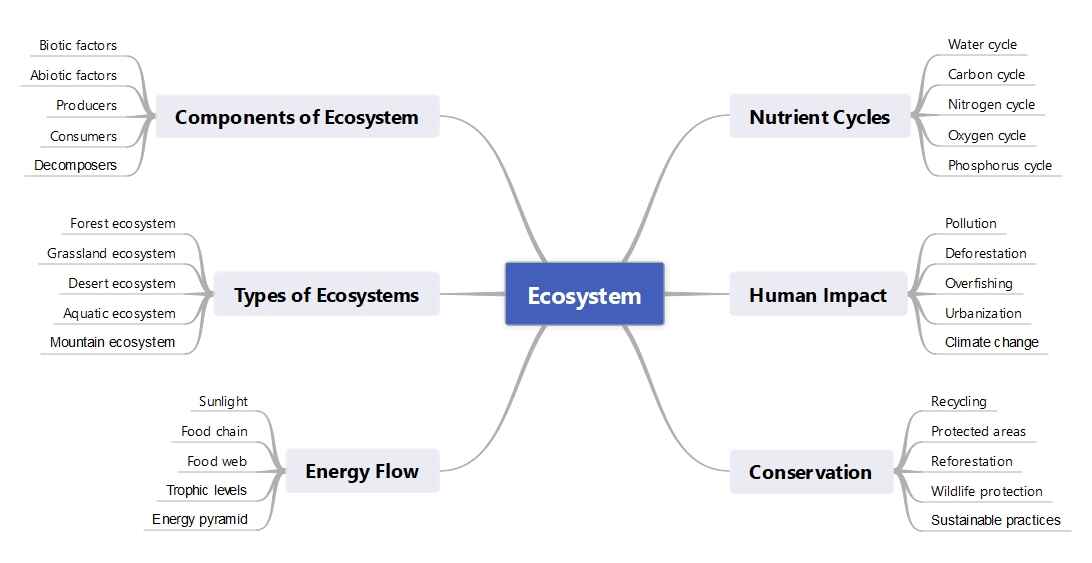
The interdependence of living and non-living organisms on each other for nutrition and energy in a specified environment is called an Ecosystem. In this environment mind map, we look at the various interdependencies and cycles in an ecosystem. It is a symbiotic relationship where organisms and their environments always engage with each other in an intricate exchange of energy and nutrients. It not only provides them with sustenance but also creates a cyclic effect, which affects the overall environment at a much bigger scale.
7. Global Warming mind map
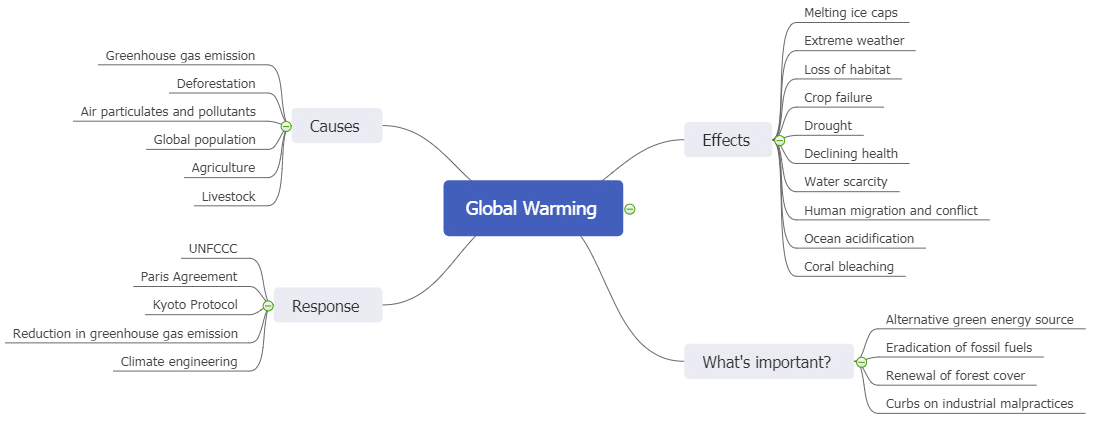
Let’s look at the global warming mind map above. Renewing the lost forest cover ensures some delay in the global warming process. If nothing else, this one single step should buy us enough time to research alternative sources of energy and look forward to a better future.