About this Concepts about Money template
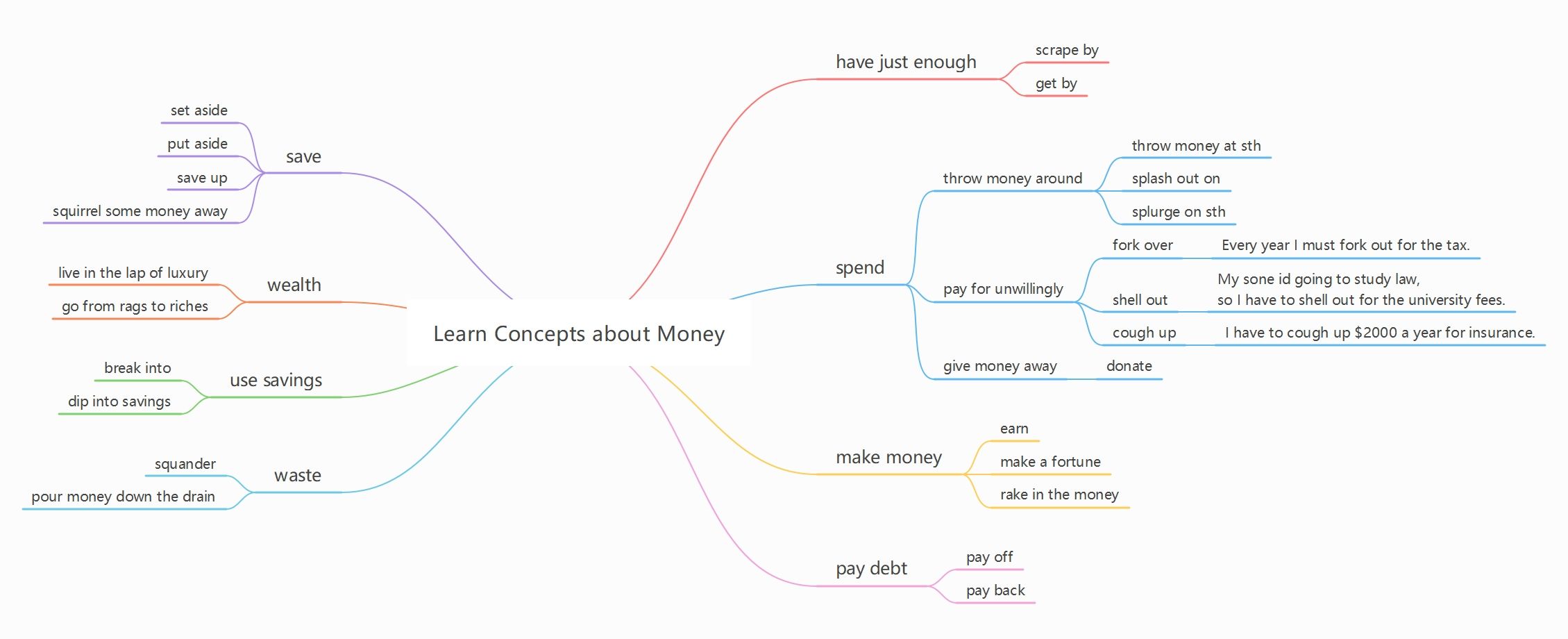
This template provides a clear visual mind map of various financial idioms and vocabulary. It categorizes money-related actions like saving, spending, and earning into easy-to-understand branches for students and learners.
Save
This section focuses on the habit of keeping money for future use. It includes common phrases like setting aside funds or saving up for a specific goal. Building these habits is essential for long-term security.
- set aside
- put aside
- save up
- squirrel some money away
Wealth
Understanding wealth involves knowing terms that describe extreme riches. Phrases like living in the lap of luxury highlight high-end lifestyles. Conversely, going from rags to riches describes a journey from poverty to significant financial success.
- live in the lap of luxury
- go from rags to riches
Use Savings
When emergencies happen, you might need to use your stored funds. Terms like dipping into savings or breaking into a fund describe this action. It refers to spending money you previously kept for a rainy day.
- break into
- dip into savings
Waste
Wasting money is often described with vivid phrases. Squandering funds or pouring money down the drain means spending it unwisely. Recognizing these behaviors helps people avoid bad habits and maintain better control over their budgets.
- squander
- pour money down the drain
Have Just Enough
Sometimes, people have only enough money to survive. Phrases like get by or scrape by describe this tight financial situation. It often implies a struggle to cover basic costs without any extra room for savings.
- scrape by
- get by
Spend
This category covers various spending styles, from splurging on luxuries to paying for things unwillingly. Whether you are splashing out or shelling out for taxes, these idioms capture the different emotions behind every single transaction.
- throw money around (throw money at sth, splash out on, splurge on sth)
- pay for unwillingly (fork over, shell out, cough up)
- give money away (donate)
Make Money
Creating wealth involves earning a living or raking in the money. This section covers terms like making a fortune or simply earning a salary. It focuses on the diverse ways people generate income for themselves.
- earn
- make a fortune
- rake in the money
Pay Debt
Managing debt is a crucial part of financial health. Idioms like paying off or paying back refer to clearing your obligations. Consistently handling these payments ensures a good credit score and helps you stay on track.
- pay off
- pay back
FAQs about this Template
-
How can I stop wasting money?
To stop wasting money, you should first identify where you are squandering your funds. Often, people pour money down the drain on small, unnecessary daily purchases. By tracking your spending, you can find these habits and replace them with better choices. Setting a strict budget helps you focus on your needs rather than splurging on things that do not add real value.
-
What is the best way to start saving?
The best way to start saving is to set aside a small amount from every paycheck. You can use phrases like saving up or squirreling money away to describe this process. Automating your transfers makes it easier because you do not have to think about it. Over time, these small amounts grow, providing you with a solid financial cushion for any future needs.
-
Why is it important to pay off debt early?
Paying off debt early is important because it reduces the amount of interest you pay over time. When you pay back what you owe quickly, you free up more of your income for savings or investments. This helps you avoid the stress of being in debt and allows you to build wealth faster. It is a key step toward achieving total financial freedom.