



Writing the thesis statement is one of the most important things when writing a thesis.
But what is a thesis statement? How to write a thesis statement? What is a thesis statement example? If you are struggling with your thesis writing, you are at the right place.
Today's article explains the concept of a thesis statement. A thesis statement is basically a one-sentence statement that puts the main idea of a thesis in a nutshell while explaining the purpose of the research.
Ultimately, a thesis statement is the foundation of your dissertation essay upon which you construct the thesis.
However, if this foundation is not strong enough, the building will be shaky. It's tricky to write a perfect thesis statement if you are a newbie. That's why researching properly before writing a thesis statement is recommended.
In this article
What Is a Thesis Statement?
Starting with the definition, a thesis statement is a single sentence that describes how the writer is going to interpret the subject matter under discussion.
In a single sentence, it explains what a reader should expect from the succeeding discussion. The rest of the write-up gives arguments, opinions, supporting ideas, and logic for the thesis statement.
The importance of a thesis statement can be analyzed from the fact that it carries a certain number of marks in academic writing.
Not only failing to mention it, but also writing a weak thesis statement leads to a deduction of marks.
To avoid any risk, you need to learn to write it concisely, clearly, and in an eye-catching manner. It may be difficult to write because summarizing an entire essay into a single statement is challenging. But as a proverb says.
How To Write a Thesis Statement?
Now the question arises: what steps do you need to take to make a thesis statement strong? A study conducted by Research Prospect states that out of five students, three lack proficiency in writing skills, which is a significant number.
Trying not to be among those three, learn how to write a thesis statement in five easy steps. First, you must understand that a good thesis statement is simple, concise, and consistent with the rest of the paper.
Step 1: Select the Essay Style:
This is the most important step, as the type of thesis statement pursued varies surely with the kind of essay you choose. Depending on the content, there are two types of essays.
 Try the app & get 500 free AI tokens


So, here are two further questions! What is a thesis statement from the perspective of an expository style essay, and how do you write a thesis statement for expository essays?
What is a thesis statement from the perspective of a persuasive style essay, and how to write a thesis statement for a persuasive essay?
Step 2: Ask Yourself a Question and Answer It:
While focusing on the title of the topic, you should answer the question in the title while writing the thesis statement.
If it’s not a question, you shall assume the question in our minds. While keeping that question in mind, the answer to the question must support our argument in the rest of the paper (in the case of an argumentative essay).
Step 3: Persuasive and Give a Logical Reason:
This type of essay requires the writer to present an argument, their personal opinion, and support for a particular point of view.
The thesis statement for such an essay must either give the opinion of the writer or clearly define which side of the argument the writer supports and the reason for it.
The next part of your thesis statement will give a logical reason for "why" or "how" you support a certain side of the argument.
Step 4: Adjust the Statement:
It usually occurs at the concluding line of the introductory paragraph, but can also be located at the beginning or even the middle.
To stay on track and avoid shifting your focus from the core idea of the essay, keep visiting your thesis statement while writing the essay.
A thesis statement is usually one or two sentences long. Too many lengthy statements are avoided to avoid the reader getting frustrated.
Step 5: Analyze the Thesis Statement of This Article:
Finally, evaluate the thesis statement of this article. It's an expository piece because it provides factual information rather than the writer’s personal opinion or argument.
It starts with the first basic step, i.e, answering the question of the title. Then gives a logical answer for "how".
The next part of the statement includes a summary of the remaining information. Upon practical observation, it can be concluded that the article contains no information beyond what is mentioned in it.
Make a Thesis Statement via Mind-Mapping
Mind maps are a visual articulation of your thoughts, opinions, and ideas. It helps you contextualize your vision, drawing inspiration to guide your writing direction, and craft the language and terminology that best express your vein of thought.
Mind mapping can work wonderfully to guide you in choosing an appropriate thesis statement for your essay.
Mind-maps help develop an understanding of the text you are writing. A visual map, whether hand-drawn or created using computer software, is a fun way to organize all your ideas and assertions in one easy-to-read format.
This mapping of ideas will orient you towards the central theme or element of the essay that is crucial for you to highlight.
This central idea is what needs to be communicated to the reader and, therefore, will determine the content and form of your thesis statement.
Here, you can choose Wondershare EdrawMind to create your mind maps.
Resource Recommendations
Strong thesis statements often rely on good resources. Here are some resource recommendations that can support learning and practice.
Mind Mapping Software
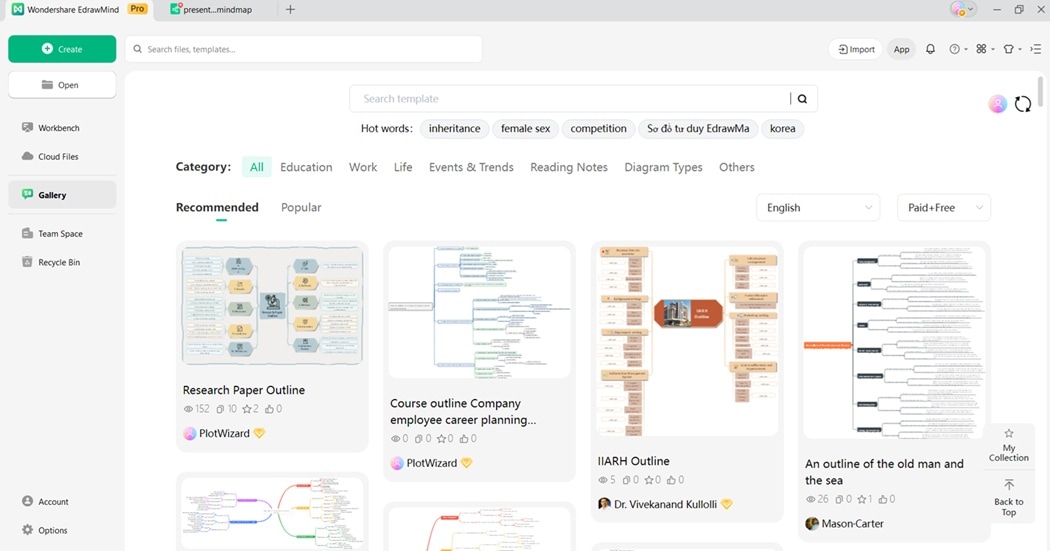
Programs like EdrawMind help organize thoughts and connect ideas in a visual format. A thesis statement is easier to draft when ideas are mapped out.
Writing Guides
University writing centers often publish free PDF handbooks that explain how to write strong thesis statements. These guides include sample statements, step-by-step instructions, and common mistakes to avoid.
Practice Worksheets
Online education platforms provide worksheets that allow students to practice writing and revising thesis statements. Regular practice improves clarity and helps students understand what makes a statement effective.
Collaboration Tools
Platforms like Google Docs allow peers, tutors, or teachers to leave comments on a draft. This feedback is valuable for refining a thesis and making sure it fits the essay’s purpose.
Video Tutorials
Educational YouTube channels and online courses often share free videos about thesis statement writing. These visual examples explain the reasoning behind strong statements and are helpful for students who learn better through demonstrations.
Repositories
Maintaining a personal digital folder with drafts, examples, and resources gives students a quick reference system. Over time, this collection becomes a personalized guide for future writing tasks.
Tutoring Support
A one-on-one session with a writing tutor or academic coach can offer focused advice. Tutors highlight weaknesses in draft statements and suggest direct improvements that general resources may not provide.
Online Forums and Study Groups
Communities on platforms like Reddit or Quora often share real study experiences. Reading how others prepare and refine thesis statements provides fresh strategies and encouragement.
These resources give structure to the writing process. They provide examples, tools, and feedback opportunities that make it easier to develop a clear and effective thesis statement. By combining them, students build a stronger foundation for academic writing.
Tips for Writing Better Thesis Statements
Strong thesis statements guide essays and give them direction. They set the stage for clear writing and focused arguments. These six tips explain how to build a thesis statement step by step, allowing students to practice and improve their skills.
Keep It Specific
A thesis should focus on one clear idea. Including too many points weakens the focus and makes the essay hard to follow. Narrowing the topic keeps the writing consistent. Every paragraph should support the same main idea.
Make It Concise
Most strong thesis statements fit into one or two sentences. Longer ones confuse readers and reduce impact. Concise statements give the essay a clear purpose. Stay on track because every argument must connect to that short, focused claim.
Answer the Main Question
Every essay topic is built around a central question or issue. A good thesis provides a direct answer. Without it, the essay risks becoming a list of random ideas.
Answering the guiding question makes the thesis purposeful and gives the essay a strong direction from the start.
Use Clear and Confident Language
Uncertain wording weakens a thesis. Words like "might" or "could" make the statement sound unsure. Strong verbs such as prove, explain, or show give confidence. Confident language signals that the essay is well thought out.
Place It Effectively
Readers expect a thesis to appear in the introduction. It gives structure and prepares the audience for what comes next. This position ensures the essay feels organized, with each paragraph tied to the central idea.
Use Mind Maps or Diagrams
Visual tools such as mind maps make it easier to build a thesis. They help organize thoughts and show connections. Mapping ideas highlights the central theme, making the thesis clearer. Use diagrams to help shape the rest of the essay.
These six tips give writers a simple process to follow. With practice, students can improve their skills and write stronger thesis statements. Follow these tips to build essays that feel clear, focused, and persuasive from start to finish.
How To Boost Efficiency With a Mind Map
A mind map is a visual method to organize ideas, tasks, or plans. By using a central theme with branches, it turns messy thoughts into a clear picture. This saves time and energy while keeping focus on the goal.
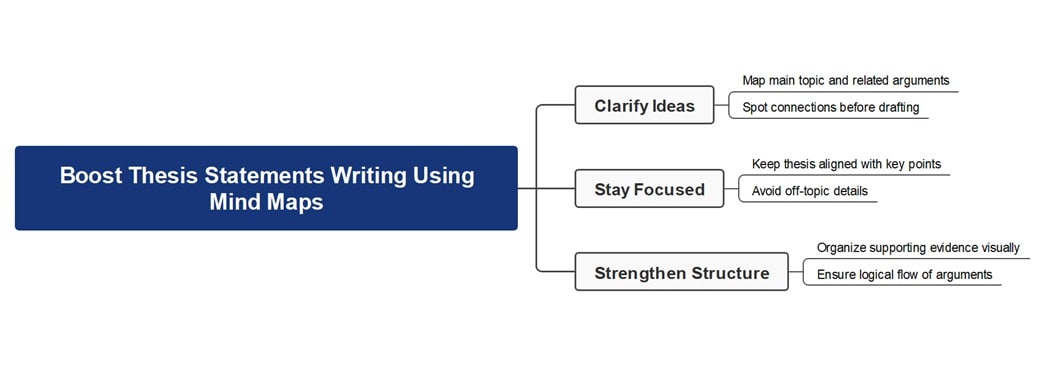


The example map shows how topics link together in a simple design.
Each branch connects to a main idea. It helps you see patterns that notes alone might hide. This makes it easier to filter out weak points and keep only strong arguments.
For students, a thesis statement often feels like the hardest step. Mind maps make this easier by placing all possible ideas in one space.
From there, it is simple to test which idea has the most support to form a strong thesis.
Creating a mind map is simple. Start with your main topic in the middle, then draw lines outward for related thoughts. Use EdrawMind’s editing interface as an example.
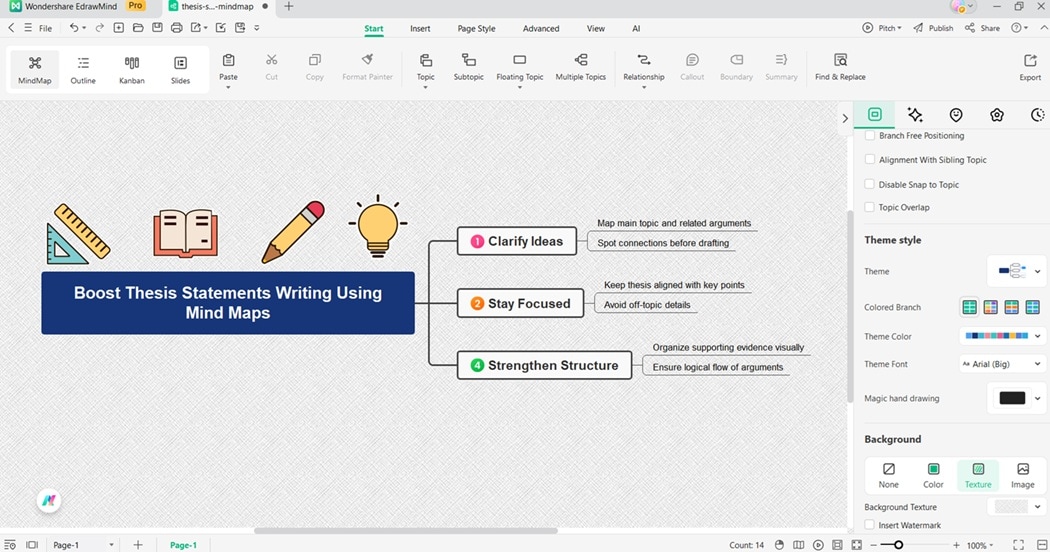
Add more details to each branch, building layers of clarity. This approach works for essays, projects, and even daily planning.
Why Use Mind Maps To Improve Thesis Statements?
EdrawMind supports knowledge management through smart mapping. It gives ready templates and AI features to expand ideas.
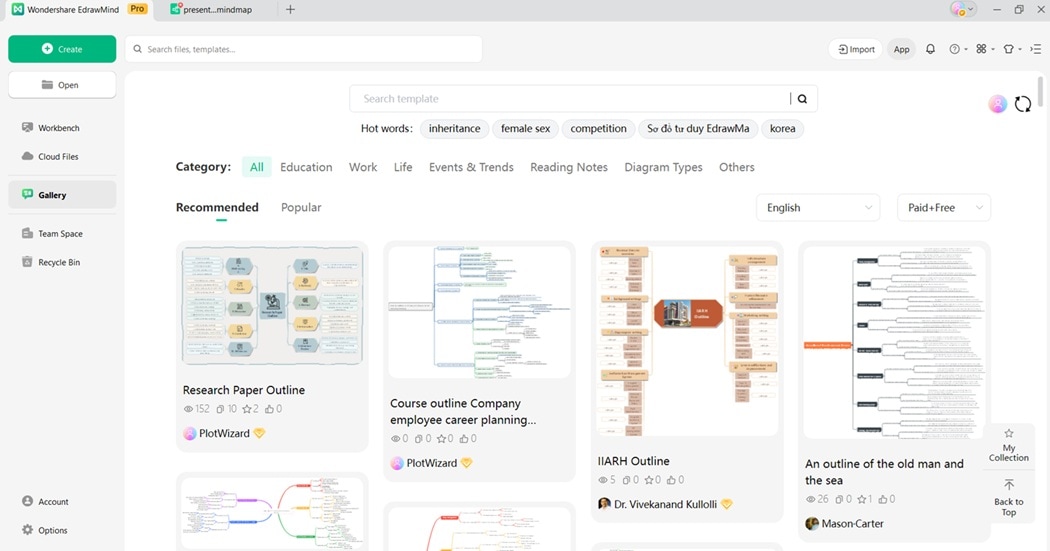
Here are the main features of the platform:
- AI Study Guide Planner
Enter topics like “Thesis Statement,” “Essay Structure,” or “Argument Development.” The tool creates a detailed mind map with branches for main ideas, supporting points, and examples to help you organize your central argument clearly.
- File to Slide Task Map
Upload drafts, outlines, or research notes. The tool arranges them into visual layouts, helping you identify your main claim, supporting evidence, and areas that need more focus or clarity.
- Pic to Mind Map
Take photos of handwritten essay plans or brainstorming notes. The system organizes them into editable digital maps, so you can refine your thesis and structure your essay from any device.
- AI Mapping
Type prompts such as “How to Write a Strong Thesis Statement,” “Persuasive Essay,” or “Research Paper Argument.” The AI automatically builds connected maps showing how ideas, evidence, and conclusions relate.
- Concept Map Maker
Link related ideas like “Topic” to “Claim” or “Reason” to “Evidence.” Visualizing these connections helps ensure your thesis is logical, focused, and supported by clear arguments.
- Text to Mind Map Maker
Paste sentences, notes, or quotes from your draft. The tool transforms them into a structured visual map that highlights your main thesis and supporting ideas, improving clarity and essay flow.
With it, students can build, adjust, and share mind maps in one workspace. This makes the whole writing process more efficient and less stressful.
Mind maps also improve memory. The brain remembers visual links faster than plain text. Seeing ideas laid out with branches helps students recall details when writing. It also prevents losing track of the main thesis.
Digital tools make the process faster. Instead of drawing by hand, you can create clean maps online. Many free tools offer templates and drag-and-drop features, so building a map only takes a few minutes. This adds flexibility and saves time.
By combining clear visuals, easy editing, and strong focus, mind maps help improve thesis statements. They guide students from brainstorming to thesis creation without confusion. With the right tool, the process becomes smoother, faster, and far more effective.
Conclusion
A thesis statement is an important part of writing that must be written while following the rules. It is an eye-catching part for the reader, and the impression of the rest of the work depends on it, as it appears at the beginning.
Substituting the statement with the proverb, "First impression is the last impression", a writer must stick to the thesis statement throughout the whole writing.
FAQS
-
Can a thesis statement be a question?
No. A thesis is never a question. It is a claim or statement that the essay will support with reasoning and evidence. Questions can help in brainstorming, but they must always be rewritten into a clear, testable statement afterward. -
Can I change my thesis while writing?
Yes, and many writers do. Research often brings new insights. A flexible thesis adapts to new evidence. The key is to ensure the final thesis matches the essay content. This keeps writing accurate, organized, and logically connected throughout. -
Do all essays need a thesis statement?
Most academic essays require one. Argumentative, persuasive, and analytical essays always need a thesis. Some creative writing or reflective pieces might not be included.For school or university assignments, assume it is required. Teachers want clear focus, direction, and strong purpose. -
Can one essay have more than one thesis statement?
No. An essay should only have one thesis statement. Multiple thesis statements confuse readers and weaken focus. However, essays can have several supporting ideas that link back to the main thesis. These strengthen rather than replace the central claim. -
Why do teachers give marks for thesis statements?
Teachers assess thesis statements because they show organization and focus. A good thesis proves the student understands the topic. It signals that a clear argument will follow. Weak thesis statements reduce clarity. They make essays harder to grade.
 EdrawMind
AppsEdrawMind Online
EdrawMind
AppsEdrawMind Online