


Do you ever pause in conversation and question why people believe what they do?
When you study philosophy, you start examining ideas more closely and tracing the reasoning that shapes them. It is not only about theories. It reshapes how you approach life, choices, and people.
If you are looking for a guide on how to study philosophy, then you are in the right place. This article will show the steps and share practical tips and tools to help you learn more effectively.
In this Article
Why Study Philosophy?
Philosophy starts when you stop accepting answers at face value and begin asking deeper questions. How have you tried to make sense of right and wrong, truth and illusion, or what makes a good life?
If you’ve ever thought about those things, you’re already thinking like a philosopher. Here’s why studying philosophy can shape the way you see the world.
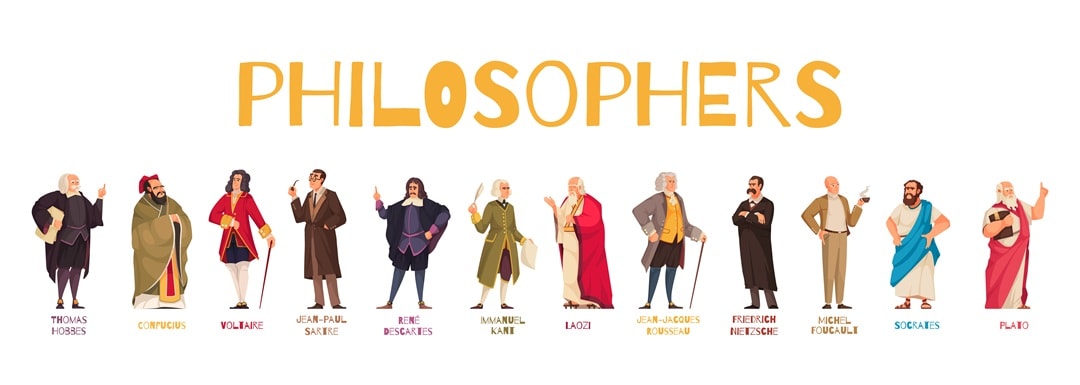
Know Life Better
Philosophy helps you look at life with more intention. You stop moving through habits and start understanding why things matter.
Have you ever made a decision that felt right but couldn’t explain why? Philosophy gives you the tools to examine your motives and align them with your values.
Improve Communication Skills
Learning philosophy improves how you express ideas and listen to others. You learn to reason before reacting. How have you handled disagreements before? Once you understand logic and perspective, you start communicating to connect, not compete.
Grow Your Personality
When you question your beliefs, you begin to see yourself differently. Philosophy encourages patience and empathy.
Have you noticed how being open to new ideas changes how you interact with people? Growth starts when you choose to understand rather than judge.
Write With Clarity
Philosophy teaches you to organize ideas before putting them into words. You stop writing to fill pages and start writing to express meaning.
Think Critically and Decide Wisely
Analytical thinking is philosophy in action. You learn to break down complex issues and evaluate choices carefully. How have you made difficult decisions before? Philosophy gives you reasoning strong enough to trust your own mind.
Roadmap on How To Study Philosophy
There have likely been instances when you wondered, Why do people think as they do? or What makes a decision right or wrong? Such questions indicate a natural curiosity for philosophy.


To turn that curiosity into understanding, you need a guide that keeps you focused and engaged. Ready to learn about philosophy? Below are five steps.
 Try the app & get 500 free AI tokens


Step 1: Build Curiosity and Foundation
Begin by knowing what fascinates you most.
- Do you find yourself drawn to questions about truth, freedom, or morality?
- What do you think makes life meaningful? And who decides what’s good or bad?
Each question opens a door into a different branch of philosophy.
Ethics studies human values and moral decisions. Logic is about the use of reason and the construction of arguments. Metaphysics is the study of existence and reality.
It is not necessary to have all the answers at once; what you need is the readiness to explore them. This step, you could say, is the base for every idea that you will come across later.
Check? Move forward.
Step 2: Read About Philosophers and Their Works
When you already know the area of philosophy you like, find out the thinkers whose ideas have influenced philosophy. Try to read the brief descriptions or contemporary views of the great philosophers such as Socrates, Aristotle, or Confucius.
Notice how their ideas came from their experiences.
Thinking closely: How have my experiences impacted my beliefs?
The intention is not to reproduce their thoughts but to get familiar with different minds' ways of seeking truth and finding meaning.
Have you finished this step? Now you can go on further.
Step 3: Take Introductory Courses or Watch Lectures
Suppose you prefer a more organized path. It’s a good idea to sign up for a web course or attend lectures. You could get an excellent jumping-off point from the likes of Coursera, EdX, and OpenLearn.
Besides helping you grasp the theories, these courses also train your logical thinking.
Feeling ready for interaction? Keep going.
Step 4: Join Philosophy Communities
Become a member of a local club, an online forum, or a subreddit that deals with philosophy.
The people you get to know will question your thoughts and broaden your viewpoint. Offer up concepts you’ve learn, ask, and discover how others comprehend them.
How long has it been since a chat altered your perspective?
Time for the last step.
Step 5: Start Reflective Practice
Keep a learning diary and mention how your studies relate to your everyday life. Write down ideas that cause you to stop or challenge what you think.
Afterward, you can also present these realizations through diagrams such as mind maps. However, at the moment, concentrate only on comprehending your own thoughts.
Philosophy Resource Recommendations
You can’t study philosophy by guessing your way through random blogs. Go for sources that make sense of abstract ideas. When you pair them with good practice tools, curiosity takes the lead.

How have you been choosing what to read or watch? You can sort through the best resources for each stage of learning.
For Guides and Learning Materials
Kick off with resources designed to simplify complex thoughts.
- Books: Sophie’s World by Jostein Gaarder and The Philosophy Book by DK are great picks if you want a broad look at philosophy’s major ideas.
- Online courses: Platforms such as Coursera, EdX, and OpenLearn provide you with guided lessons to keep your studies on track.
- Podcasts and YouTube: Try following The School of Life or catching Philosophize This. They wrap abstract concepts into everyday examples.
Their content allows you to gradually grasp the knowledge, progressing from simple to complex concepts. Which ones have you explored so far?
For Practice and Application
Once you’ve learned the basics, it’s time to test what you know.
- Connect with people on Reddit or Facebook who love discussing philosophical topics.
- Use Quizlet or StudySmarter to create quick reviews for major theories.
- Start or join a debate circle or journal-writing community to express your ideas in words.
Philosophy grows when you express it. How have you shared your thoughts so far?
For Deep Research and References
When you’re ready for deeper exploration, shift to scholarly sources.
- Stanford Encyclopedia of Philosophy
- Internet Encyclopedia of Philosophy
- JSTOR and Google Scholar for academic papers
- Modern blogs and newsletters like Daily Philosophy or Substack essays by independent writers
These references guide you into advanced study, letting you compare schools of thought and trace how ideas evolved.
Tips To Make Philosophy Easier To Learn
Philosophy can feel heavy when you treat it like homework. The trick is to make it part of how you see the world. One second, you’re scrolling, the next you’re deep in thought about something totally random.
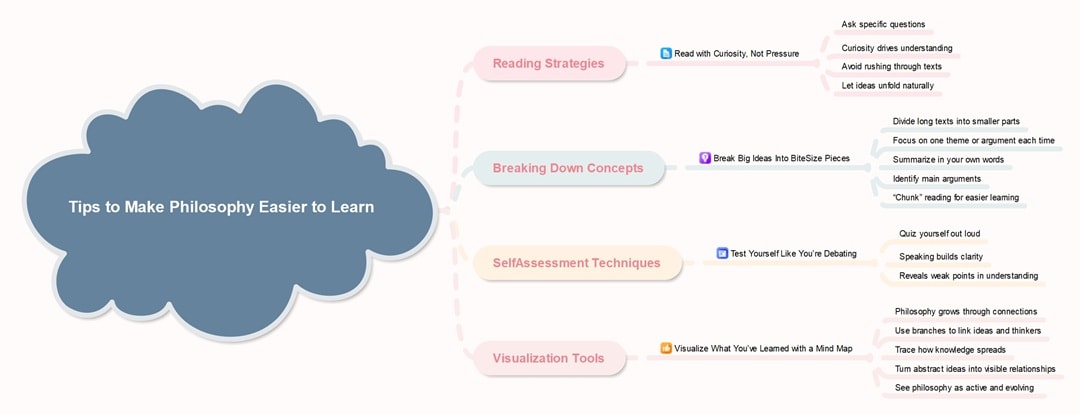
Sound familiar? That curiosity is where good study habits begin. Here’s how to turn that spark into progress.
Read With Curiosity, Not Pressure
Philosophy can feel heavy when you try to “get” everything at once. Instead, approach every text with questions.
What was so important about this idea at that time? How have you observed its effects in real life?
One reason curiosity is the best driver of understanding is that it refutes the practice of rushing through chapters.
Not trying to understand things all the time will make you see that the ideas come on their own.
Break Big Ideas Into Bite-Size Pieces
It is not helpful to look at a 400-page book with dread. Divide it into smaller parts that you can handle. Concentrate on a single theme or argument only each time.
Say, you go through one chapter, put it in your own words, and pick out the main arguments. Have you ever chunked your reading like this? It allows you to digest the dense material much more easily.
Test Yourself Like You’re Debating
Before moving on to a new topic, quiz yourself out loud. Ask questions like, Can I explain Plato’s Allegory of the Cave in two sentences? Or could I defend this argument in a debate?
Speaking forces clarity. You’ll spot which ideas still feel shaky.
Visualize What You’ve Learned With a Mind Map
Philosophy isn’t linear. Ideas grow in branches: one thought connects to another, forming webs of meaning.
By mirroring that framework, a mind map reveals how ideas, questions, and thinkers fit together. When you put ideas in a diagram, you’re not watching a tool think.
You are tracing how knowledge spreads, like visualizing the shape of thought itself. It’s a simple way to see philosophy as something alive, not abstract.
How To Boost Efficiency With a Mind Map
You’ve collected ideas, summarized readings, and reflected on what they mean. Now you need a way to connect them. How have you been keeping your notes organized so far?
If your materials feel like separate pieces, a mind map can link everything into a structure you can follow. When you use it, you’re building a network of ideas instead of memorizing isolated facts.
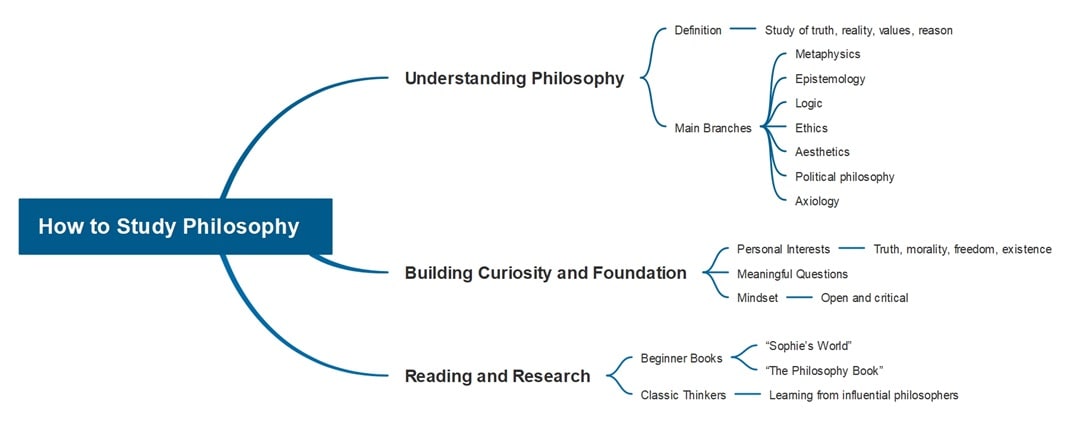
See How Philosophy Topics Come Together
A mind map complements your natural thinking process. It keeps your effort structured and more hands-on. Here’s how it works:
- Connects arguments: You can track how one idea supports, opposes, or expands another.
- Highlights core themes: The center of your mind map becomes your anchor, keeping your main topic visible as you explore.
- Shows patterns across thinkers: When you group philosophers by topic, you see who influenced whom.
- Reveals gaps in understanding: Empty branches remind you which theories you still need to explore.
- Turns review into discovery: Revisiting a mind map sparks new insights and questions instead of repeating what you already know.
Track Arguments, Not Just Information
Most students copy notes line by line, but philosophy demands structure. With a mind map, you can trace how an argument begins, develops, and ends.
- Start with a main theme like morality.
- Branch out to different perspectives: Aristotle’s virtue ethics, Kant’s duty-based ethics, and Mill’s utilitarianism.
- Under each, add short notes explaining how each thinker defines what’s “right.”
Have you ever read two philosophers with opposing views and struggled to compare them? When you place their arguments side by side, differences stand out. This process turns abstract debate into something you can analyze and understand.
Make Your Study Sessions More Efficient
Mind maps turn passive reading into active learning. They engage your brain to reflect, contrast, and arrange concepts during your learning process.
Instead of just repeating a philosopher's saying, you try to understand their motivation and link their thoughts to other ones.
Each time you revise a mind map, you exercise your brain to make quicker associations between new pieces of information. Eventually, you will use memory less and comprehension of logical patterns more.
So, as your notes expand, you need more than notebooks to manage them. Try Wondershare EdrawMind for free, a collaborative mind mapping tool for knowledge management and idea organization.
Use it to create and design expandable diagrams for tracking philosophers, theories, and timelines.
Final Thoughts
The more you ask questions and think about ideas that push your limits, the more you understand philosophy. You’ve learned how to prepare, find useful resources, and study in ways that keep your thoughts organized.
Now it’s your turn to explore further.
Read from different thinkers, ask your own questions, and connect your insights as you go. You can use simple notes or visual tools like EdrawMind to organize what you discover.
What matters is how each idea shapes the next. Keep studying, keep asking, and let philosophy change the way you see the world.
FAQ
-
What Are the 7 Areas of Philosophy?
Philosophy branches into seven main areas: metaphysics, epistemology, logic, ethics, aesthetics, political philosophy, and axiology. Each one explores a specific part of human thought. Together, they form the core of philosophical study. -
How Can You Memorize Philosophy Faster?
To memorize philosophy fast, focus on active recall and simplifying complex ideas in your own words. Write short explanations, quiz yourself often, and use mind maps to connect theories and philosophers visually.
When you recall ideas from memory instead of rereading, you strengthen understanding and retention. -
Who Is Considered a Philosopher?
A philosopher is someone who questions, reasons, and seeks truth about reality, knowledge, and values. The word comes from the Greek philosophos, meaning “lover of wisdom.”
Philosophers think critically about life’s biggest questions: from how truth is defined to what makes a good life. -
What Is Plato’s Most Famous Work?
Plato’s most recognized work is The Republic, a dialogue about justice, morality, and the structure of an ideal society ruled by wise leaders. -
What Did Aristotle Believe?
Aristotle taught that the highest purpose of life is eudaimonia, or human flourishing. You achieve it through moral habits, intellectual growth, and the practice of virtues like courage and fairness every day.
 EdrawMind
AppsEdrawMind Online
EdrawMind
AppsEdrawMind Online