


Studying law can feel overwhelming. Thousands of cases, legal doctrines, and terminologies can easily confuse beginners. But with the right study plan and learning strategy, any student can master law efficiently and confidently.

In this article

Why Studying Law is Challenging yet Rewarding
Law is one of the most intellectually demanding disciplines. It requires constant reading, reasoning, and reflection. Students often struggle not because of a lack of talent but because of the vast scope of materials and the complexity of legal reasoning.
Understanding the right study strategies allows law students to manage time better, comprehend materials faster, and retain key concepts effectively.
Whether you’re a first-year student or preparing for bar exams, these proven techniques will help you stay on top of your studies and thrive in the legal field.
This comprehensive guide explores six essential tips to study law efficiently, key reference books for law students, community insights, and how to use AI-powered mind mapping tools to simplify complex legal concepts.
Tips To Study Law Effectively
First things first, here’s a thought to ponder on: Mastering law doesn’t mean studying harder—it means studying smarter.
Read Extensively and Consistently
Reading is the heart of studying law. You’ll spend most of your time reading books, laws, and case studies. The more you read, the better you’ll understand how the law works.
Start small. Read short sections first before moving to longer cases or commentaries. Take notes as you go and try to explain what you read in your own words. This helps you remember better.
Easy reading tips:
- Set a daily reading schedule and stick to it.
- Highlight important words or ideas.
- Write short summaries for each topic.
- Review your notes weekly.
- Don’t rush—focus on understanding.
Focus on Every Small Detail
Every word in law matters. Missing a phrase or misunderstanding a definition can change how you see a case. Good law students pay attention to every small detail, from a single sentence to the full legal rule.
When you read carefully, you build a sharper and more logical mind. You’ll start seeing how different laws connect and how arguments are constructed. That skill is what makes great lawyers stand out.
Tips for better attention to detail:
- Highlight and define new legal terms.
- Compare similar laws to spot differences.
- Re-read confusing parts slowly.
- Use flashcards to test your memory.
Make a Study Plan and Avoid Cramming
Law is not something you can learn overnight. It takes time and regular effort. That’s why having a study plan helps. It keeps you on track and reduces stress.
When you plan, list all your subjects, topics, and deadlines. Study a little every day instead of cramming everything before exams. You’ll feel more confident and less tired.
Steps to create a good study plan:
- List all your topics by importance.
- Break big lessons into smaller parts.
- Set daily or weekly goals.
- Review your notes often.
- Include time for rest and fun.

Learn With Friends and Study Groups
Law becomes easier when you study with others. Talking about topics helps you understand them better. You can ask questions, share notes, and hear new ideas that you might have missed.
Group discussions also prepare you for the real world of law, where talking, debating, and defending ideas are key skills. You’ll also stay more motivated when you study together.
Tips for Group Study:
- Keep your group small and focused.
- Choose a topic before each meeting.
- Practice mock debates or case reviews.
- Take turns explaining lessons.
Many law students use online forums like Reddit’s r/LawSchool or The Student Room to share advice and study together virtually.
Study Real-Life Cases and Collaborate With Other Students
Experience teaches more than theory. By studying real cases, you see how laws are used in real life. You’ll also learn how judges think and how lawyers build their arguments.
Some of the best practices shared by many students around the world include:
- Summarizing each case after class improved their memory by 60%.
- Using visual aids to prepare for exams can cut study time in half.
Hearing stories like these reminds you that success in law isn’t about memorizing—it’s about understanding and using what you learn wisely.
Practice With Real Cases and Mind Maps
Reading helps you learn theory. Practice enables you to apply it. Try solving sample cases, writing short essays, or answering past exams. This will train your mind to think like a lawyer.
A great way to practice is by creating mind maps. These visual diagrams help you connect laws, cases, and key points. Instead of memorizing paragraphs, you’ll see everything in one clear picture.
Why mind maps work well:
- They show how topics relate.
- They make reviewing faster.
- They help you remember better.
- They keep your notes organized.
Bonus Hack: Use EdrawMind To Make Mind Maps
Wondershare Edrawmind is an AI-powered tool that makes mind mapping simple and fun. It turns your long notes into colorful diagrams and helps you organize them by topic.
Here’s a sample mind map to tackle one of the most dreaded law topics, “Separation of Powers.”
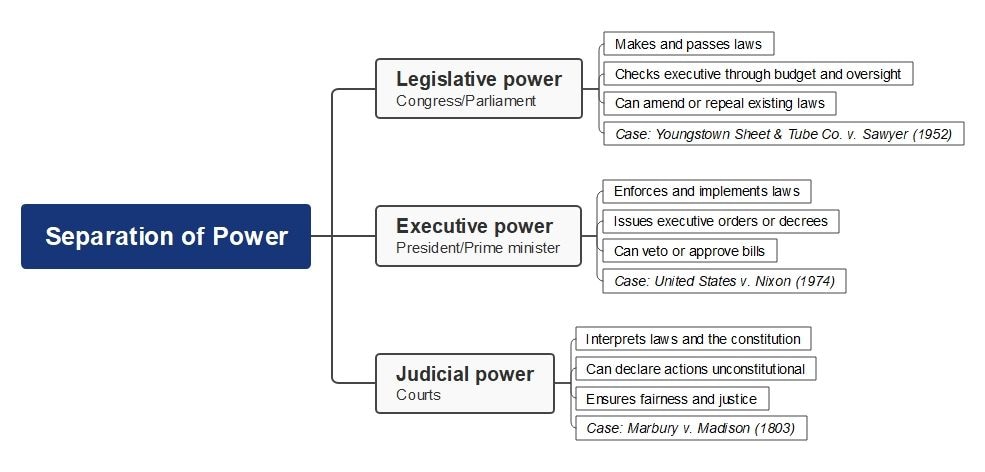


This mind map helps law students visualize how government powers are divided and where conflicts arise. Instead of memorizing definitions, students can see relationships between institutions and connect theory to real cases.
You can use this mind map as a review tool before exams or expand it into a comparison map (e.g., “U.S. vs. U.K. separation of powers”).
Why EdrawMind is best for law students:
- It uses AI to create maps from your notes.
- You can share and edit with classmates.
- It has templates for law subjects.
- You can study anywhere with cloud storage.
With EdrawMind, students can use AI to auto-generate case summaries or export the map as a visual study sheet, making even tough subjects like constitutional or criminal law easy to study and remember.
Best Books for Studying Law
Reading the right books gives you a strong base. Here are three trusted choices for law students of all levels.
| Book title | Author | Why it’s useful |
| Learning the Law | Glanville Williams | A classic that explains how the legal system works and how to approach studying it step by step. |
| How to Study Law | Anthony Bradney & Fiona Cownie | A practical guide that teaches how to read cases, understand statutes, and write essays clearly. |
| The Legal Analyst: A Toolkit for Thinking About the Law | Ward Farnsworth | Helps you think like a lawyer using logic and real examples of how the law is applied. |
These books help improve reading, reasoning, and problem-solving skills—everything you need for law school success.
How To Boost Efficiency With a Mind Map
⚖️ Law has many topics, cases, and connections. It can feel overwhelming at first. Mind maps help by organizing all that information into one clear and visual layout.
With a mind map, you can see how one topic leads to another. You’ll understand the “big picture” instead of getting lost in detail.
Using EdrawMind for Law Study
EdrawMind helps you build mind maps easily. It even uses AI to turn your notes into clear, colorful charts. You can also share your maps with classmates and update them together.

Features that help law students:
- AI auto-summarizes text and cases.
- Cloud saving for easy access anywhere.
- Templates made for legal studies.
- Visual themes that make maps easy to read.
By turning your lessons into visual maps, you’ll study faster and remember more—especially during exam season.
Studying law doesn’t have to be stressful. With smart planning, consistent reading, and helpful tools like EdrawMind, you can make learning organized and fun.
Stay curious, study a little every day, and use what you learn. Step by step, you’ll build the knowledge and confidence you need to succeed in law.
FAQs
-
1. Is studying law really hard?
Law can be tough because there’s a lot to read and remember. But with good study habits and tools like EdrawMind, it becomes much easier to manage. -
2. How can I improve my writing for law school?
Write short case summaries every week. Focus on being clear and direct instead of using complicated words. -
3. What’s the best way to prepare for exams?
Practice with old exam questions, use mind maps for revision, and focus on understanding key concepts instead of memorizing. -
4. How often should I review my notes?
Review small parts every week. Regular review builds strong memory and saves you from cramming later. -
5. Do mind maps really help with studying law?
Yes. They show how topics and cases are connected, making it easier to see relationships and remember details.
 EdrawMind
AppsEdrawMind Online
EdrawMind
AppsEdrawMind Online