

Your manager has suggested that you work from home lately because it is unsafe to leave your residence, and now you are looking for ways to be productive at home. You are in the right place.
The essential tips covered in the following sections will help you efficiently utilize your time by monetizing your work hours while maintaining good habits from home.

In This Article
Introduction
Have you ever thought about what keeps you sane and in your senses? It is your business.
The fact is that when you keep yourself busy, you can enjoy quality time and become more productive, not only financially but also mentally. To elaborate, being productive:
Economically Means
When you work as sincerely from home as you do in the office, your work efficiency doesn’t deteriorate, and therefore, you will never face any financial crises. After all, every employer wants a perfect output. Right?
Mentally Means
With economic security, you will be at peace and mentally relaxed, which helps you generate new ideas for upgrading your skills. This can be beneficial in the long run, such as during promotions or salary increases.
Health Wise Means
With sound finances and mental peace, it is doubtful that you will experience any sleeping disorders. Therefore, you will stay fit and healthy, and add a few extra years to your life.
To summarize, it is vital to remain productive at home even when working from home, ensuring you make the most of your time and life.

7 Best Tips To Become Productive at Home
Once you understand the importance of being productive while working from home, it is crucial to know how to stay productive in your own space. Below are a couple of tips to keep you in good health, wealth, and shape:
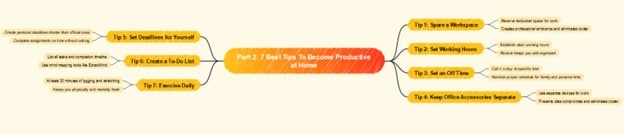


Spare a Workspace
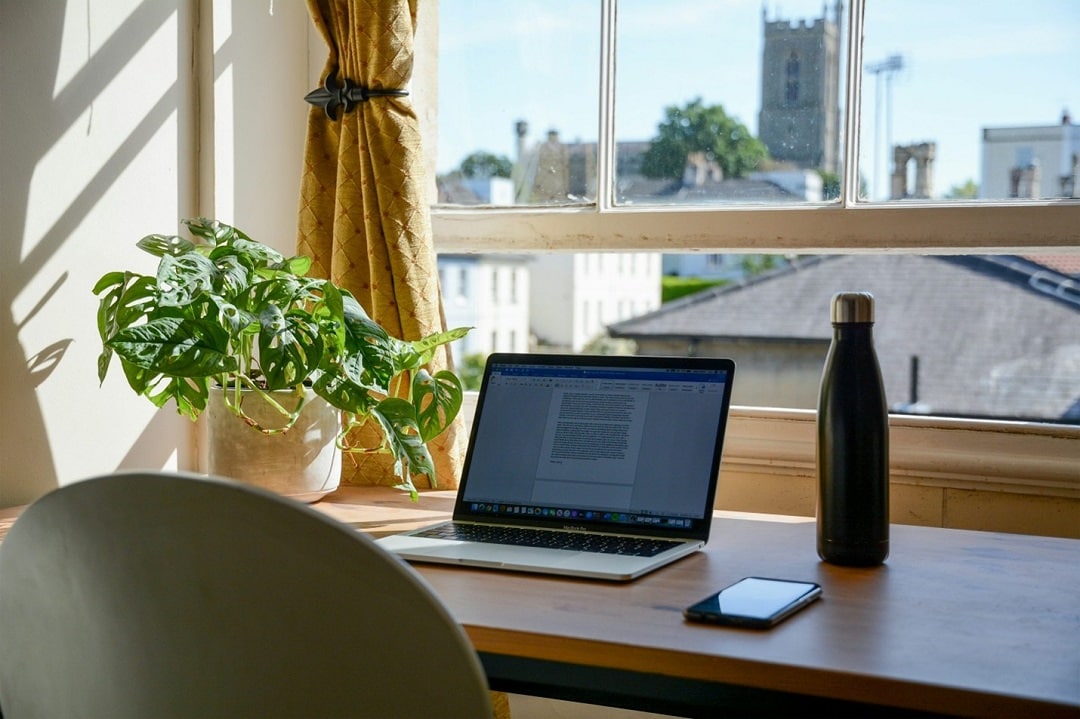
The first thing you should do is to reserve a space in your house for work and put all your office-related items, such as a pen stand, PC, and files, there.
This helps keep things well-organized and eliminates the risk of losing essential items. Using a specific area of your home as an office also creates a professional ambiance, enabling you to concentrate on your work.
 Try the app & get 500 free AI tokens


Set Working Hours
It is the routine that keeps you well-organized. Therefore, it is essential to establish clear working hours for yourself. Depending on the nature of your job and schedule, your hours of engagement may vary from those of your colleagues.
However, getting to your workspace daily and simultaneously virtually taking you to your office, where you are expected to work as a full-time employee.
Set an off Time
It is also essential to call it ‘a day’ at a specific time each day. Maintaining this habit helps you stay on a proper schedule, giving you enough space for yourself, your family, and managing other routines correctly.
Ensure that you inform your employers or reporting managers about your working hours and off-hours so that they can assign you daily tasks and corresponding turnaround times accordingly.
Keep Office Accessories Separate
If possible, have a separate laptop/desktop computer, cell phone (a smartphone is recommended), tablet, etc., for office work.
Using the same devices and accessories for both personal and professional tasks may result in compromised data, leading to the loss of important files, exposure of sensitive details to official authorities, or both.
Keeping your equipment separate from that used in the office can help eliminate clutter.
Set Deadlines for Yourself
As soon as you have been assigned a project, regardless of the turnaround time your employer has given you, set a deadline for yourself and make sure to stick to it.
Your deadline should be of shorter duration than that provided by the seniors. This would help you complete your assignments on time, thereby eliminating any chance of rushing and making mistakes during those last moments.
Create a To-Do List
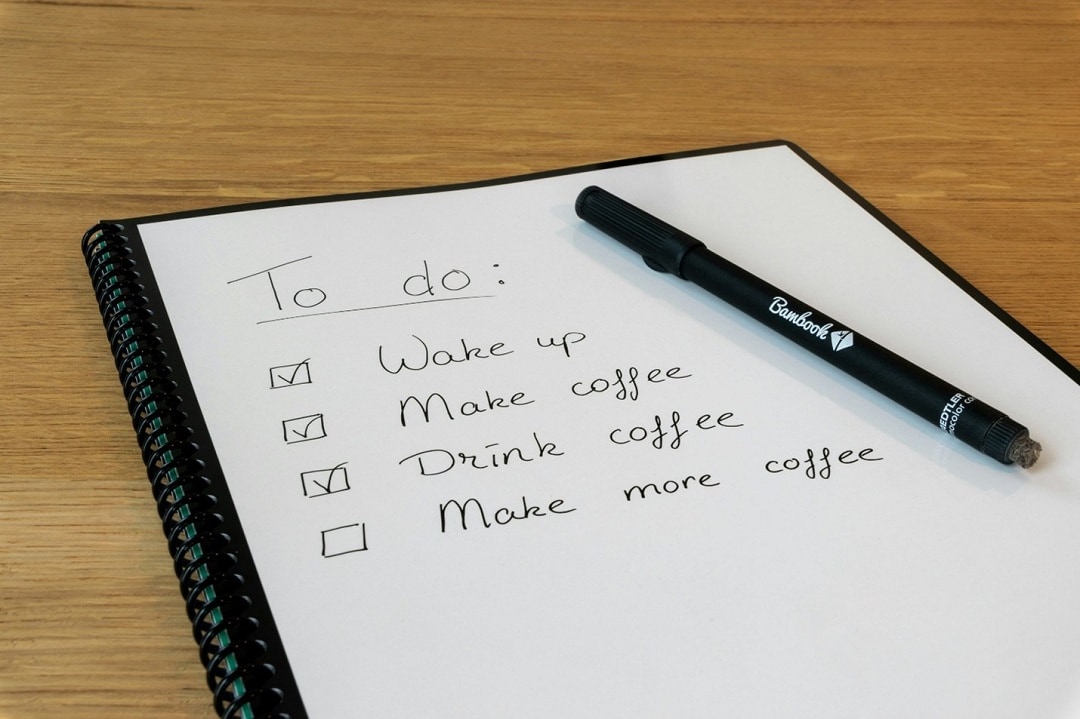
It is vital to create a To-Do list for yourself. This list must contain all the tasks that you have been assigned and how you are going to complete them before the given time.
Depending on your profile, assignments, responsibilities, and tenure, if you have been asked to work from home, you can create a To-Do list on a monthly, fortnightly, weekly, or daily basis.
The crux is, before rolling up your sleeves and getting to work, knowing what you are supposed to do and when to do it helps you stay on schedule.
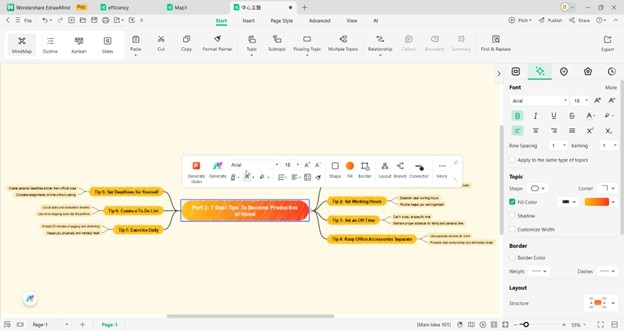
To make things easier, you can try using an efficient mind mapping program like EdrawMind, which is free and enables you to create mind maps quite quickly.
Exercise Daily
Regardless of your schedule and the working hours you set for yourself, make sure to EXERCISE DAILY.
This practice will not only keep you in good health and shape, but it will also help you remain mentally fresh and enthusiastic throughout your day.
Since you are no longer traveling and/or walking to your office during your work from home phase, you are not as physically active as you should generally be.
In this situation, even 30 minutes of jogging and stretching may do wonders for your body and mental well-being.

How To Boost Efficiency With a Mind Map To Be More Productive at Home
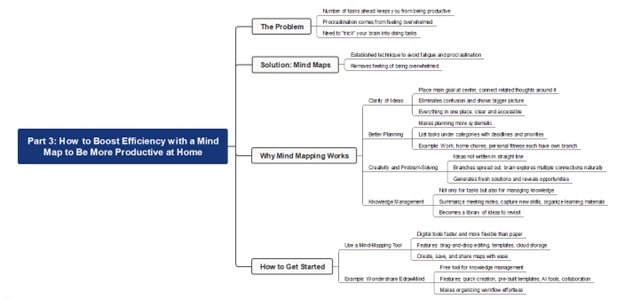
One thing that’s keeping you from being productive is the number of tasks that are ahead of you. Oftentimes, procrastination comes from the mere fact that the worker is overwhelmed.
However, there are ways to sort of “trick” your brain into doing these tasks and removing the feeling of being overwhelmed. Here, this refers to using mind maps as a technique to avoid fatigue or procrastination.
There are several reasons why mind mapping is one of the established ways of thinking, after all. Read through the reasons why you should do it, and a way to begin with the technique.
Clarity of Ideas
When you place your main goal at the center of a mind map, you can connect every related thought or task around it.
This visual structure eliminates confusion, helps you see the bigger picture, and keeps you focused on what truly matters.
Instead of handling random notes, everything is in one place, clear and accessible.
Better Planning
Mind maps make planning more systematic. By listing tasks under categories, you can easily set deadlines and priorities.
For example, if you are managing work, home chores, and personal fitness, each can have its own branch. This division allows you to see what needs attention first and what can wait.
Creativity and Problem-Solving
Mind maps encourage creative thinking because ideas are not written in a straight line. With branches spreading out, your brain naturally explores multiple connections.
This approach helps you generate fresh solutions and see opportunities you might otherwise miss.
Knowledge Management
A mind map is not only for tasks but also for managing knowledge. You can use it to summarize meeting notes, capture new skills, or organize learning materials.
Over time, it becomes a library of ideas that you can revisit whenever needed.
Use a Mind-Mapping Tool
Although you can draw mind maps on paper, digital tools make the process faster and more flexible. Free mind mapping programs are widely available and provide features like drag-and-drop editing, templates, and cloud storage.
These tools allow you to create, save, and share maps with ease.
Example: Wondershare EdrawMind
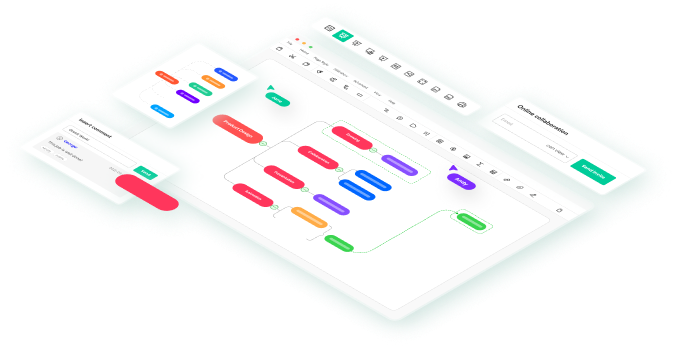
EdrawMind is a free tool designed for knowledge management. It enables you to create mind maps quickly, utilize pre-built templates, maximize AI tools, and maybe even collaborate with others.
With such a tool, organizing your workflow becomes effortless, and you can focus more on completing tasks rather than planning them.
Conclusion
After understanding the importance of being productive at home, there is absolutely no reason not to follow the tips suggested above.
Furthermore, it is essential to maintain a proper schedule and routine to stay in good physical and mental health while remaining economically secure.
FAQs
Now, before you go and return to work, read these FAQs that might help you in some way. Here are some questions from real users that haven’t been really tackled in the discussion above:
FAQ
-
1. How do I stay productive if my home environment is noisy?
Noise is honestly one of the worst distractions when working from home. Noise-canceling headphones are a lifesaver here, or play some calm background sounds to help you zone in.
Talk to your family or housemates about your work hours. Let them know when you really need things quiet. And if noise is unavoidable? Save your heaviest, most brain-intensive tasks for whenever your space is naturally calmer.
-
2. What should I do when I start losing focus during the day?
Losing focus happens. Sitting in the same spot for hours will do that to anyone.
Short breaks work wonders. Five minutes of just moving around can completely refresh your brain. But here's the thing.
Don't spend that break scrolling through your phone. That'll drain you more. Get up, stretch, grab water. Then come back ready to focus again.
-
3. How can I avoid feeling isolated while working from home?
Working alone gets lonely sometimes, no sugarcoating it. Stay connected by checking in with colleagues regularly. Quick chats or video calls make a difference.
Online communities can be helpful, especially those centered around your interests or industry. And don't underestimate a simple conversation with a friend or family member during lunch. Even brief social contact keeps your spirits up and helps you avoid burnout.
-
4. Is multitasking a good way to get more done at home?
Short answer? No. Multitasking looks productive, but it's actually a trap. Every time you switch between tasks, your brain needs time to catch up.
That leads to slower work and more mistakes. Focus on one thing at a time; you'll finish faster and do better work.
-
5. How do I maintain energy throughout the day without commuting or moving much?
Here's the thing: when you're not commuting, your body basically stays still all day. And that inactivity? It drains you more than you'd think.
The fix is simple: move. You don't need a full workout routine (though that helps). Just do short bursts of activity throughout the day. Stretch at your desk. Do a quick lap around your house.
And don't forget the basics. Drink enough water and snack smart. Fruits, nuts, things that actually fuel you instead of causing a sugar crash. These small habits might seem minor, but they add up.
 EdrawMind
AppsEdrawMind Online
EdrawMind
AppsEdrawMind Online