

Individuals like to joke that the main thing you truly "learn" in school is how to memorize. For reasons unknown, that is not even the case for the majority of us.
If you avoid school and request tricks and tips from individuals on how to memorize things fast, many people will most likely tell you that the key to learning and remembering is repetition and practice.
If you somehow happened to converse with memory professionals, you would discover that the committee isn't pointing you in the correct direction.
If you need to memorize something rapidly and completely, repetition won't cut it; however, reviewing something will. The issue is that reviewing something requires focusing and learning, and you know in various ways as a whole.
Anyway, how might you memorize something quickly?
In this article, you will learn memory techniques to master the art of reviewing, aiming to retain a large amount of information quickly and learn how to memorize things fast.


In this article
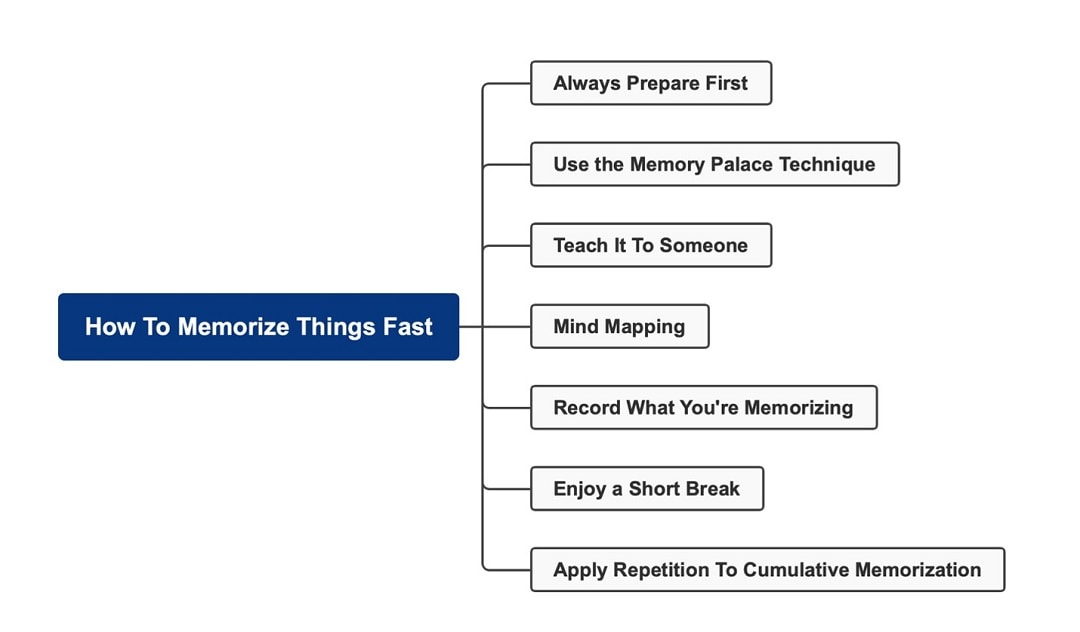
7 Study Hacks To Memorize Things Faster
Here are seven study hacks to memorize things faster.
Always Prepare First
To optimize and improve your memorization meeting, and figure out how to memorize something quickly, give close consideration to which condition you choose.
For the vast majority, this implies picking a zone with many distractions; however, a few people do flourish off of learning in open zones. Understand what is generally helpful for your learning so that you can begin.
Next, start drinking some tea. I could connect you to numerous studies that affirm green tea as a natural catalyst for improving memory.
Precisely, our capacity to recall data comes down to the quality between neurons in our psyche, which are associated with synapses. The more you practice the neurotransmitter (repetition), the more grounded it is, bringing about the capacity to memorize.
When you get more seasoned, harmful synthetic substances will harm your neurons and synapses, prompting cognitive decline and even Alzheimer's. Green tea contains antioxidants that mitigate this harmfulness and keep your synapses working more effectively.
 Try the app & get 500 free AI tokens



Use the Memory Palace Technique

An incredible method to "segment " data is through the memory royal residence technique. This is particularly useful for visual students.
However, it can also serve as an "encounter" for experiential students, and if you state the way for all to hear, it can work for auditory students too.
There are a few stages to this technique. Yet, it essentially involves choosing a place you know well, identifying its distinctive features, and using those features to "store" pieces of information you want to remember.
For instance, if you're chipping away at learning how to memorize lines, you can discover a spot in your memory center for each line of text.
As you're recounting them when the opportunity arises, you'll need to stroll through the space to get each line of text in the right order.
When everything has its place, it'll be easy for you to find and recover it. Making learning interesting and memorizing even faster.
Teach It to Someone

Studies have demonstrated that teaching data to somebody is a surefire approach to recollect that data, as it requires you to recover the data from your memory. You can do this in an assortment of ways.
You can address the information to somebody sitting directly before you (or the mirror, on the off chance that you can't persuade anybody to endure it).
If what you've learned should be discussed verbatim, please do so before someone else does, to understand how to present the content to the target group.
My preferred method for this is making tests for others. Take the data and predict which addresses will result from it. Utilize multiple-choice, coordinating, etc., to introduce the information in a test configuration and perceive how another person does.
The entirety of this is experiential learning since you are practicing and controlling the ideas you've learned.
Mind Mapping
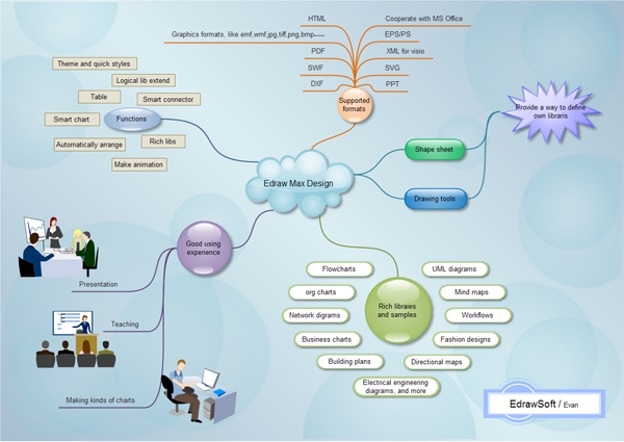
Mind mapping is a technique that is highly utilized for structuring, improving memory, producing, and presenting ideas and thoughts, just as for considering and sorting out new data.
Mind maps are generally created around a specific concept or thought introduced as a focal key component. This particular subject later branches out to provide cozy connections with an expansive range of ideas.
In the mind, mapping involves using words, pictures, and symbols to help a thought or concept be better understood and memorized. One thing that makes mind mapping particularly valuable is its benefits for memory retention.
In actuality, mind mapping can improve our memory by incorporating association and creative thinking into the process of creating a guide, which helps us learn how to memorize things quickly.
Record What You’re Memorizing

This tip is very valuable if you are learning how to memorize things fast or if you're attempting to memorize information from a lecture.
Use your phone or invest in a tape recorder when you are trying to memorize, and keep listening to it to memorize it faster.
If you're tackling something more complex, like learning a new language, it might be helpful to make notecards of the words you're trying to memorize.
In case you're attempting to memorize a speech, record yourself reading the speech so that anyone can hear and hear yourself speaking.
This is generally useful for auditory students, but at the same time, it's convenient because it guarantees that you're getting more context from a lecture that will assist you with learning the information quickly.
Enjoy a Short Break

After studying or working quite a lot, let your mind relax for a short while. Take a short break without worrying about what you'll do during it, and return to work later with a fresh mind.
Even better, take a stroll during your break to enjoy the benefits of being in nature and breathing in the fresh air.
You'll discover what you truly know once you return to the information, and this will assist you with concentrating on the sections you may be most fragile at.
Try these methods now, and you will find remembering things much easier and memorizing more than many others!
Apply Repetition To Cumulative Memorization
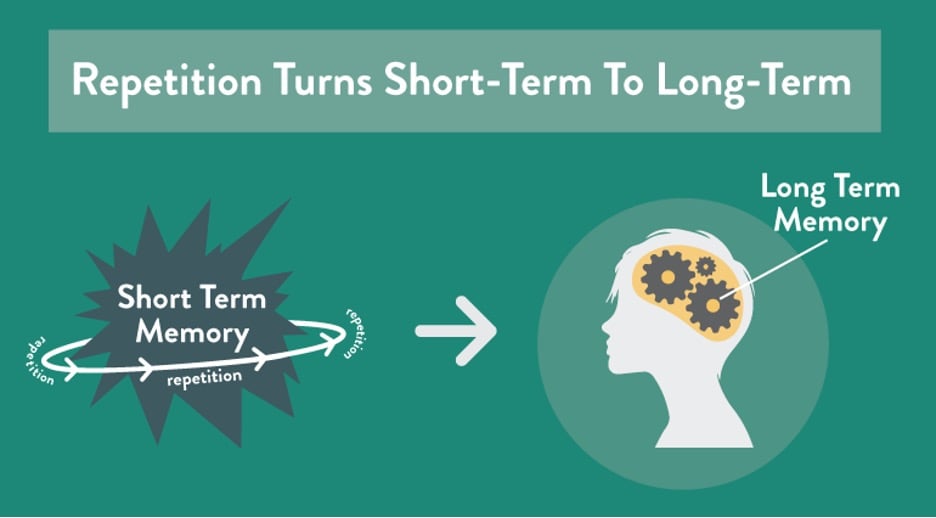
For each line of text, repeat it a couple of times and attempt to recall it without looking.
When you memorize each arrangement of text, build on what you've recently learned by adding new information. This will keep everything inside your transient memory from blurring.
Continue doing this until you have memorized that area and can recall the whole thing. Try not to proceed onward to another location until you have memorized that one.
This is, for most parts of visual learning, but if you are speaking so that anyone might hear, then you are also applying auditory learning.
Resource Recommendations for Memorization
The tips provided above are bare tips on how you can improve your memory and memorize things fast. However, if you want a deeper look into how memory works and more practical tips or techniques, this section provides them:
For Guides
Start with resources that explain proven memory techniques. “Moonwalking with Einstein” by Joshua Foer is a popular book that introduces the idea of memory palaces and association tricks.
For a free guide, here’s Memory: How To Develop, Train and Use It. It has different memorization techniques for other stuff like places, faces, numbers, music, tales, and more.
For Practice
With AI and other advanced tech these days, memorization is a lot easier. You don’t have to buy preset flash cards or tediously make them; you can use apps like Anki or Quizlet.
You can even ask AI chatbots like ChatGPT, Gemini, or Notebook LM to give you repetition quizzes that enhance your memory in the long run.
How Mind Mapping Can Boost Efficiency When Memorizing
Earlier, one of the tips provided was to use mind maps when trying to memorize stuff. However, in this part, you’ll try to explore more of how mind maps boost your efficiency and help you learn things fast.
Mind mapping adds an extra layer to your memorization. Beyond repetition, it helps you process the items in your study list a lot better because your brain is forced to correlate them or chunk them into keywords.
Practical Example
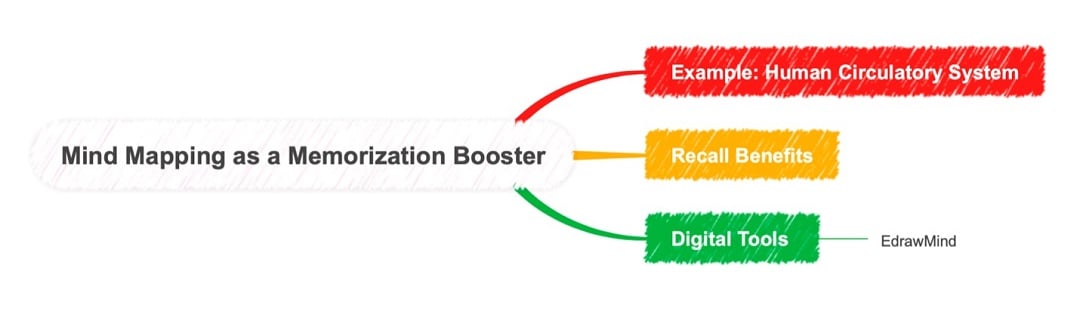
For example, when studying biology, you can place "Human Circulatory System" at the center. Branches might include "Heart," "Blood Vessels," and "Blood Components." Each branch can then expand into subtopics such as "arteries," "veins," or "red blood cells."
The structure not only improves understanding but also speeds up revision because you can immediately see how each detail links to the larger concept.
Recall Benefits of a Mind Map
Mind maps also improve memory by using colors, keywords, and visuals. Associating terms with icons or drawings strengthens recall. The mere act of color-coding them does wonders for your memory.
For instance, drawing a simple lung next to "Respiration" makes it easier to remember later. The creative process of building the map itself acts as an active review session, reinforcing what you learn.
Using Digital Tools Like EdrawMind
Digital tools make this process even smoother. Free applications allow you to build and edit maps with drag-and-drop functions. Wondershare EdrawMind, for example, is a practical option for knowledge management and studying.
With features such as templates, icons, and collaboration tools, it helps students organize lessons, track progress, and share maps with peers.
Using such tools ensures your memorization process is not just faster but also more effective.
Other Tips or Techniques To Improve Memorization
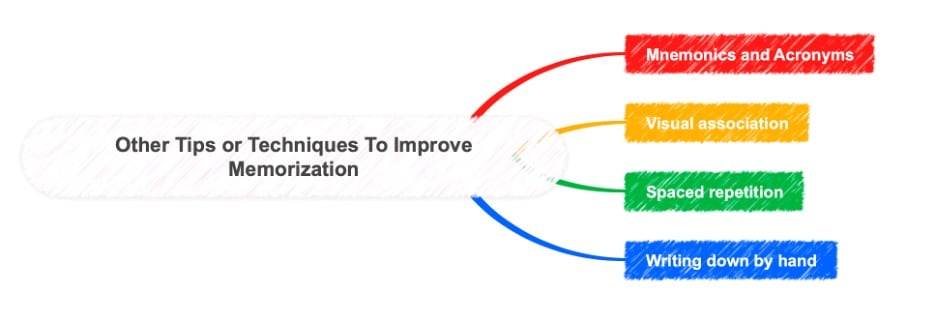
Here are some tried and tested techniques that you can employ as well:
- Mnemonics and acronyms. You can turn long lists into short, fun catch phrases to improve recall. One good example of this is PEMDAS – the order for math operations. Try to think of other ones for your topics.
- Visual associations. With the mind mapping tip provided, you can make a visual association for every concept. Add an image or something, so come exams, you’re just going to recall whatever that image was.
- Spaced repetition. Memorizing can’t be done in one go. You should do it every hour or day. This way, you can really embed the information in your memory.
- Write it down by hand. Writing is a good and well-known way to improve recall. IF you’re lazy, you can get a piece of paper and scribble randomly as you read through the text in your book or screen.
Conclusion
Our minds are continually developing with new information. Unquestionably, learning new skills can be baffling and tedious, but consider the possibility that science could help speed up the process, making it easier to learn how to memorize things quickly.
Regardless of whether you're learning how to memorize a speech, become familiar with another language, or packing for tomorrow's test, memory serves us in almost every part of our lives.
When you figure out how to memorize information quickly and more effectively, you'll put yourself ahead of the pack of individuals who are still trying to recall fundamental pieces of information. Begin today!
FAQs
Lastly, here are some frequently asked questions related to memorizing things fast:
-
1. What is the fastest way to memorize large amounts of information?
It really depends on your predispositions. If you’re more tech-inclined, then using AI tools like ChatGPT or mind mapping with EdrawMind might be your best bet. If you’re more of a traditional student, then making mind maps on paper or using flashcards can work wonders for you. -
2. Does repeating information really work for memorization?
Yes, but it’s more effective with spaced repetition. Reviewing material after one day, three days, and a week strengthens recall far more than rereading everything at once. -
3. Are there tricks for memorizing lists or sequences?
Mnemonics are popular across different fields for a good reason. Having a shorter word to remember and simply recalling what’s inside it is a good technique, especially for exams. For example, in law, you can use “FISTS” as a mnemonic for “Force, Intimidation, Strategy, Threats, and Stealth” to represent the grounds for vitiation of consent. There are other uses for fields like medicine, too. -
4. How can I memorize definitions or vocabulary quickly?
Connect words to visuals or examples. If you need to memorize the word “gregarious,” imagine someone happily surrounded by friends at a party. Linking terms to images makes recall easier. You can do this best with mind mapping tools like EdrawMind. -
5. Do lifestyle habits affect memorization speed?
Absolutely. Lack of sleep, dehydration, and poor diet weaken memory. Also, taking short breaks, engaging in light exercise, and staying hydrated improve focus and retention.
 EdrawMind
AppsEdrawMind Online
EdrawMind
AppsEdrawMind Online