About this annual marketing plan template
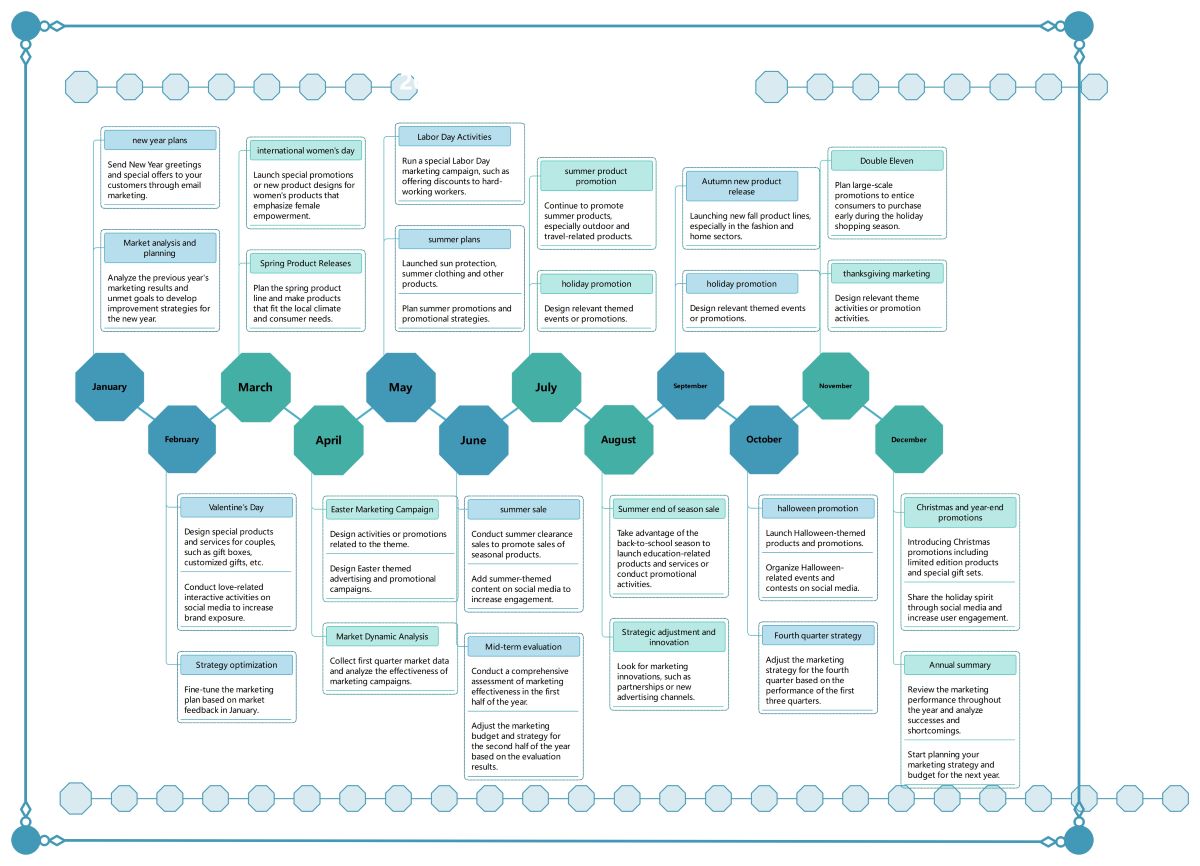
This comprehensive annual marketing plan template provides a month-by-month guide to seasonal promotions and strategic analysis. It helps teams visualize key holidays and product launches to ensure maximum brand visibility and sales performance throughout the year.
First Quarter Strategies
The first quarter focuses on analyzing previous performance and launching new spring initiatives. It involves setting the tone for the year with fresh greetings, strategic planning, and targeted holiday promotions for early-year events like Valentine's Day.
- New year plans and customer email marketing
- Market analysis and improvement strategies
- Valentine's Day product design and social media
- International Women's Day promotions
- Spring product releases and line planning
Second Quarter Development
During the second quarter, businesses analyze market dynamics and transition into summer sales cycles. This period highlights the importance of mid-term evaluations to adjust budgets and strategies based on performance data gathered during the year's first half.
- Easter-themed advertising and promotional campaigns
- Market dynamic analysis and effectiveness reviews
- Labor Day marketing and worker discounts
- Summer product launches and promotional planning
- Summer clearance sales and social media engagement
- Mid-term comprehensive marketing assessment
Third Quarter Optimization
The third quarter focuses on maximizing summer engagement and preparing for the autumn transition. It includes strategic adjustments, back-to-school promotions, and the introduction of new fall product lines to maintain momentum before the busy holiday season begins.
- Travel-related product promotions for summer
- Summer end-of-season and back-to-school sales
- Strategic adjustment and marketing innovation
- Autumn new product release for fashion and home
- Holiday-themed event design and promotions
Fourth Quarter Execution
The fourth quarter is the peak shopping season, requiring intensive focus on major global shopping holidays. It concludes with an annual summary where teams review successes and shortcomings to begin planning the budget and strategy for the upcoming year.
- Halloween-themed social media contests and events
- Fourth quarter strategy adjustment and innovation
- Double Eleven large-scale consumer promotions
- Thanksgiving marketing activities and theme design
- Christmas and year-end special gift sets
- Annual summary and next-year planning
FAQs about this Template
-
How do I create a successful annual marketing plan?
To create a successful annual marketing plan, start by analyzing your past performance data and setting clear, measurable goals. Identify key seasonal holidays and industry events that align with your brand. Develop specific strategies for each quarter, allocate your budget wisely, and ensure you have a mechanism for regular performance reviews to adjust your tactics throughout the year.
-
Why is seasonal planning important for retail businesses?
Seasonal planning is crucial for retail businesses because it allows them to capitalize on shifts in consumer behavior and spending habits. By aligning promotions with holidays like Christmas or Back-to-School, brands can meet specific customer needs. This proactive approach ensures inventory readiness, optimizes advertising spend, and helps maintain a competitive edge during high-traffic periods throughout the calendar year.
-
How often should I review my annual marketing strategy?
While the plan is set annually, you should perform formal reviews at the end of every quarter. Mid-term evaluations are particularly vital for adjusting budgets and pivoting strategies based on market shifts. Regular monthly check-ins on key performance indicators also help in making small, agile adjustments that keep your marketing efforts aligned with your primary business objectives.