About this American Political System template
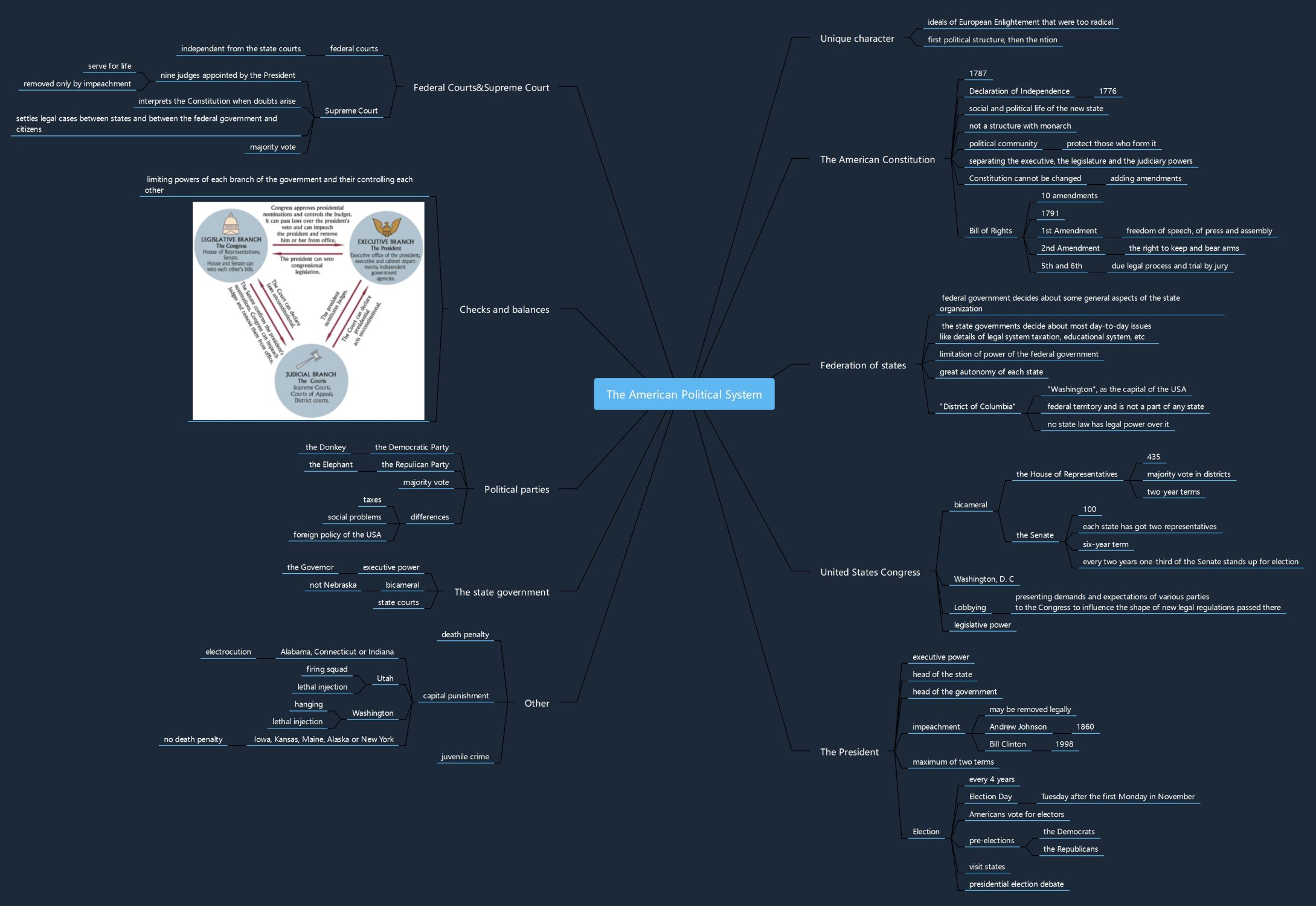
This template provides a clear visual map of the United States government structure. It covers the Constitution, the three branches of power, and how federal and state levels interact within the American democratic framework. It is an ideal tool for students and educators.
The American Constitution
The Constitution is the supreme law of the United States, created in 1787 to establish a stable government. It focuses on separating powers and protecting the rights of citizens through the Bill of Rights.
- Drafted in 1787 following the Declaration of Independence
- Establishes separation of powers between three branches
- Includes the Bill of Rights with 10 original amendments
- Protects freedom of speech, press, and assembly
United States Congress
As the legislative branch, Congress is responsible for making laws and managing the national budget. It consists of two separate chambers that work together to represent the people and the individual states fairly across the nation.
- Bicameral system: House of Representatives and the Senate
- House of Representatives has 435 members with two-year terms
- The Senate includes 100 members with six-year terms
- Involves lobbying from various parties to influence legislation
The President and Executive Branch
The President serves as the head of state and the head of government. This role holds the executive power to enforce laws, lead the military, and manage the country's foreign policy and general administration duties.
- Elected every four years through the Electoral College
- Can be removed through the legal process of impeachment
- Maximum limit of two four-year terms in office
- Includes pre-elections and presidential election debates
Federal Courts and the Supreme Court
The judicial branch interprets the Constitution and settles legal disputes between states or citizens. The Supreme Court is the highest authority, ensuring that all laws follow the rules set by the national Constitution and its amendments.
- Supreme Court consists of nine judges appointed by the President
- Judges serve for life unless removed by impeachment
- Interprets the Constitution when legal doubts arise
- Settles cases between states and the federal government
System of Checks and Balances
This system prevents any single branch of government from becoming too powerful. Each branch has specific ways to limit the actions of the others, ensuring a fair and balanced distribution of authority throughout the federal government.
- Congress can pass laws over a presidential veto
- The President can veto legislation passed by Congress
- The Supreme Court can declare laws unconstitutional
- The Senate confirms presidential nominations for high offices
FAQs about this Template
-
What are the three branches of the U.S. government?
The United States government is divided into three distinct branches: the legislative, executive, and judicial branches. The legislative branch, or Congress, creates laws. The executive branch, led by the President, carries out and enforces these laws. Finally, the judicial branch, including the Supreme Court, interprets the laws. This separation ensures that no single group gains total control over the nation.
-
How does the U.S. electoral process work for the President?
The President is elected every four years through a unique process involving primary elections and the Electoral College. Citizens vote for electors who then officially cast ballots for the President. This system requires candidates to visit various states and participate in debates. The final election is held on the Tuesday after the first Monday in November, determining the country's leader.
-
What is the role of the Supreme Court in the American system?
The Supreme Court acts as the highest judicial authority in the country. Its primary job is to interpret the Constitution and ensure that all laws passed by Congress align with it. Nine judges serve for life, providing stability and independence from political pressure. They settle legal disputes between states and handle cases involving the federal government or constitutional rights.